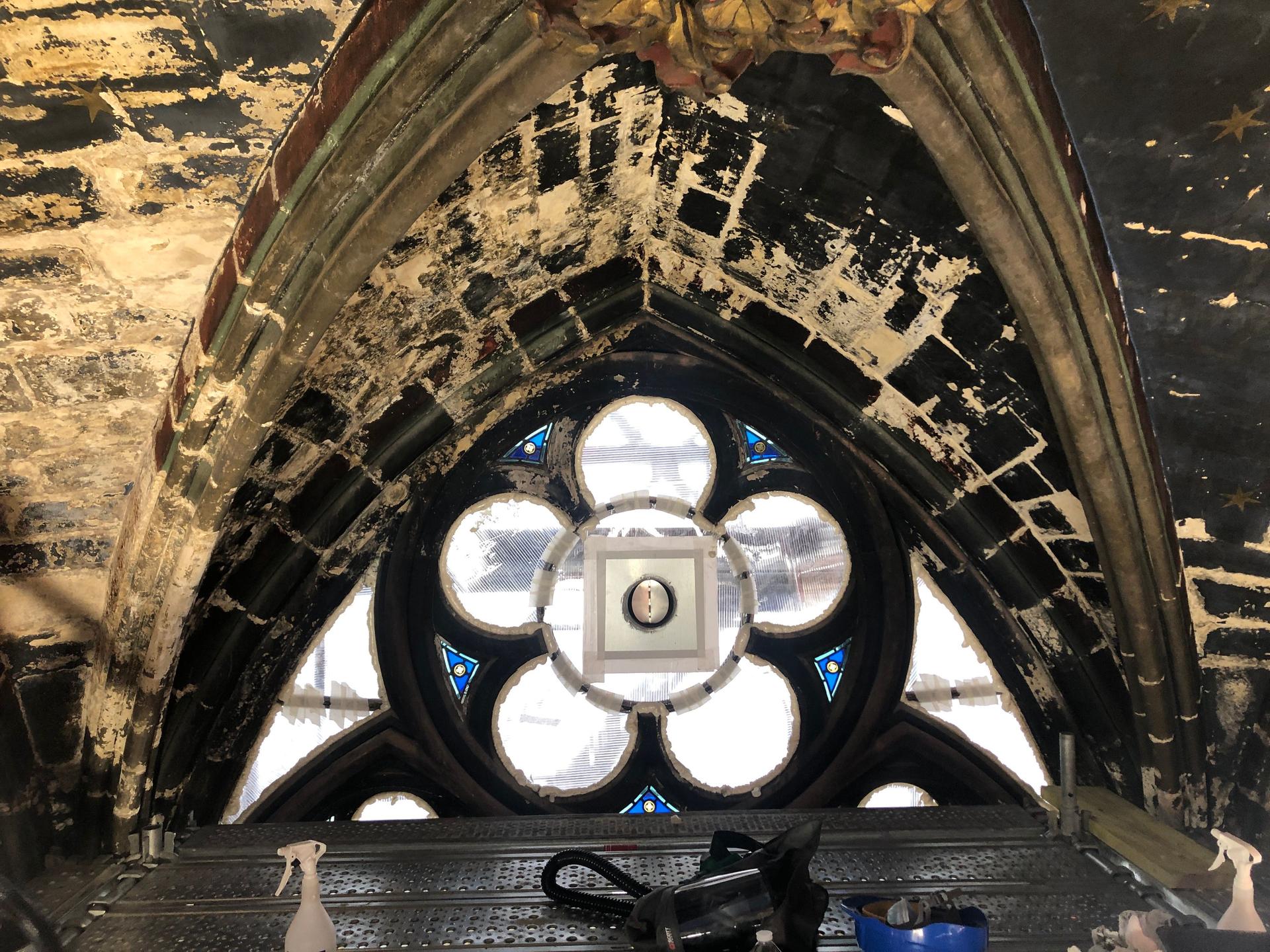


Decades of attendance at Notre Dame had left the interior of the cathedral in a state of visible deterioration: time had blackened the walls and paintings were peeling in places.
During the fire these walls were exposed to lead dust, which had to be removed before the cathedral could be opened to the public. In the process, cleaning and restoration would reestablish the full beauty of the interior of Notre Dame de Paris.
In the midst of the securing phase, tests were thus conducted in two of the cathedral's chapels and their adjacent spans. The goal was to precisely ascertain the scale of the damage and lead pollution inflicted on the chapels during the fire. These tests also enabled the retained protocol to be established, along with the associated time frames and costs for cleaning and restoring the interior of the monument, as well as ensuring that all the different professions could work at the same time and evaluating the cost and the schedule for restoring the interior.
A work site within a work site
To conduct these tests in real conditions, two chapels were chosen: one, Saint-Ferdinand chapel, in the choir of the cathedral, still preserved its painted decor as designed by Eugène Viollet-le-Duc. The other, Notre-Dame-de-Guadalupe chapel in the nave, presented bare stone facings since its decor was destroyed in the 1960s. This choice enabled methods for all types of supports to be tested.
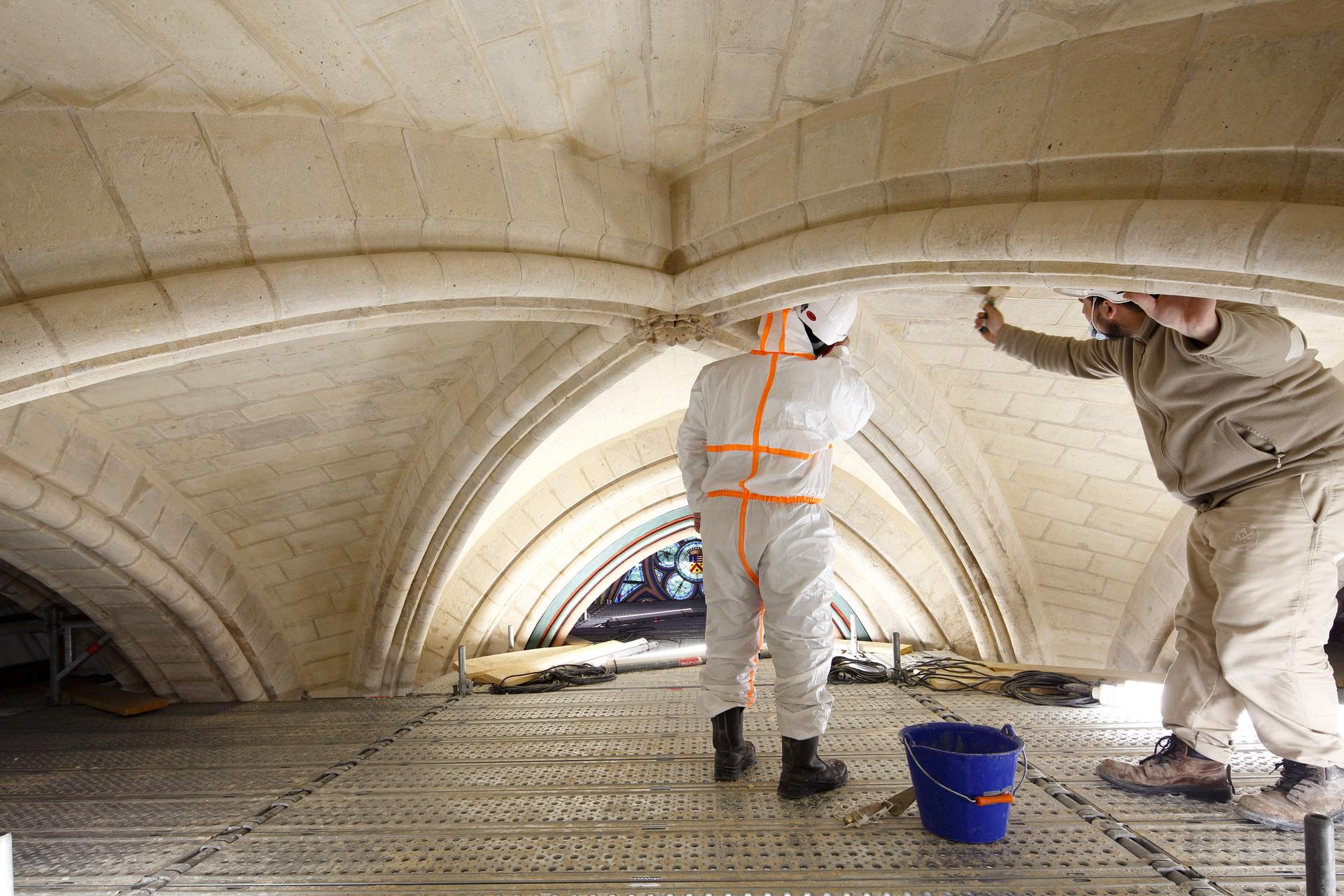
These two chapels and the span of the ambulatory or the side aisle adjoining them, were isolated from the rest of the cathedral with tarpaulins, forming two hermetically sealed cells. Scaffolding was installed in them up to four levels in order to provide access to the full surface of the walls.
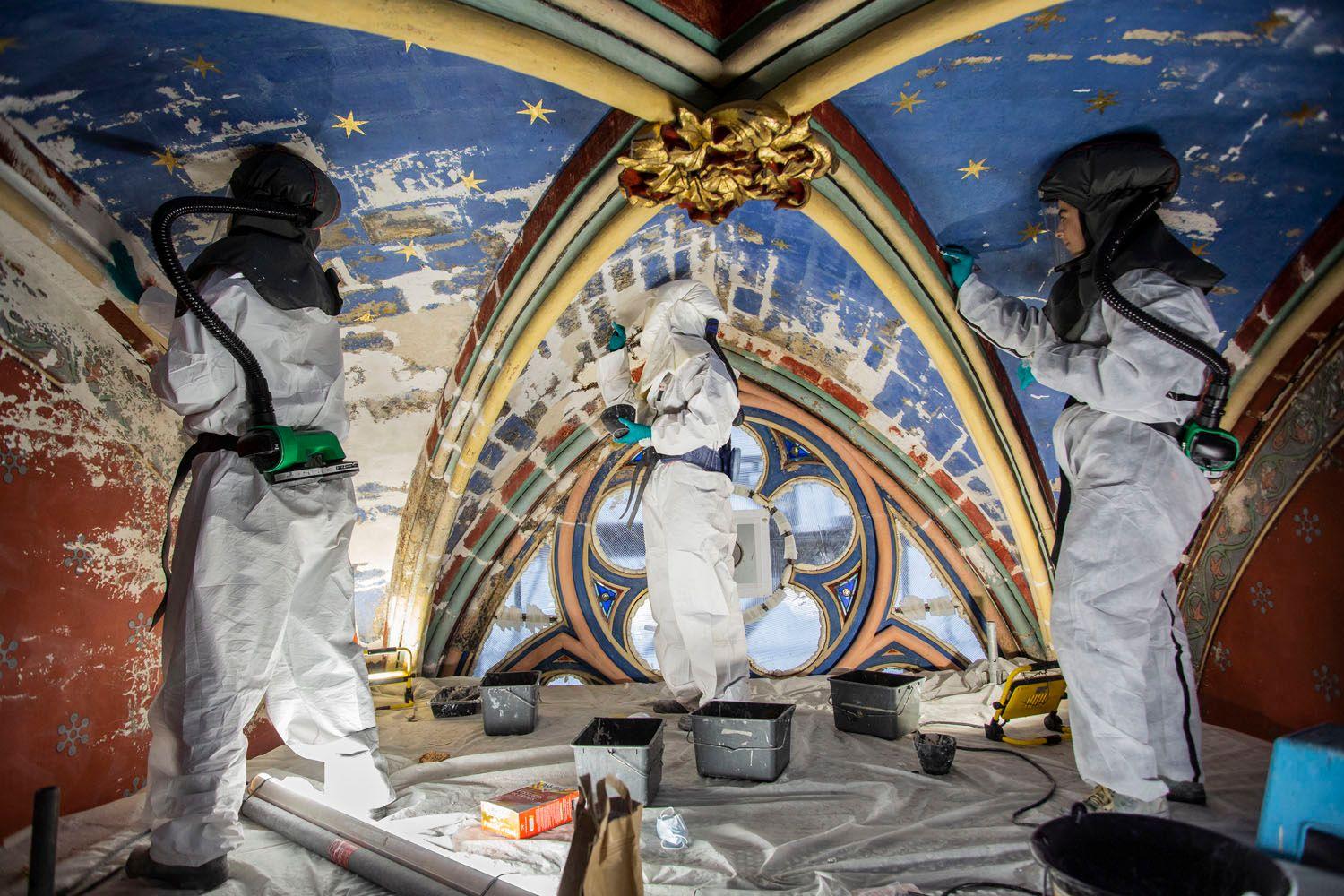
The skilled workers in these confined spaces were equipped with masks with integrated ventilation that reinforced their protection with regard to lead particles.
Paintings, stone facings, ironwork, sculptures, stained-glass windows: a variety of restoration techniques were mobilized. Several trades intervened at the same time to test the different protocols and check that they were compatible.
The cathedral recovers its colors
Based on the first trials conducted by the Historic Monuments Research Laboratory (LRMH) in 2019, a few months were sufficient to elaborate, test and validate the protocols developed by the restorers.
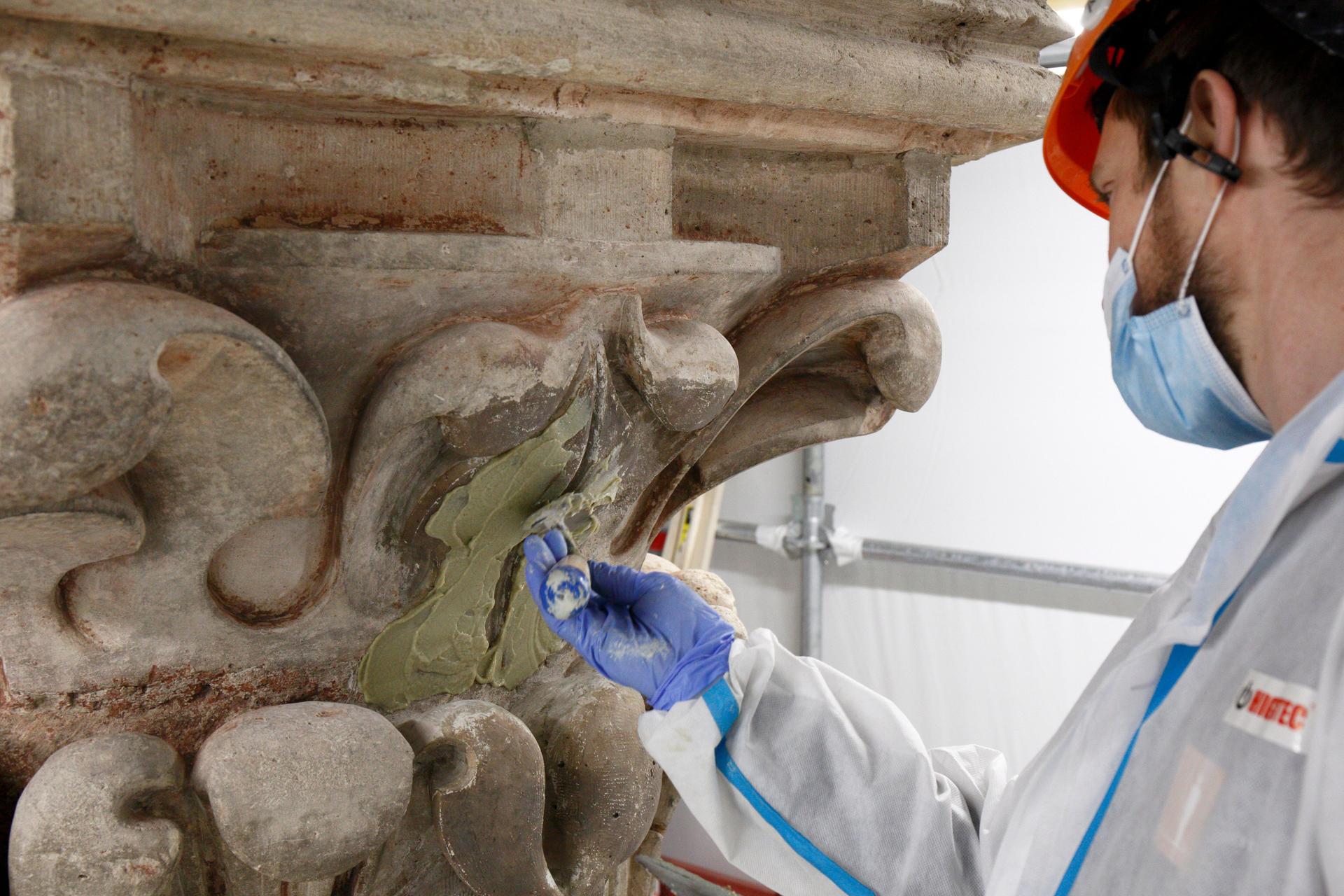
In the two chapels, master glassmakers used dusting and vacuuming to clean the stained-glass windows. Stone cutters applied compresses and latex to clean the facing of bare masonry (on walls and floors) and, whenever necessary, replaced the joints bonding the stones. Sculpted decors (altars, small columns, funerary monuments, etc.) were also treated by the sculpture restorers.
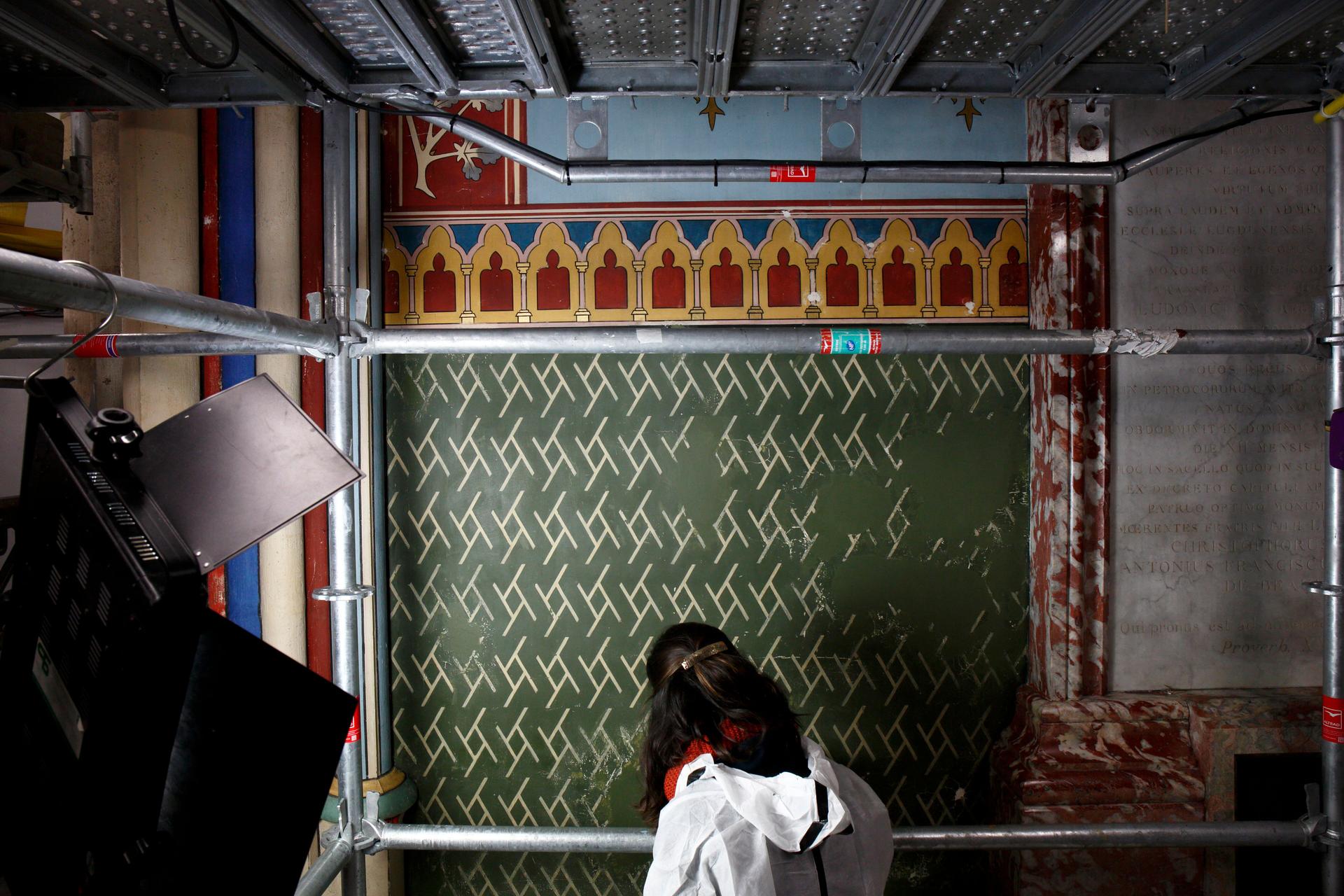
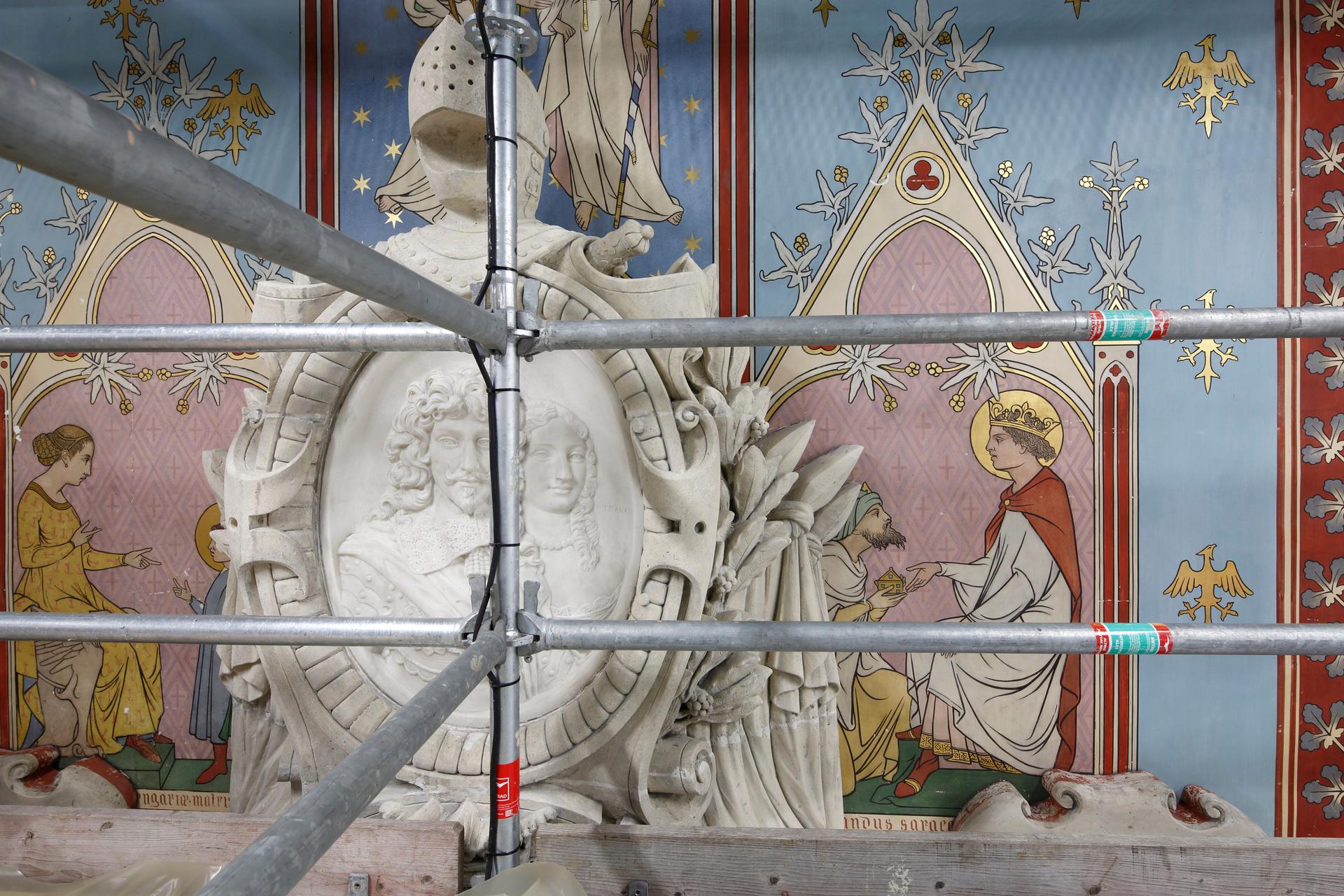
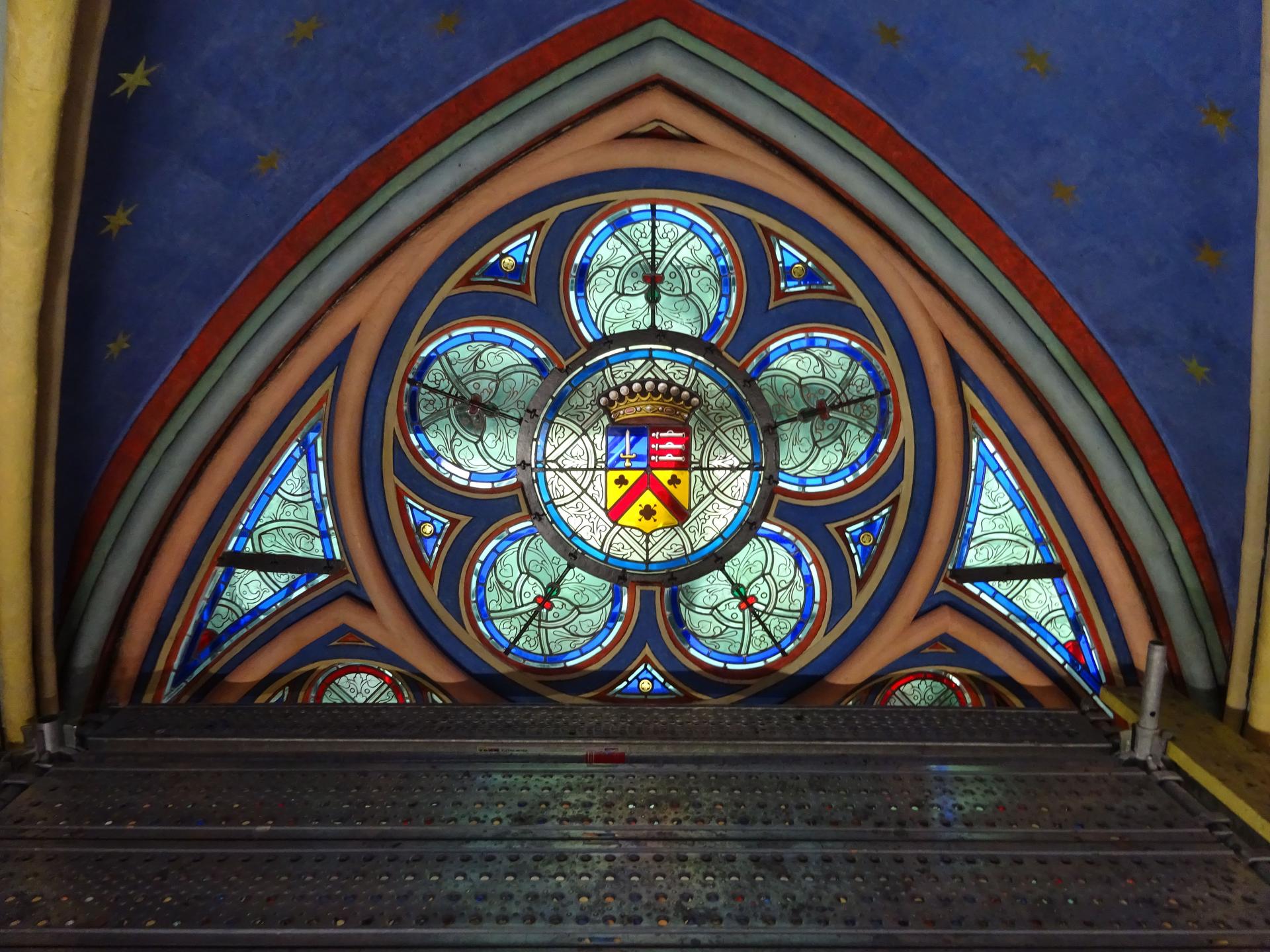
Saint-Ferdinand chapel, the only one of the two to preserve its painted decor, benefited from the intervention of painting restorers. They started by using syringes with tiny diameters to inject a substance to bond the plaster-based layer underlying the paint. They then used dirt-dissolving gels to clean away the grit accumulated over the centuries. As they vacuumed this dirt, little by little they revealed the extremely bright colors adorning the chapels. Whenever necessary, they filled in any gaps in order to restore overall legibility.
This restoration revealed the brightness of the paintings, the quality of their pigments and the high standards used to apply them in the 19th century, as well as revealing a deliberate complementarity between the colors of the painted facings and those of the stained-glass windows and stones, contributing to a restoration of the dimension of Notre Dame as a total artwork.
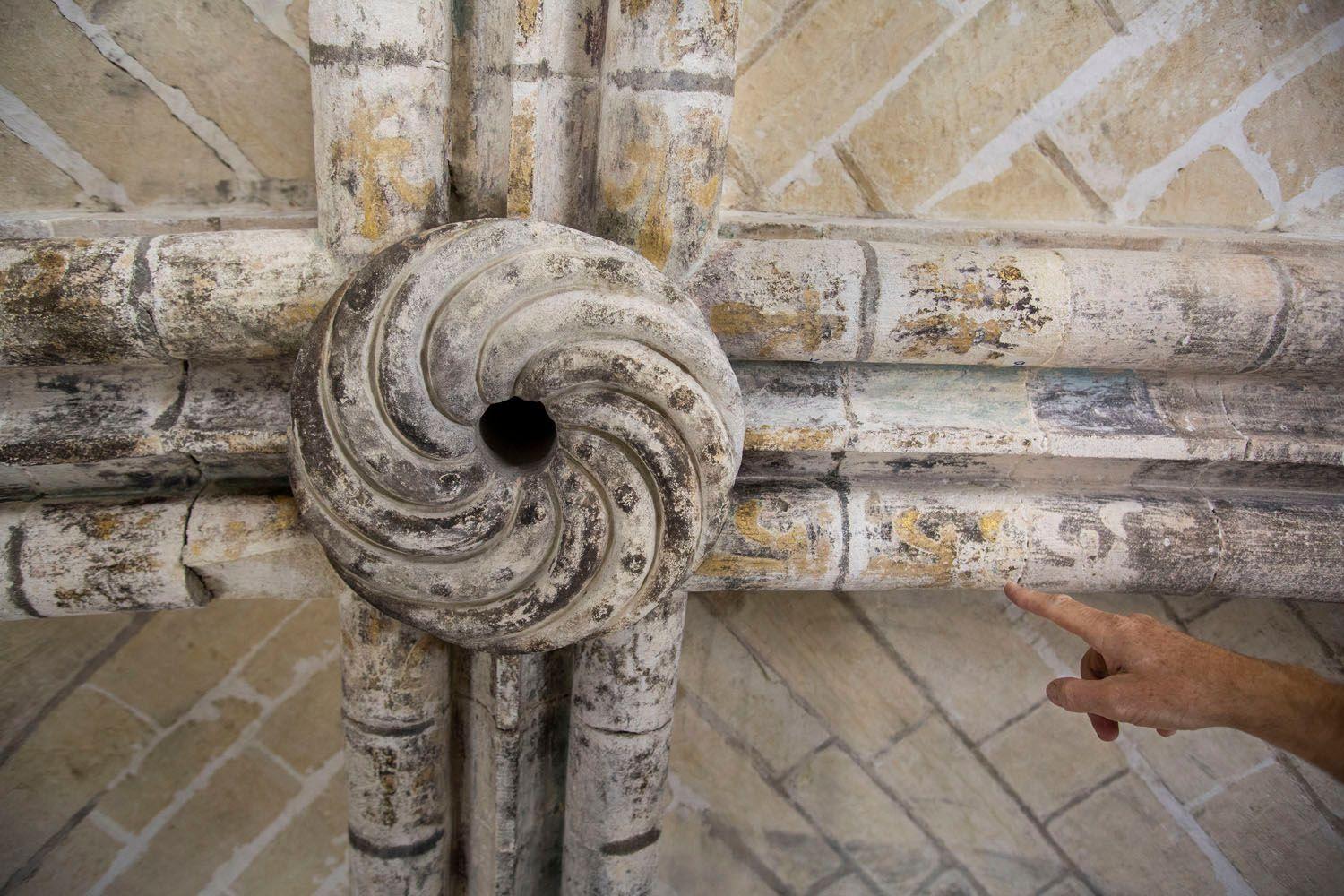
Notre-Dame-de-Guadalupe chapel was the subject of less intense restoration because its walls no longer presented any wall paintings. However, test work on the vaults of the side aisle revealed traces of decorative fleur-de-lys motifs predating the 19th century.
In April 2021, the completion of the test work lent an added dimension to the securing work: the new-found youth of the first two chapels prefigured the future splendor of Notre Dame de Paris when fully restored.
Visuel principal ©Patrick Zachmann – Magnum Photos / RNDP