
Taking down the great organ
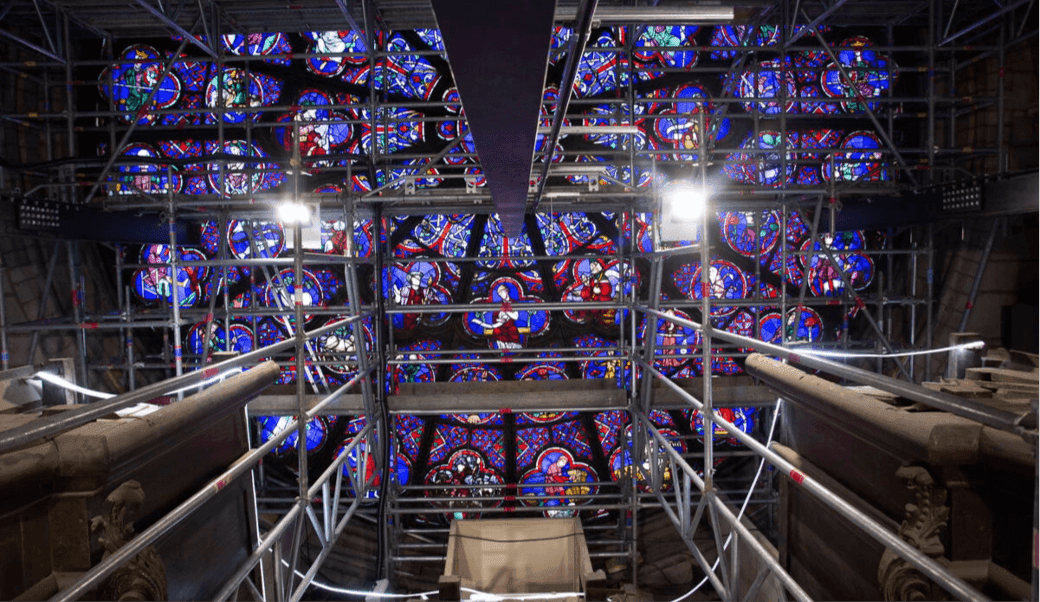
In an 18th century case, the great organ of the cathedral elaborated by Aristide Cavaillé-Coll in the 19th century has 116 stops, making it the largest in France. Great organists like Louis Vierne and Pierre Cochereau made it famous.
An exceptional project
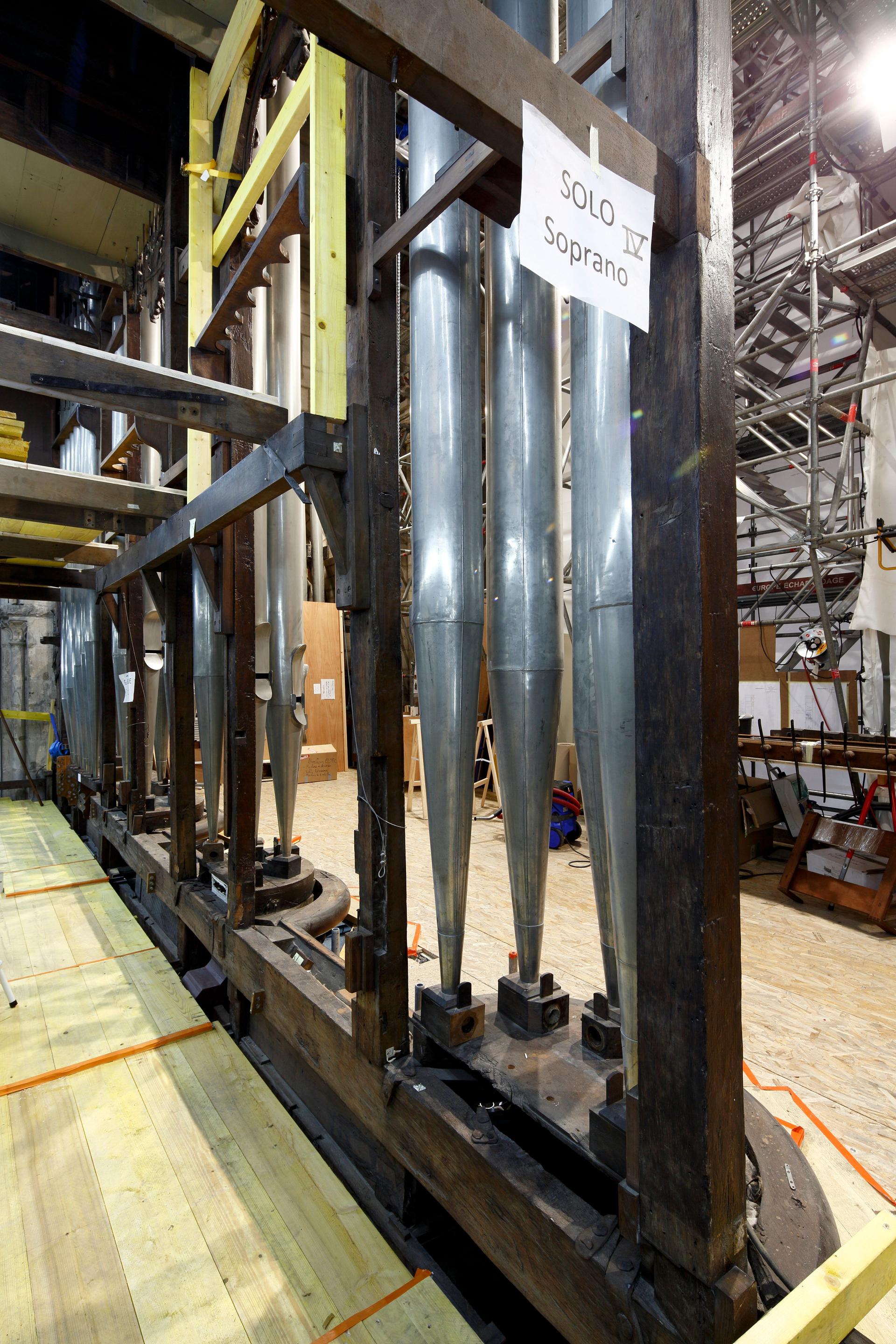
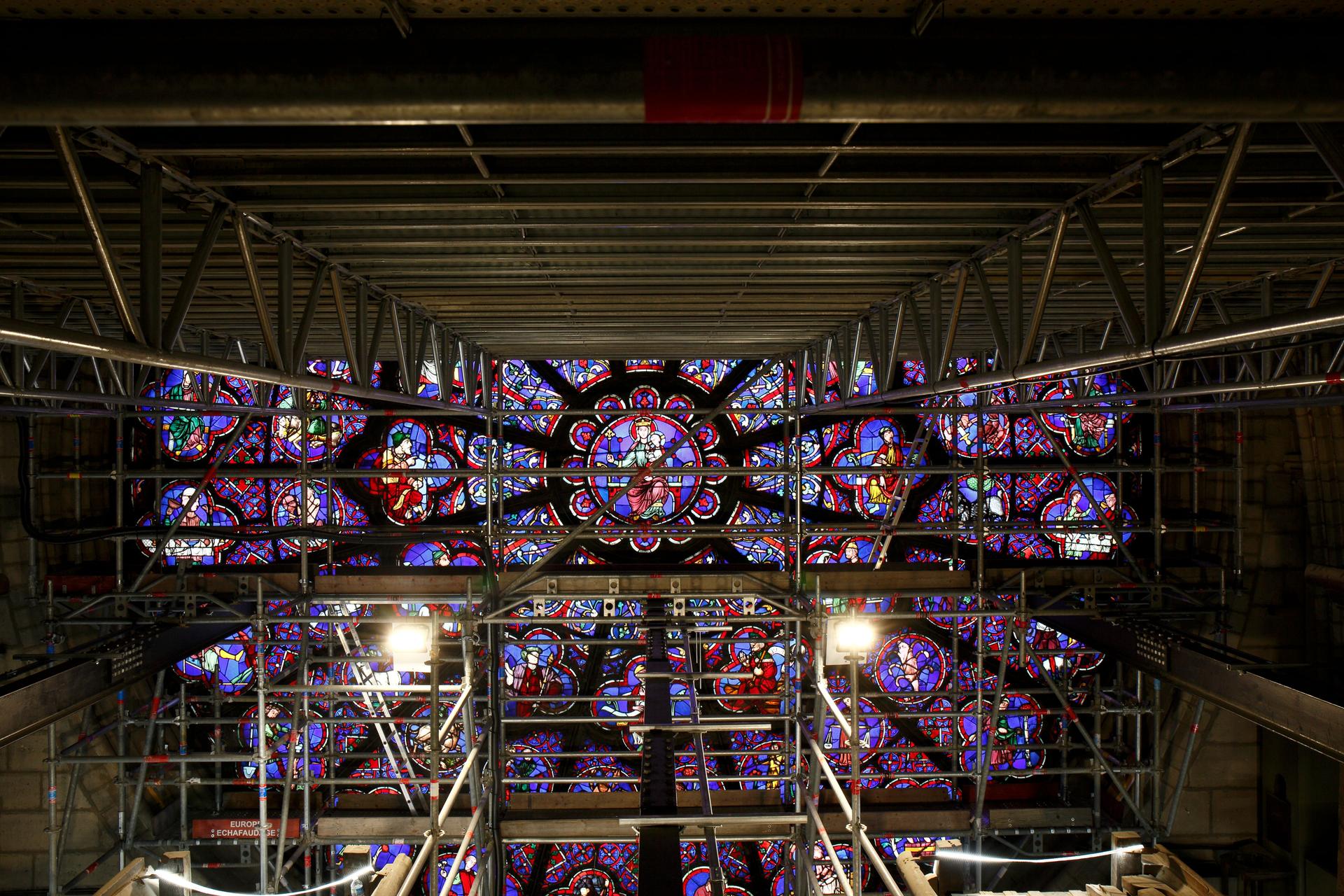
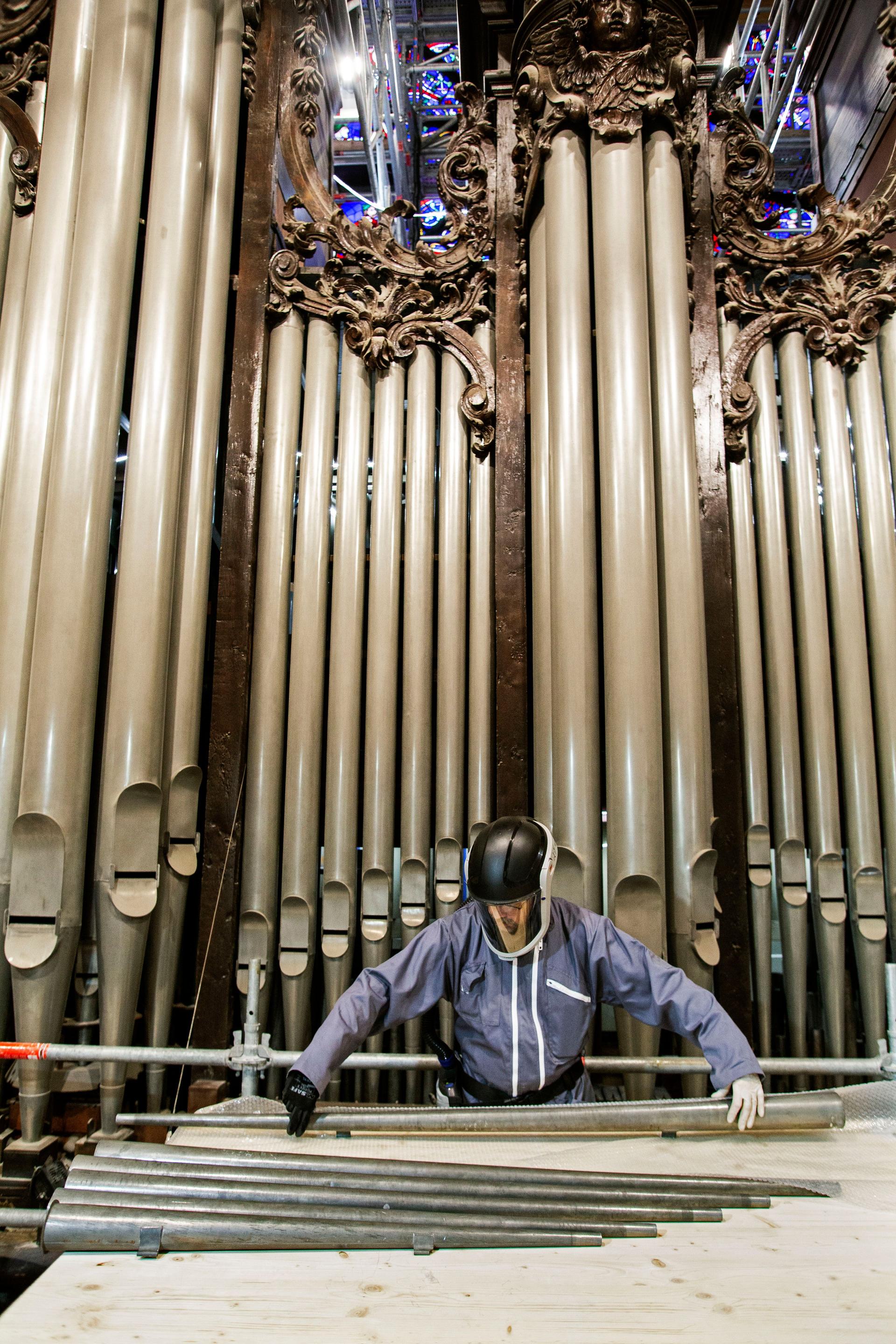
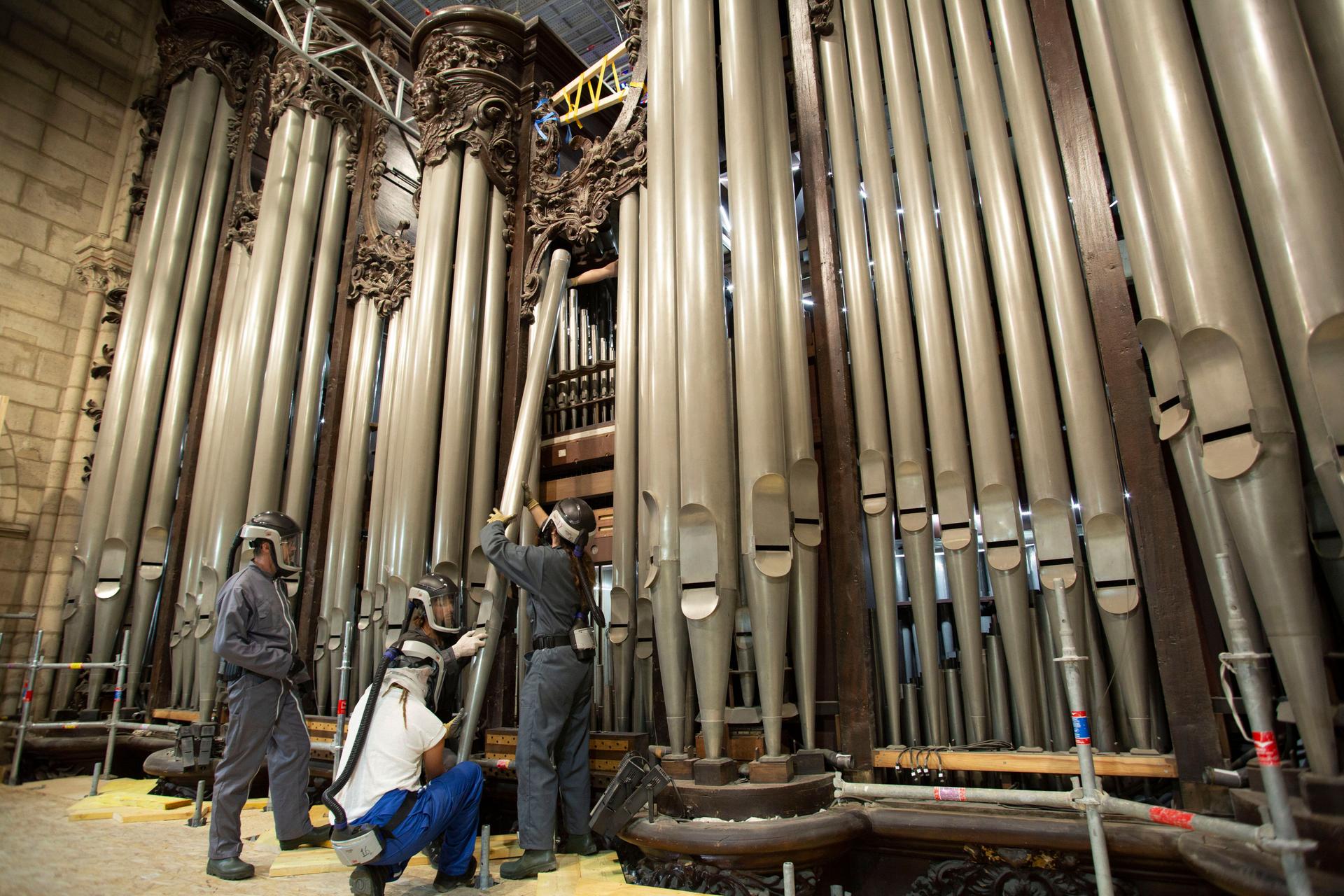
All the pipes of the organ had to be dismantled and sent to workshops for cleaning. The dismantling of the organ was a veritable project within a project: a scaffold was installed, surrounded by heat-welded tarpaulins forming a protective shell around the instrument. The organ workers themselves wore protective breathing masks while working.
Another feature: although it is not rare to dismantle the pipes of an organ, it is exceptional to dismantle them all, and even more so to clean all the machinery, the case and the console.
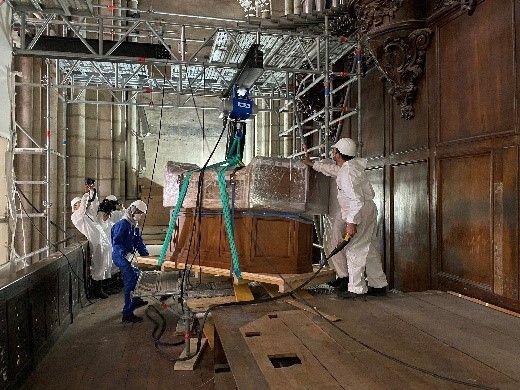
With an organologist as project manager and technical consultant, the three organ-building companies mobilized for the project labored for 5 months to dismantle all the pieces making up the gigantic instrument. On August 3 2020, the dismantling of the console, the element containing the keyboards and pedals used by the organist when playing, kickstarted an exceptional operation.
Pipes in exile
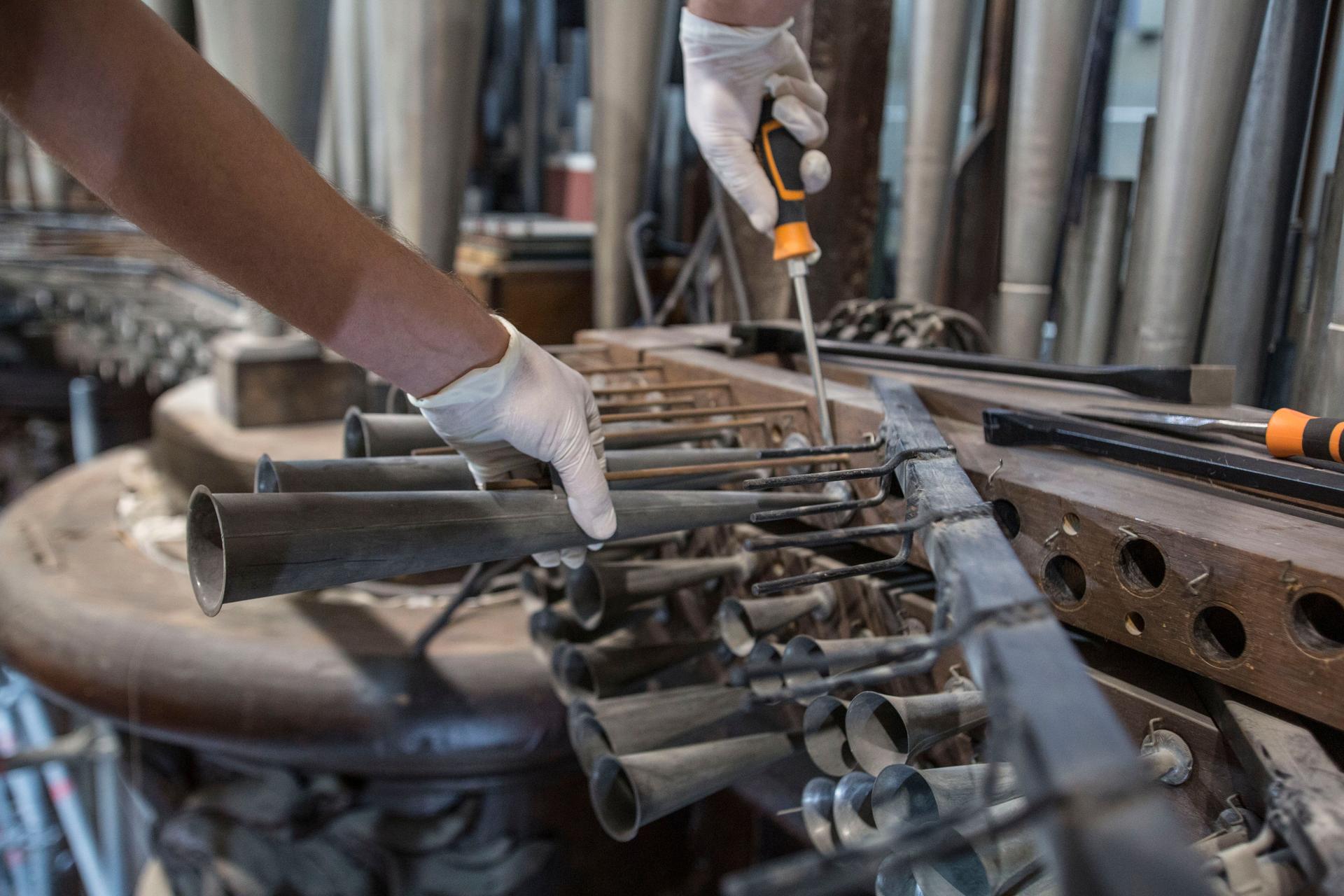
The first pipes to be dismantled were the chamade pipes, horizontal pipes projecting out like trumpets at the base of the organ. The organ builders then removed the facade pipes – except for the largest pipes, which could not be moved – then the rest of the wooden and metal pipes and finally the technical part, notably the transmission systems for notes and the set of 19 wind chests that distribute the compressed air that makes the pipes ring out.
The metal pipes presented a very great variety of sizes: the shortest ones being only a few centimeters long! They all share a single characteristic: the thinness of the metal leaf comprising them. They are therefore fragile and must be handled with infinite care.
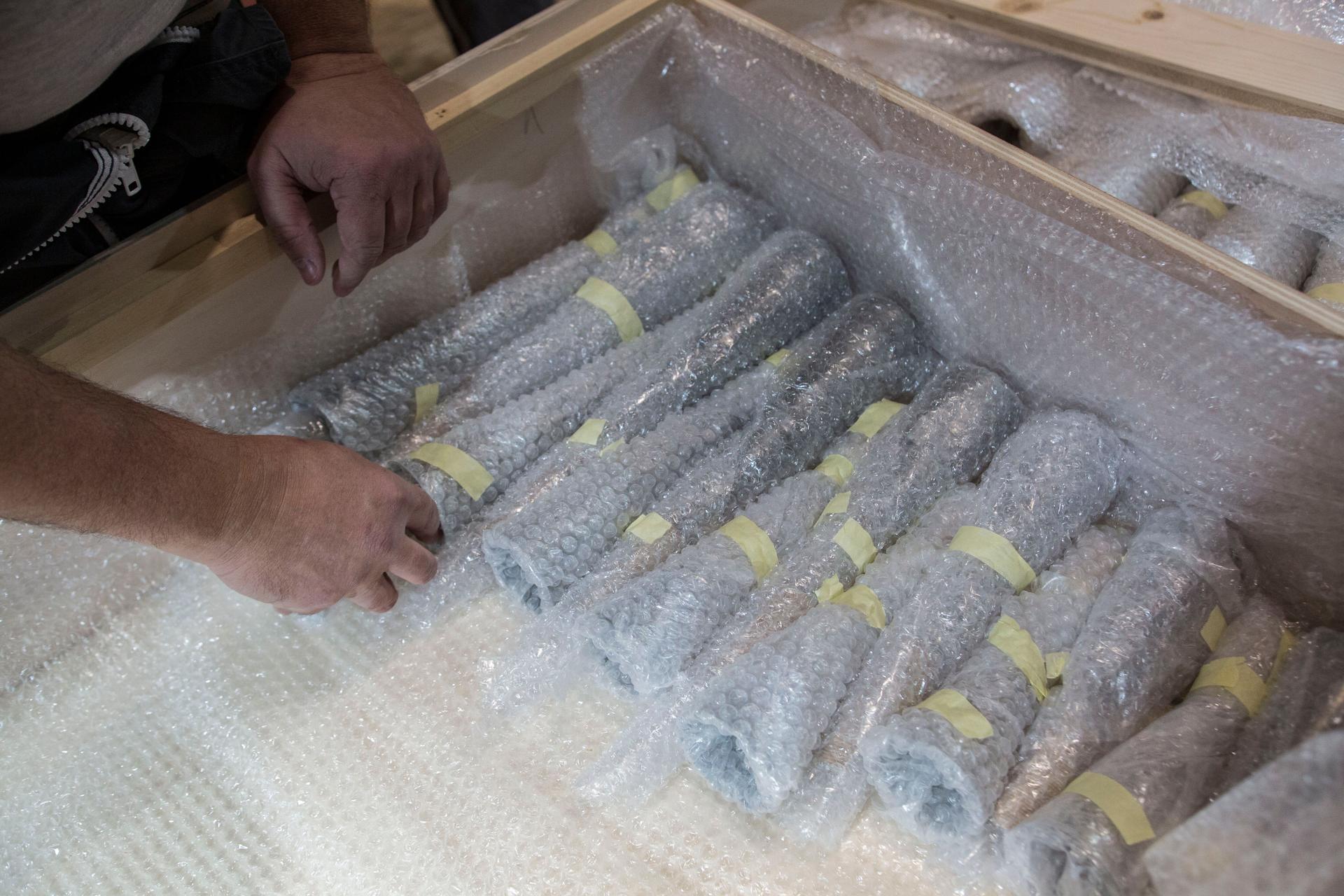
Meticulously packaged in cases to fit its size, each pipe then left the cathedral to be stored in a warehouse in the Paris region before being moved to an organ builder's workshop to be restored.
Being too fragile to be evacuated, the large facade pipes, along with the bellows and the organ case, were left in place to be restored on site.
Following the swiftly conducted dismantling, the restoration of the organ could begin: this would restore the full power of its breath to the venerable instrument
Main visual © David Bordes / RNDP
Taking down the great organ