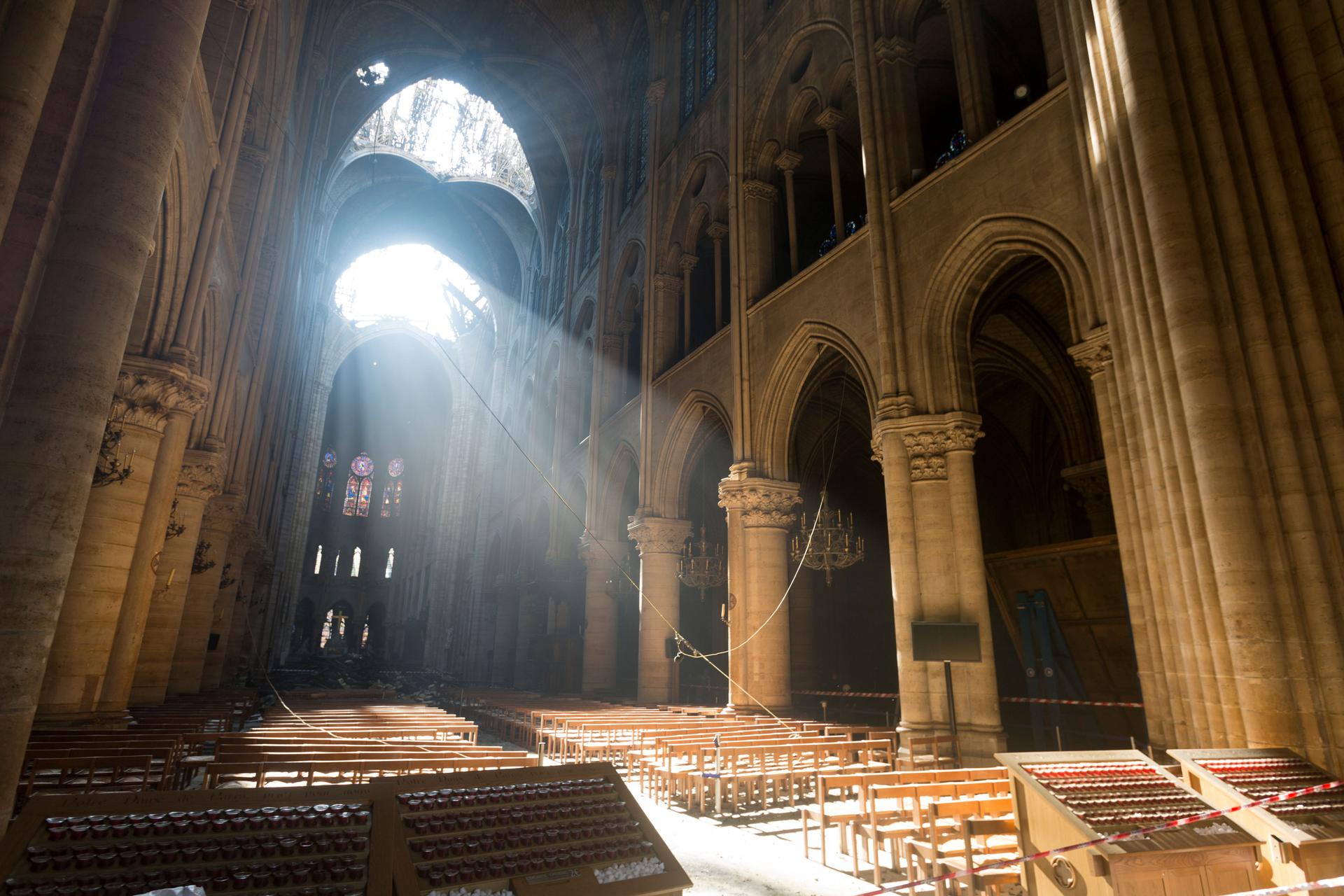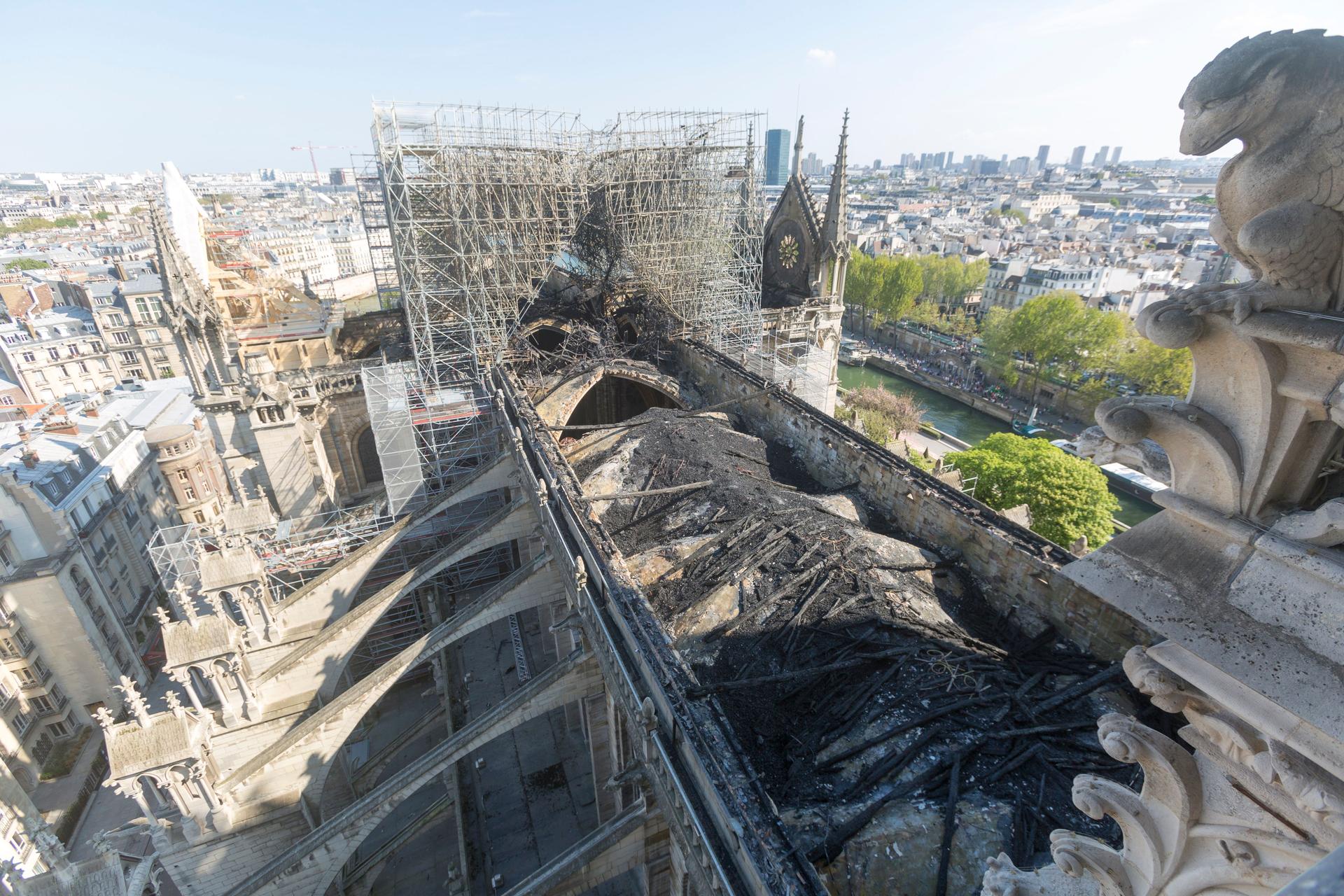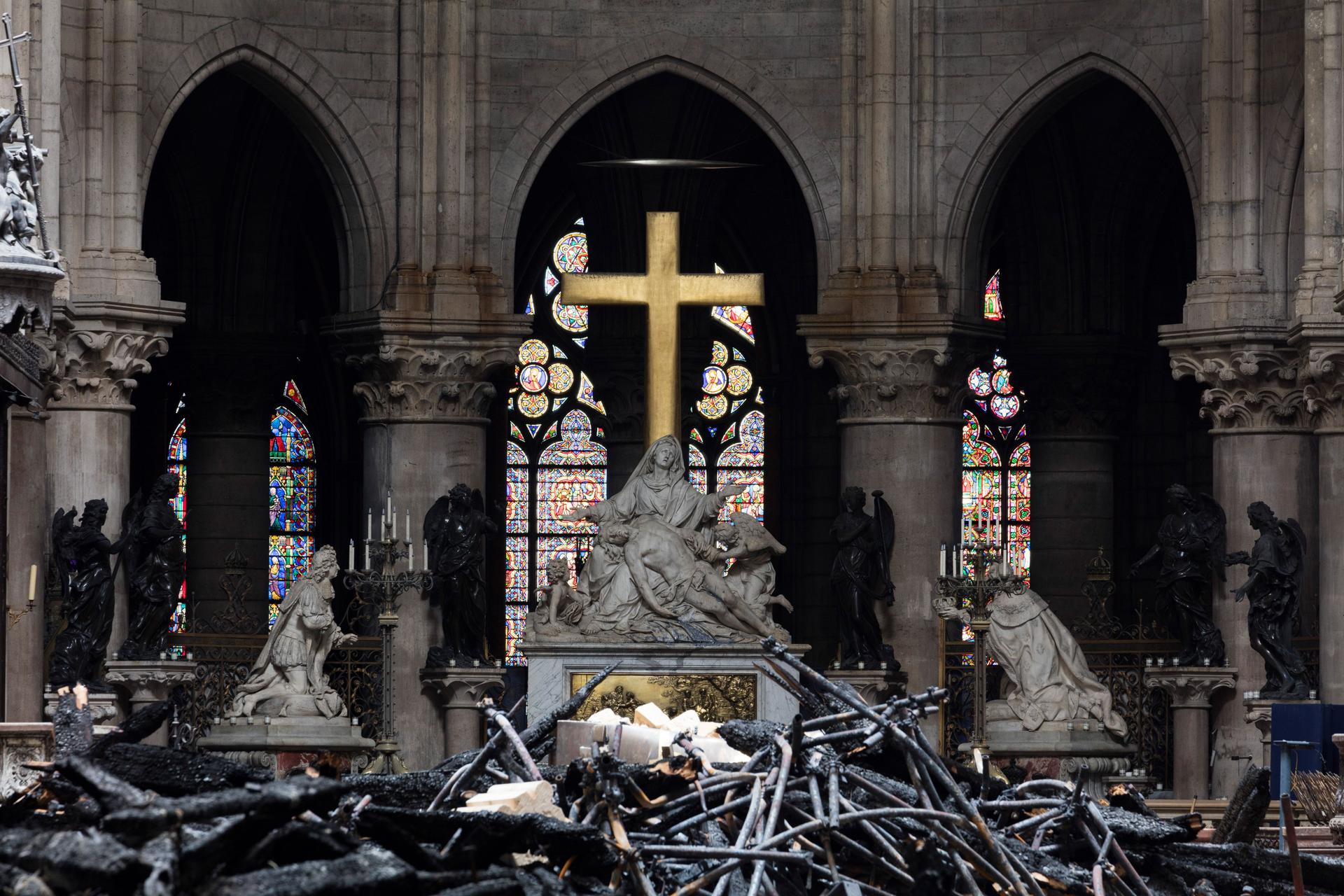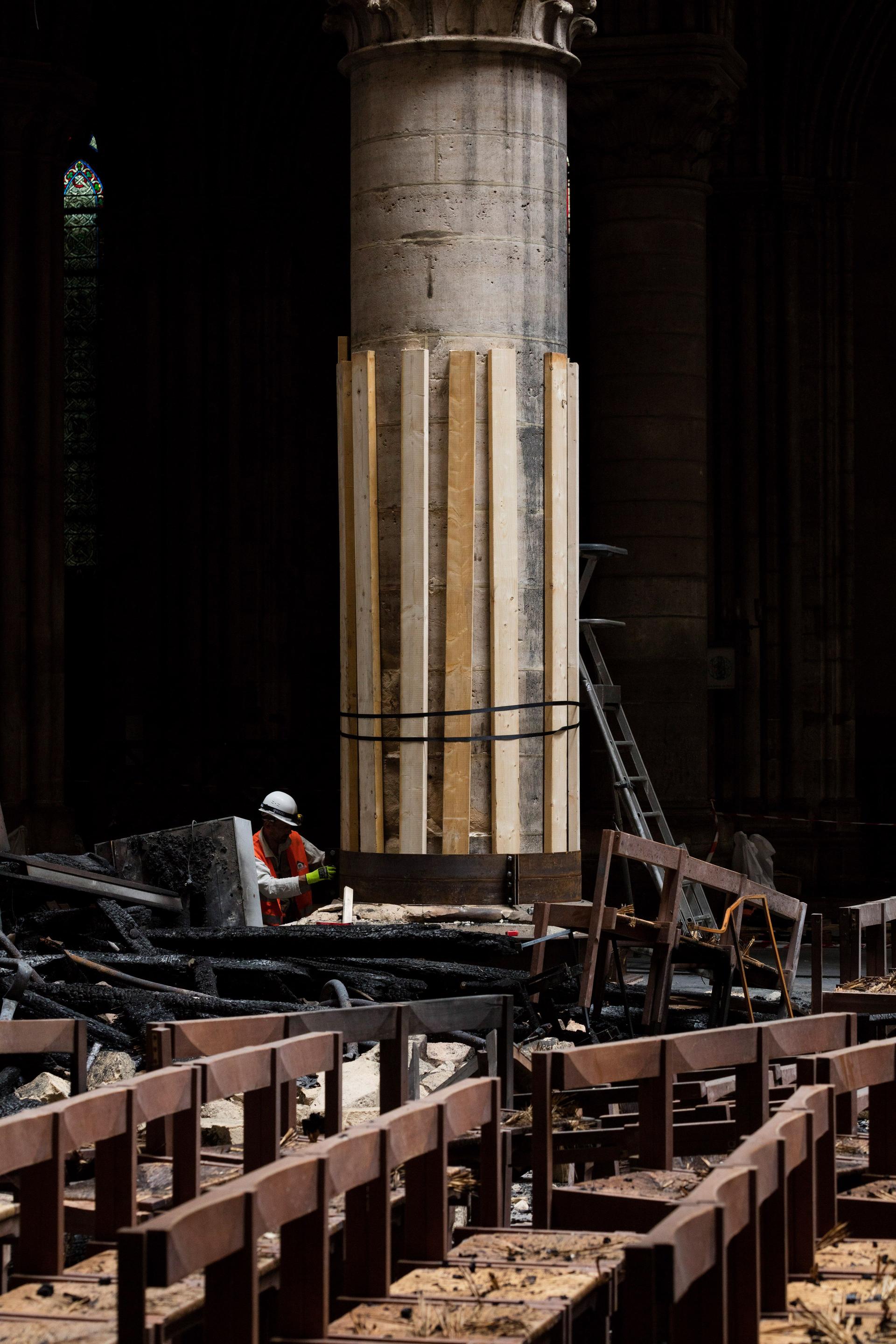

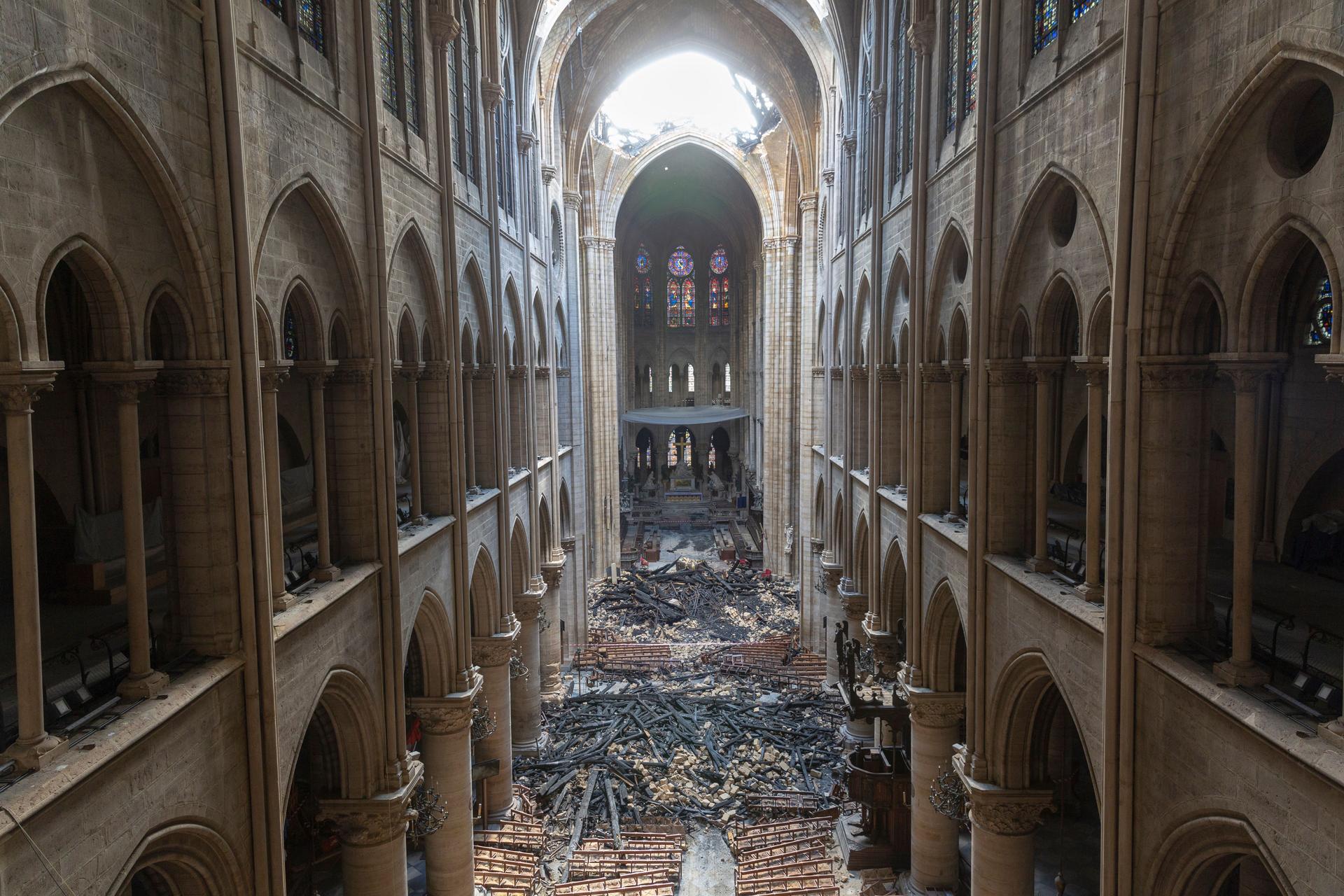
The day after the fire that affected it before the eyes of the world, Notre Dame de Paris was still standing, like a symbol of resilience. However, the cathedral had not been definitively saved: having suffered very serious damage and in danger of collapsing in places, it was a sorry sight. The prefect of police for Paris promulgated a decree of peril strictly regulating the conditions for accessing the perimeter of the damaged edifice. Before undertaking any restoration, it was imperative to secure the edifice.
The scale of the damage
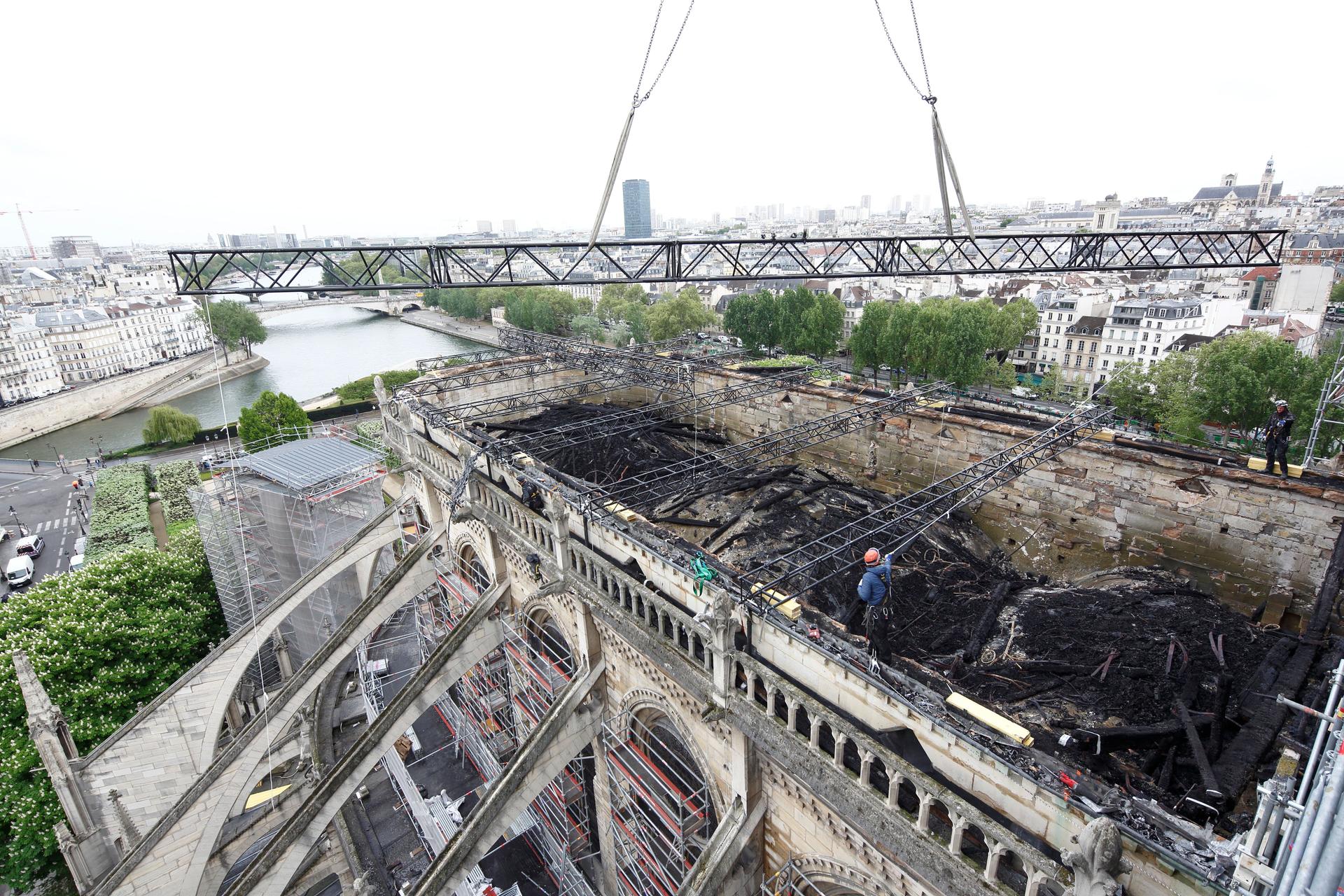
The wooden framework, notably comprising the forest erected in the early 13th century, and the roofing had disappeared in the fire. The fall of the oak spire constructed in the 19th century by architect Viollet-le-Duc and the Bellu company led to the destruction of a part of the vaults. The burning wood on the floor of the nave and the crossing destroyed the floors and spread dust throughout the interior of the cathedral. The gable of the North transept and certain statues were in danger of falling. The coped walls, whose upper masonry supported the weight of the framework, suffered greatly in the flames. The water projected by the firefighters saturated the masonry of the vaults. The scaffolding destined to support the restoration project for the spire, which was ongoing at the time of the fire, resisted the collapse of the spire and the flames but, partly molten and rendered fragile, the scaffolding was in an intensely distressing state.
On the morning of April 16, the chief architect for historic monuments and project manager, Philippe Villeneuve, registered the damage and established a preliminary diagnostic of the building and an inventory of securing work. The most urgent operations were engaged under the DRAC as contracting authority and with the help of the companies already present for the ongoing project.
Securing the gables
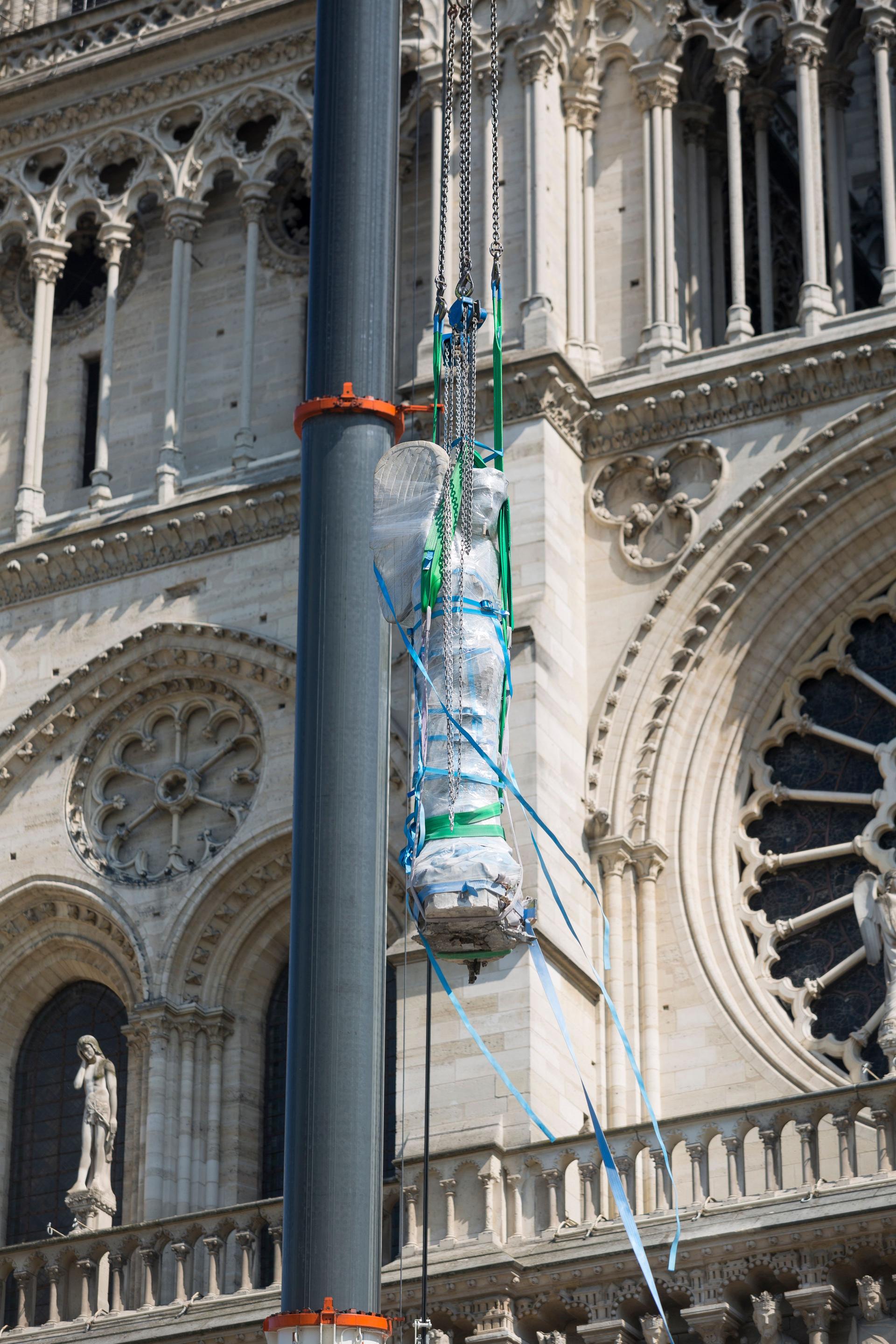
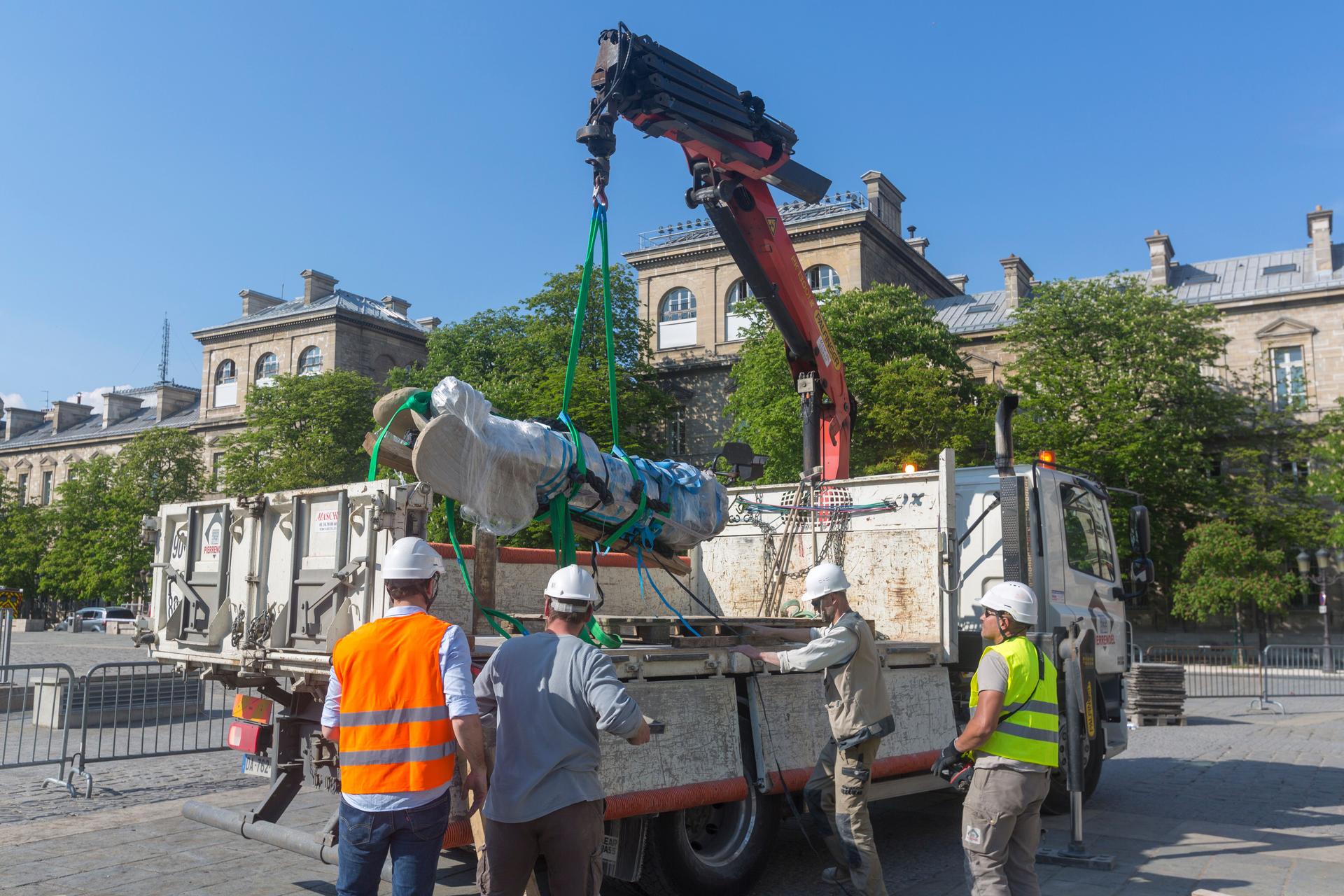
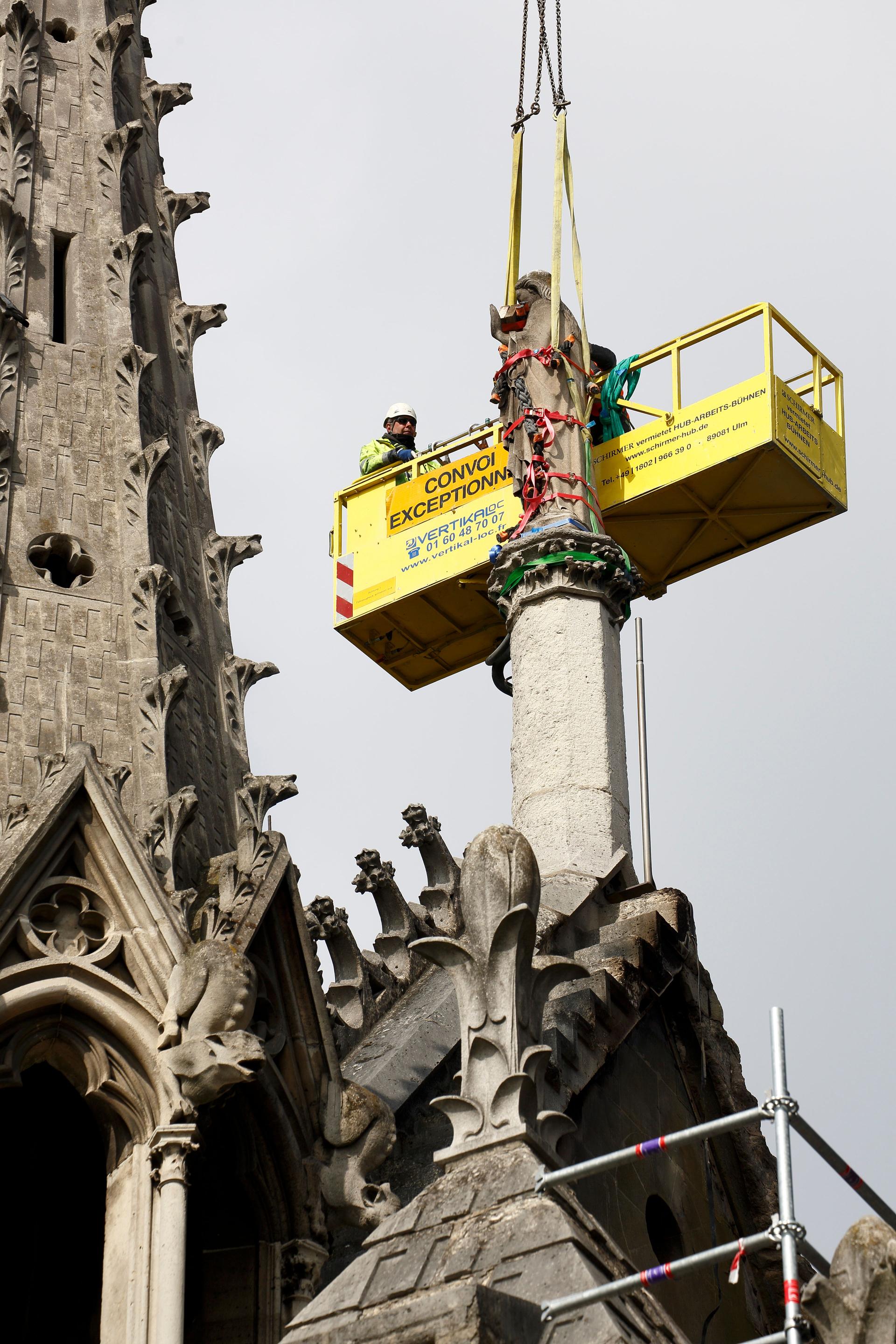
Situated at the heart of the inferno, the three gables bounding the framework (West facade, North and South facades of the transept) had become very fragile. Carpenters and stonecutters started work as early as April 17: they sawed and took down the 7 statues surmounting them, including the Angel with a trumpet on the West gable, then stabilized the masonry using a complex system of props positioned on both sides, combined with nets destined to avert any possible falling stones.
Protecting the cathedral from water
With a storm looming in the Parisian sky, protecting a cathedral deprived of a roof from the weather was an obvious priority in order avoid further damage to the state of Notre Dame.
At very short notice, a structure consisting of metal girders was installed on the coped walls at the nave and choir with the help of cranes, provided with a provisional wooden floor and covered with tarpaulins. This deployment on April 19 protected the cathedral temporarily from water.
Instruments in the cathedral
Naked-eye diagnostics were insufficient to ascertain the true state of the edifice. No one knew how stable the spire scaffolding was or the capacity of the surviving vaults for resistance. To anticipate all risk of collapsing, it was thus decided to place 40 sensors connected to audible alarms throughout the cathedral in order to monitor any movement of the monument, particularly in the vaults and scaffolding. Throughout the securing phase, these devices monitored the cathedral in real time, down to the nearest millimeter.
Public measures – Establishing an organization for securing and restoring the cathedral
On the evening of the fire, the President of the French Republic declared from the square before Notre Dame de Paris "We shall rebuild the cathedral". In the following week the government set about drafting a law instituting a national call for donations to collect the funds required to finance the works, and providing for the creation of a dedicated public establishment in charge of securing and restoring the cathedral.
On April 17 2019, the President appointed a special representative to assume responsibility for reconstructing the cathedral, military General Jean-Louis Georgelin, and fixed the goal of reopening in a period of five years, i.e. in 2024. The public establishment was set up in record time and set to work on December 1 2019, taking over from the DRAC as contracting authority for all operations contributing to the preserving and restoring the cathedral.
Main visual ©C2RMF Alexis Komenda