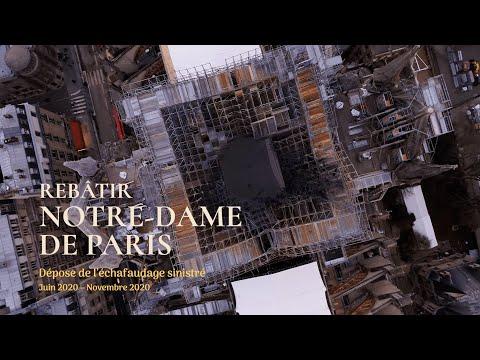


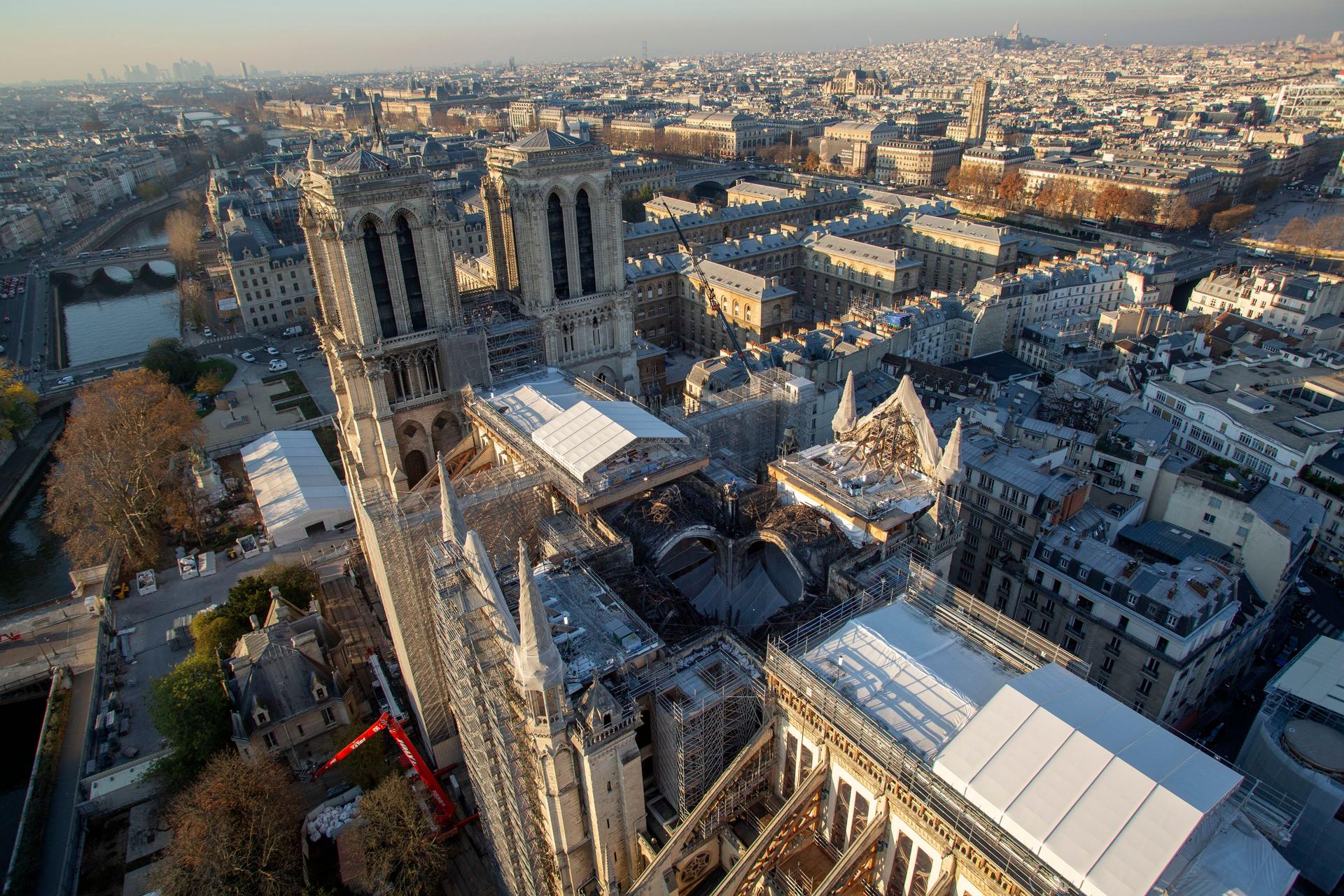
The spire of Notre Dame de Paris was being restored at the time of the fire. A large external self-supporting scaffolding was being assembled.
The sword of Damocles
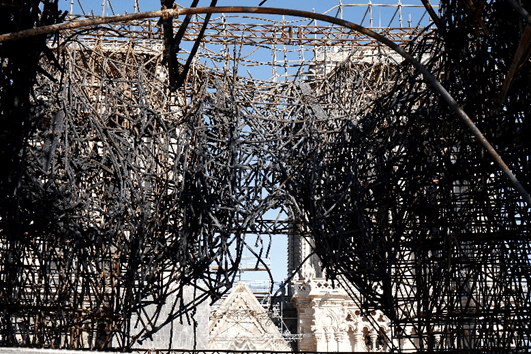
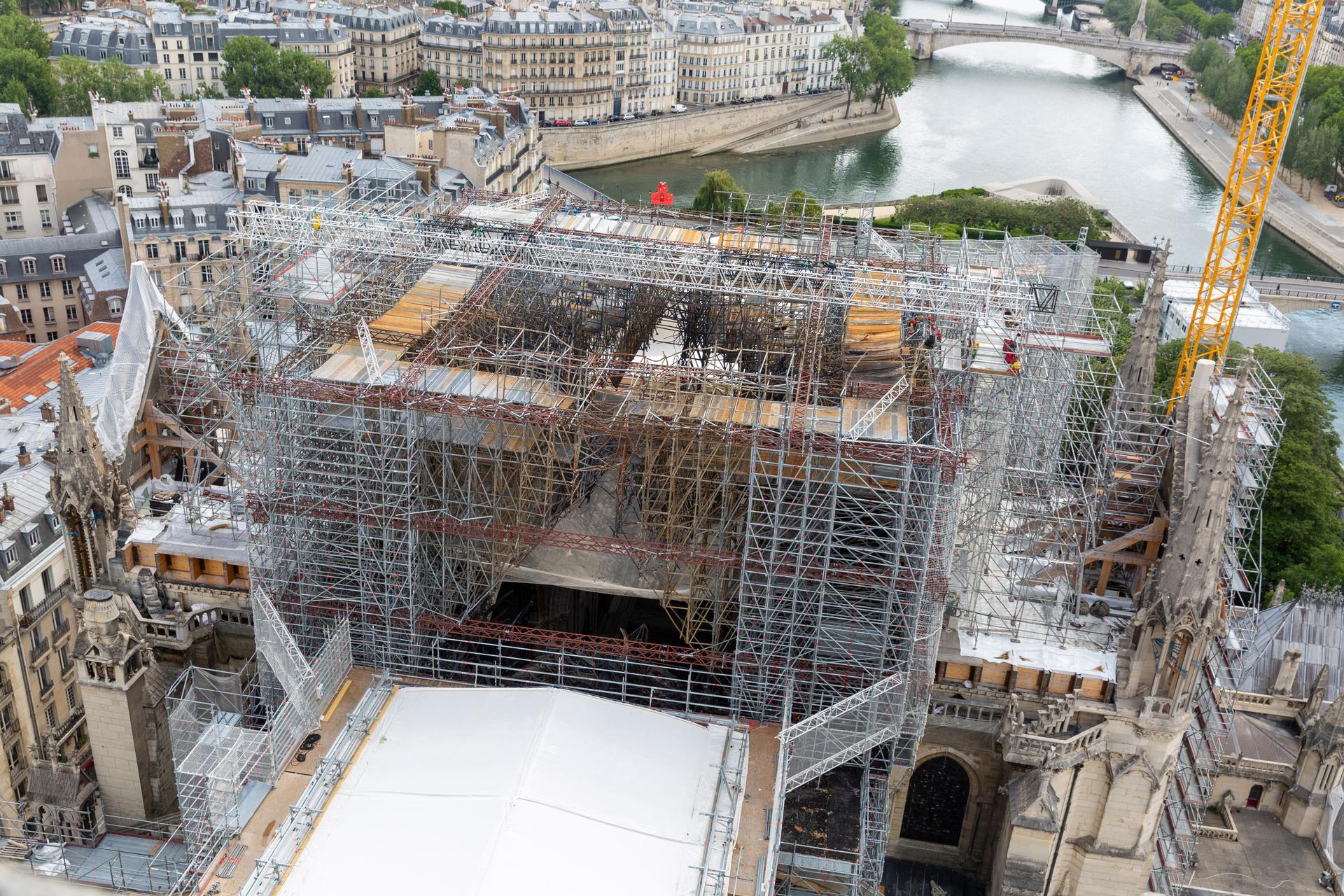
This steel monster resisted the fall of the spire, but some of its parts located nearest to the inferno were deformed and welded together by the flames. How much longer would it hold? It represented innumerable dangers for the whole cathedral: were it to collapse, it would take the whole crossing with it in the clutch of its metal claws.
So the cathedral could not be secured as long as the damaged scaffolding was hanging over it. Its dismantlement was a priority for the skilled workers, but it had to be prepared meticulously and with great caution.
Consolidating in order to dismantle
To avoid destabilizing the structure while dismantling it, it first had to be reinforced. Metal girders were used to frame the quadrilateral on three successive levels in order to consolidate the scaffolding and secure its four corners. Another scaffolding was constructed on each side. This provided solid support points enabling the damaged structure to be dismantled from above.
40,000 tubes
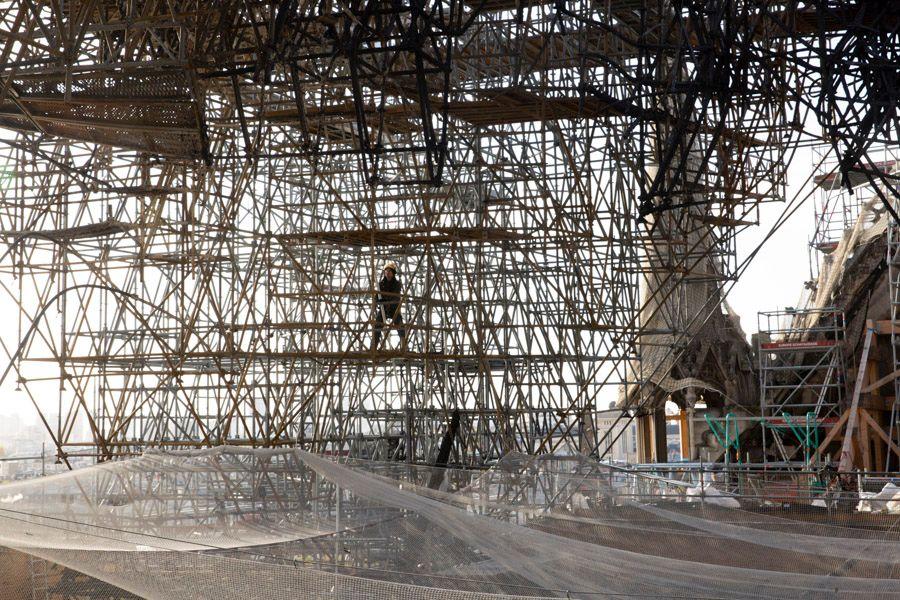
Interrupted by the first lockdown in March 2020, the Notre Dame project was one of the first in France to resume work. The dismantling of the damaged scaffolding could thus commence in June 2020. At a height of more than 40 meters, the task was colossal: 40,000 pieces had to be removed, representing 200 tons of steel, 75 of which were suspended in space, tangled up with the remains of the framework and metal.
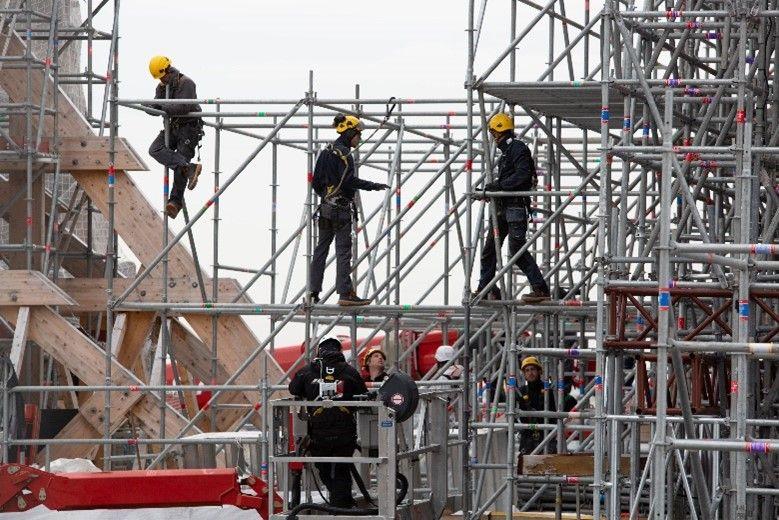
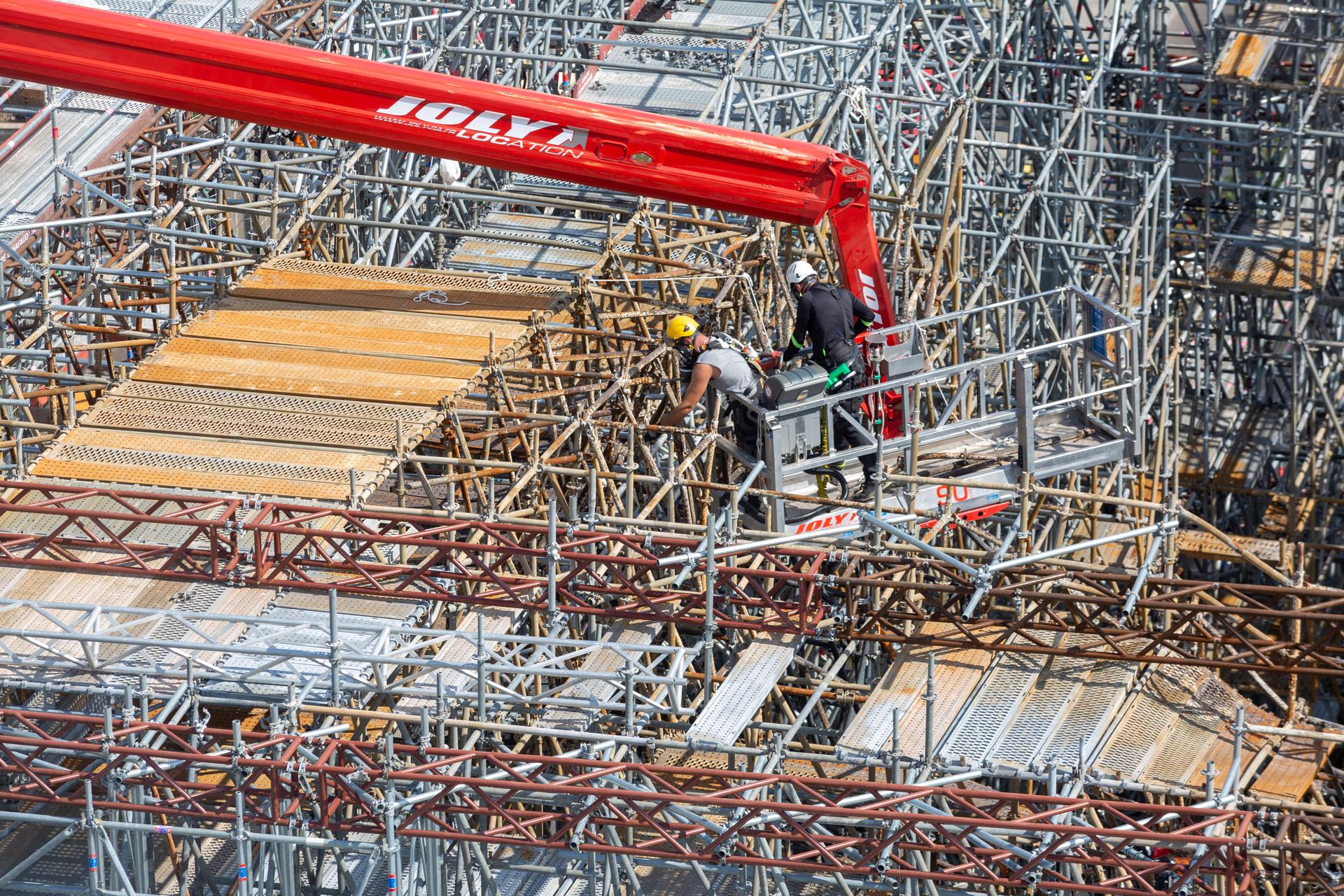
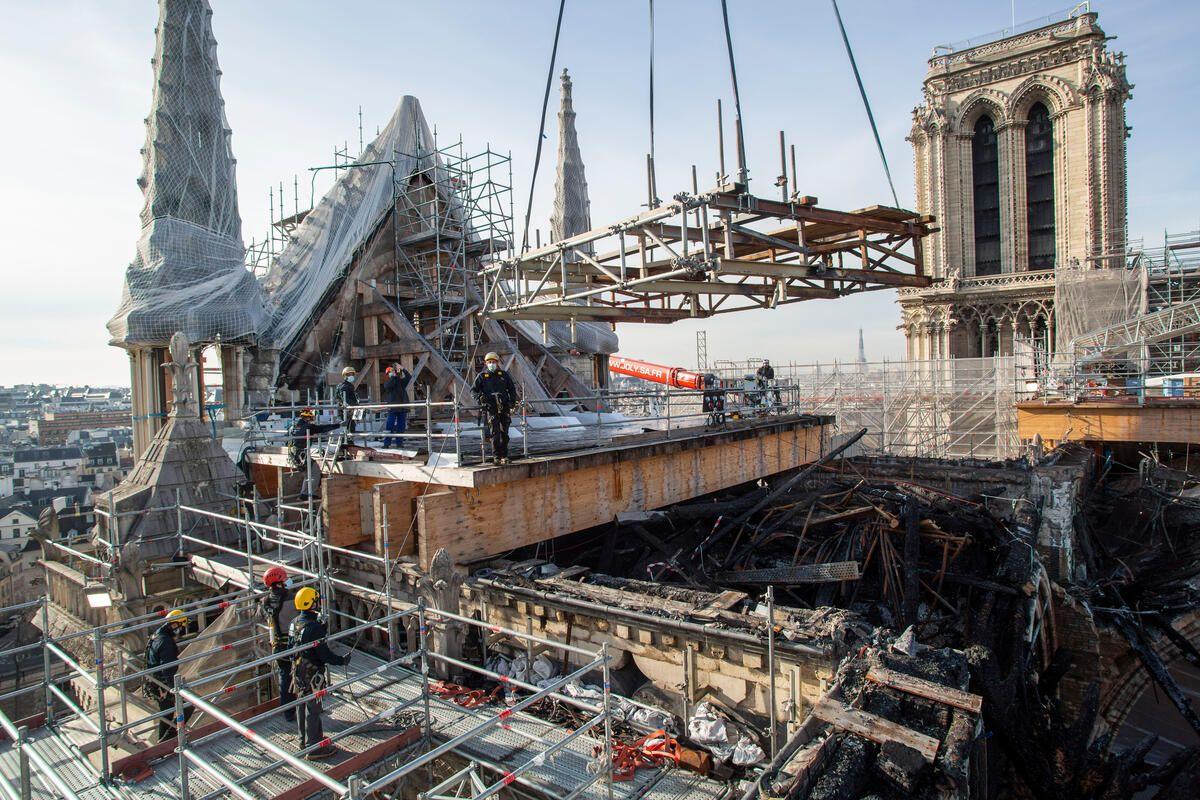
This mass was the first to be dismantled, thanks to the collaboration of scaffolders, rope workers, crane operators and basket operators. Guided by the scaffolders, the rope workers suspended from the higher girders descended into the heart of the scaffolding and used saber saw to cut the tubes that had been welded together. They used ropes to attach the metal elements to be cut to their own harnesses so that once cut, the tubes could be placed in a container held in place by the crane. These pieces were then evacuated with the help of the great tower crane.
Working from baskets, the scaffolders could then disassemble one by one the pieces making up the scaffolding. They worked from the bottom up and from the inside of the structure toward the outside because it had to be balanced progressively in order not to destabilize the structure. At nightfall, the ropeworkers took over, evacuating the vestiges of the framework that had fallen on the vaults.
The final phase was also delicate: the four legs of the structure had to be disconnected. Two teams of scaffolders worked in two separate 8-hour shifts from 6.00 am to 11.00 pm in order to make the most of the favorable weather conditions.
On November 24 2020, after a year and half of anxiety, the damaged scaffolding, the most visible testament to the fire, was entirely dismantled and the dangers it represented for the cathedral were definitively eliminated. The completion of this operation then enabled the securing of the transept crossing to begin.
Main visual ©Patrick Zachmann – Magnum Photos / RNDP


Dismantling the damaged scaffolding