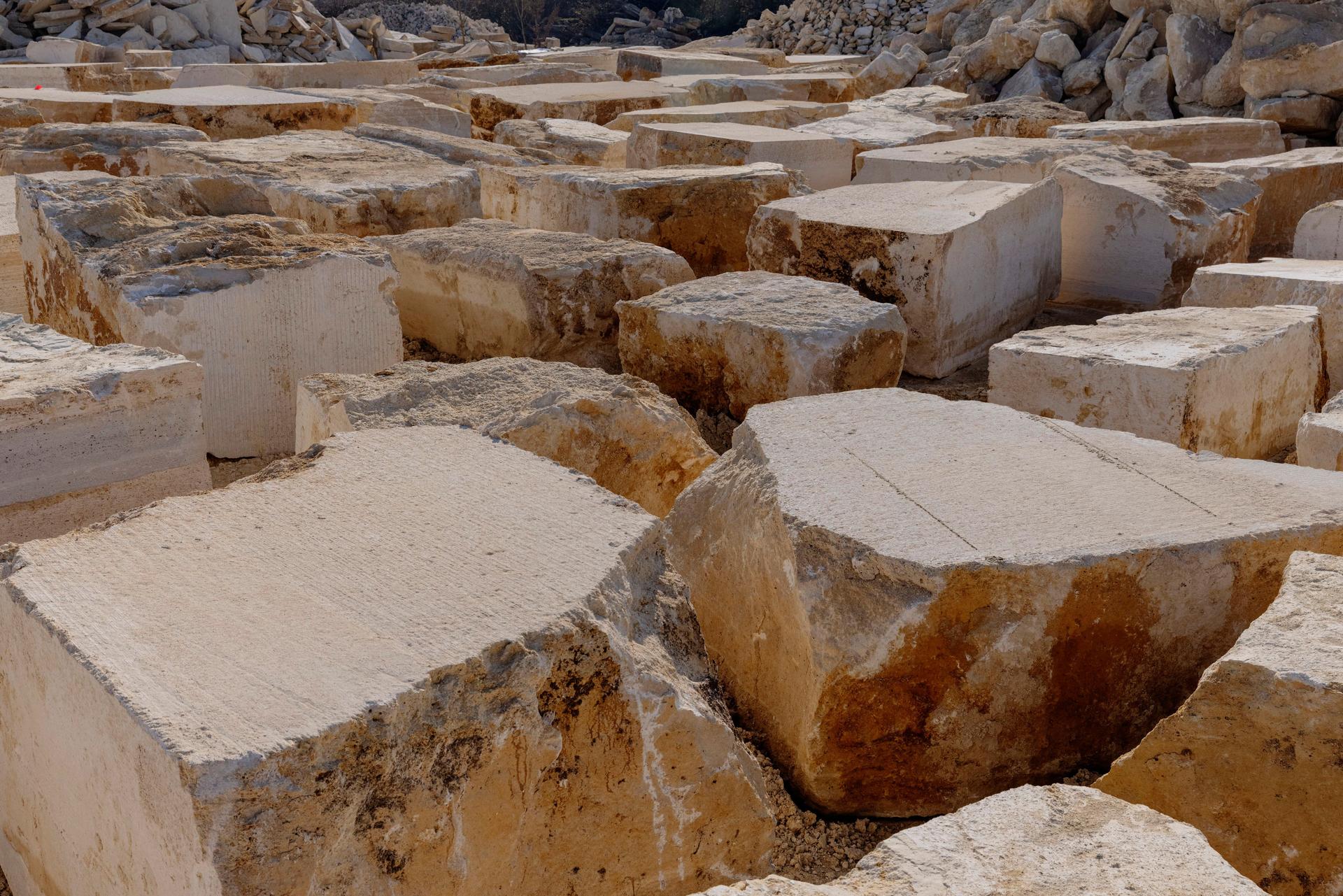
The stones that make up the cathedral have often been replaced since its construction, while respecting in so far as possible the properties of the original stones, limestone from the "white Parisian banks", but coming from quarries increasingly far removed from the capital.
To reconstruct the collapsed vaults, replace coped wall stones damaged by the heat from the fire, completely resculpt some of the statues at the gables and the tracery of the bays, 1,300 m3 of stones had to be found.
In search of stones
Two studies were conducted in order to provide stones. The Historical Monuments Research Laboratory (LRMH) first analyzed the stones evacuated from the cathedral or still in place in order to define their characteristics.
Mandated by the public establishment, the Geological and Mining Research Bureau (BRGM) then identified the quarries likely to provide stones that would be compatible from an aesthetic and physical-chemical point of view with the original stones. This research program demonstrated that some quarries in the Lutetian geological basin, the historical source of supply for the cathedral's stone, were capable of providing all the stones required for the restoration project.
The La Croix-Huyart quarry situated at Bonneuil-en-Valois in the Oise department proved to be the only one capable of providing the type of hard stone required to reconstruct the arches of the collapsed vaults and to restore the coped walls. Contrary to standard practice, in order to ensure the supply, the public establishment chose to purchase the stones itself.
Eight other quarries located in the regions of Saint-Maximin (Oise) and Soissons (Aisne) would provide the softer stones to reconstruct the vaultings of the collapsed or damaged vaults and for restoration work on interior stone.
The extraction
A quarry, whether underground or open-air, takes the form of a stack of mineral layers known as "banks". To extract the required stones, the bank in which the stone is found must first be cleared by removing the layers that cover it.
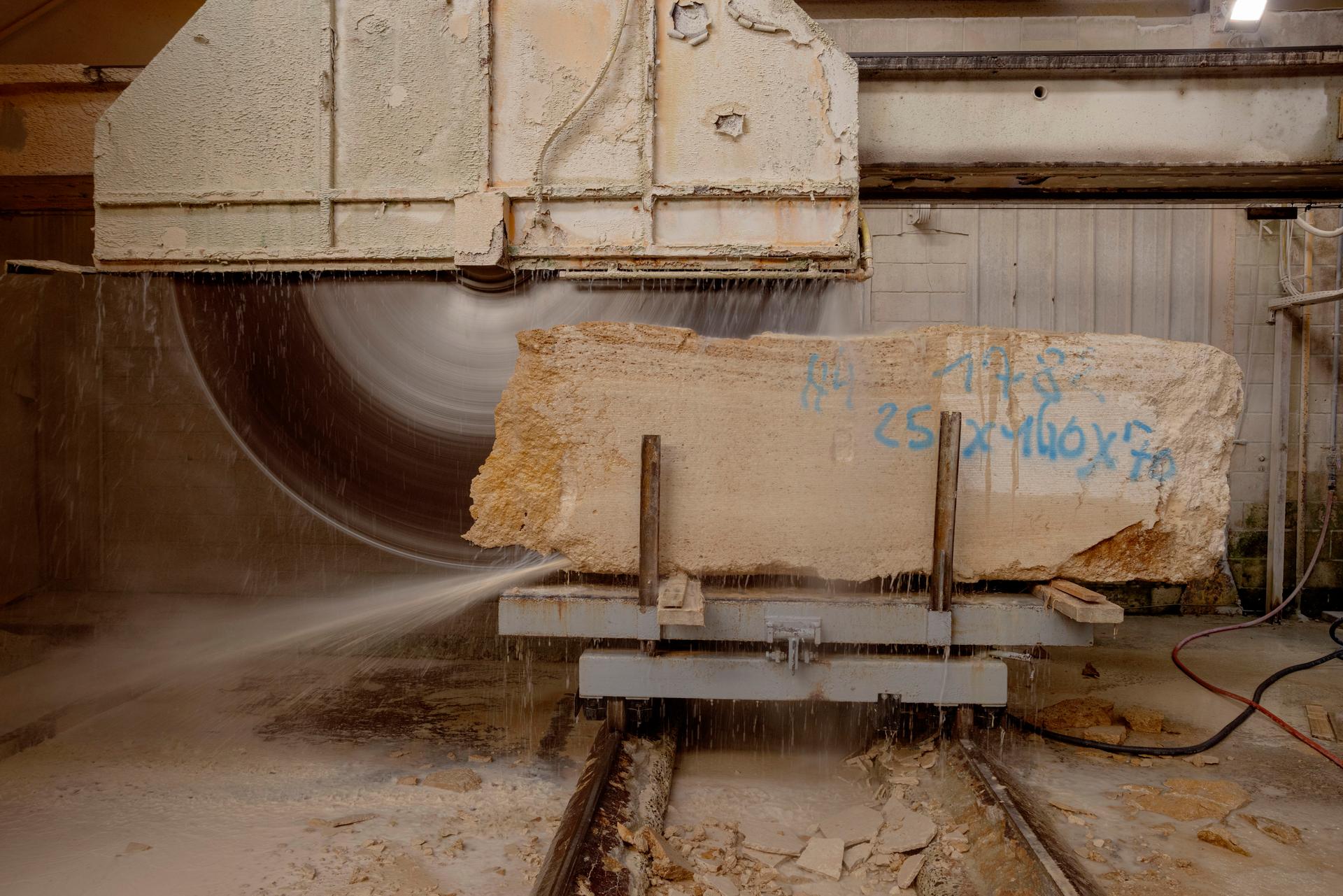
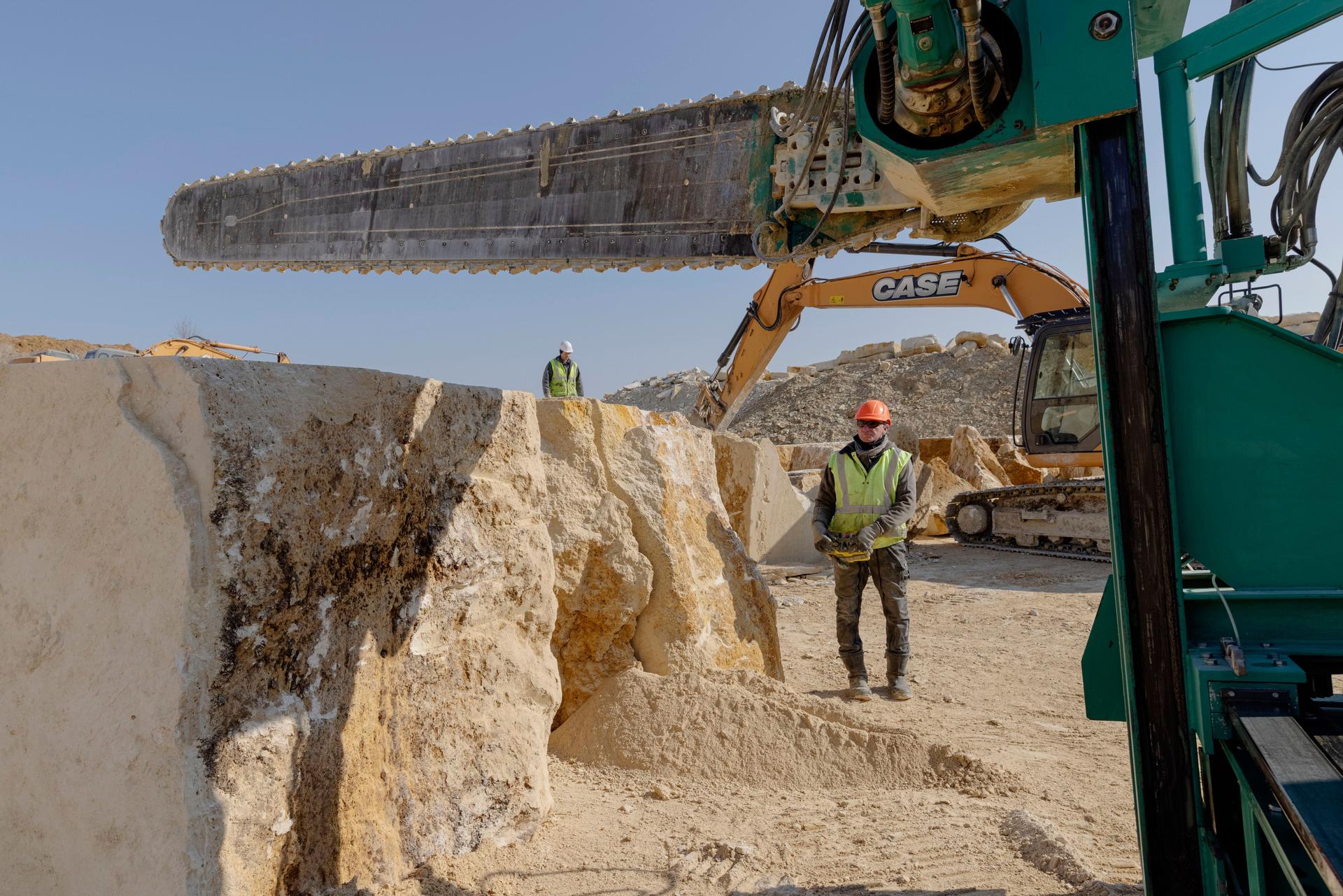
The quarry worker then comes with a cutter, a sort of large chainsaw mounted on a mechanical arm measuring nearly 3.5 meters, cuts the block, then divides it perpendicularly along its natural fissures with a hydraulic shovel and, lastly, separates the two qualities, hard and semi-hard, before sending them all to the factory where the blocks are "washed" i.e. cut into smaller thicknesses in order to identify any potential fissures that may have remained invisible.
Because Notre Dame required the highest quality, at the request of the public establishment the BRGM conducted quality control throughout the extraction of the stones coming from the La Croix-Huyart quarry and during the first phase of the transformation of the stones in the factory.
The blocks with 6 cut faces are then brought to the workshop while those destined to replace figurative elements, keystones and statues are brought to the sculpture lodge installed on the square before the cathedral. The sculpting of these stones has already begun.
Main visual ©Patrick Zachmann – Magnum Photos