

After the reconstruction of the spire’s solid oak framework by the carpenters, this is where the roofers come in!
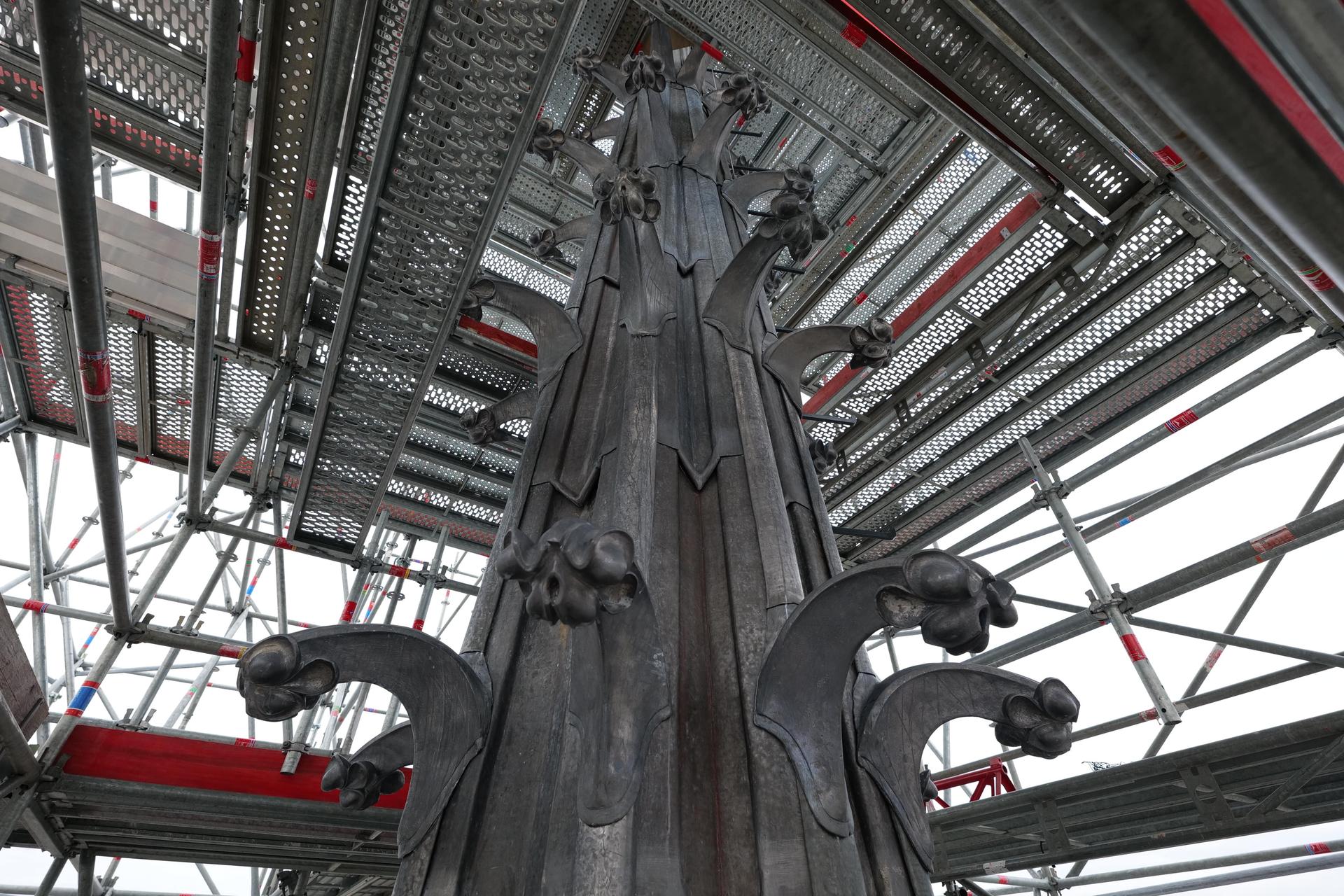
The wooden spire is covered with a thin layer of lead that protects it and ensures its durability. This covering also holds the many lead ornaments designed by Viollet le Duc that give it its unique gracefulness, including chimera, gargoyles, and hooks. Lead is used on the roofs of historic monuments featuring decoration or figures because of its malleability and durability.
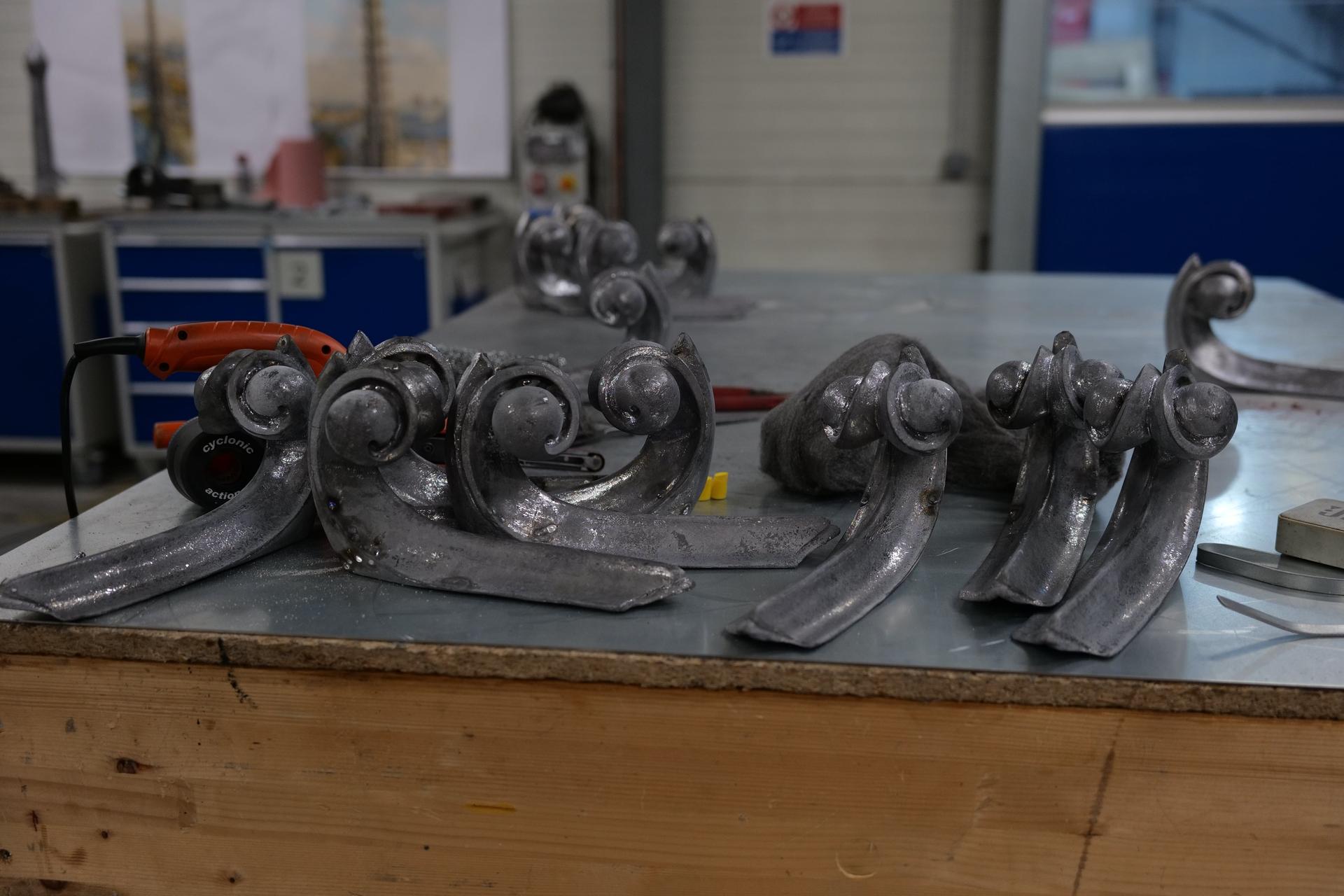
The roofers first prepared the lead in the workshop. In previous centuries, it was forged into shape on site, but carrying out this task in the workshop allows the craftsmen to work in optimal conditions with more space and without being exposed to the elements. This artistic endeavor requires highly specialized know-how and rare and valuable skills that take master and ornamental roofers around ten years to acquire.
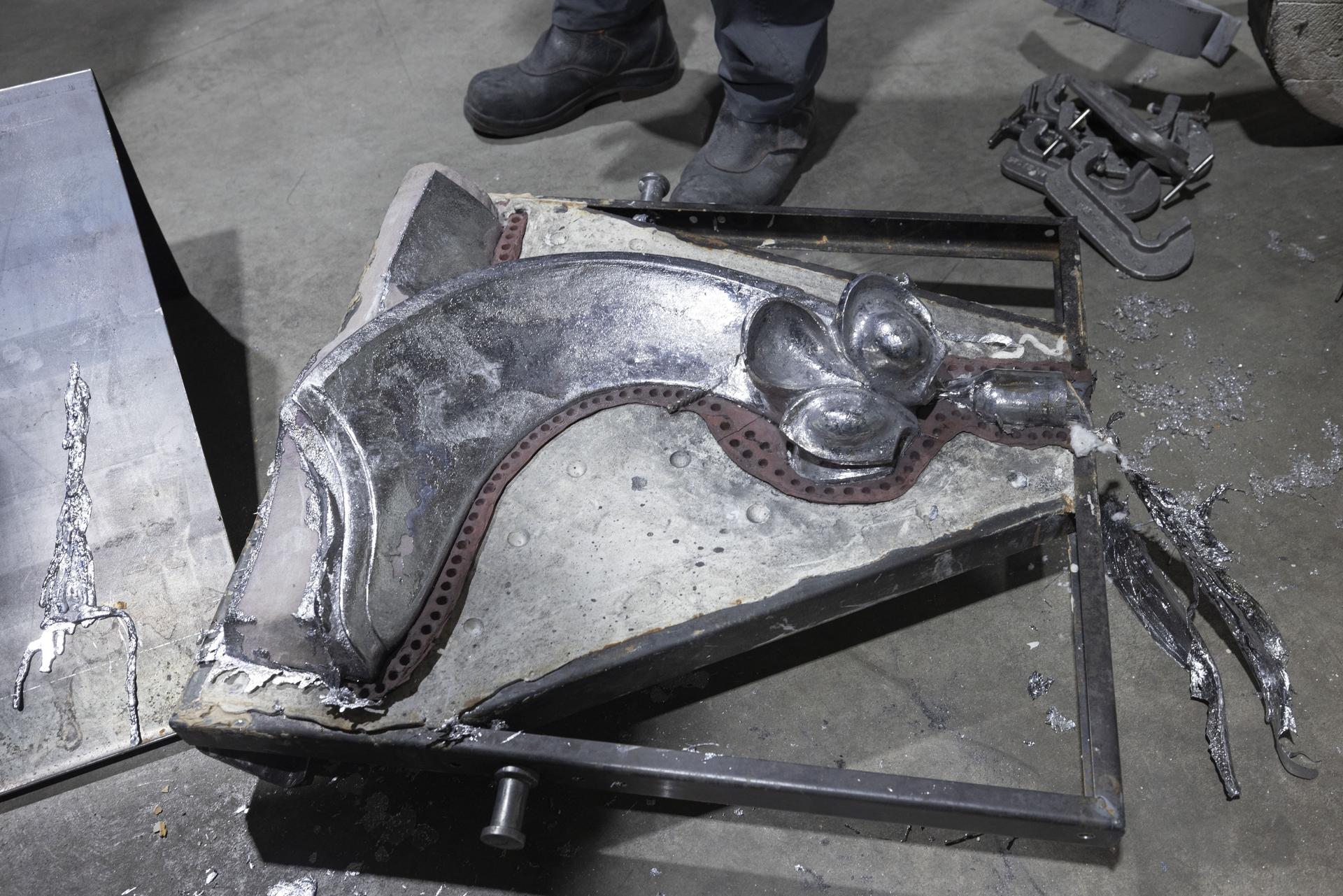
The ornaments are usually cast but may also be fashioned into shape by hand. The lead sheets are preformed using full-scale pine templates of the structural timbers they will cover. For the needle at the top of the spire, the template is approximately 30 meters high. The lead sheets for this section are chevron-shaped, i.e. triangular, because of its very specific geometry, which forms an eight-point star when laid out flat, and the unusually steep angle of its faces (nearly 85°).
The roofing company and master roofers are well experienced in the precautions needed to ensure the work goes smoothly.
After being cast and preshaped, the lead elements are carefully packaged before being transported to the site and lifted to the structural timbers by crane.
After the preparatory work in the workshop, the preshaped lead sheets and cast ornaments are ready to be fitted to the needle, which is the topmost part of the spire reaching nearly 30m high.
However, before fitting the lead sheets, the roofers cover the timber framework with dry oak boards called batten boards. They then lay a watertight membrane, composed of kraft paper with a polyethylene coating, over the batten boards to separate the dry oak from the lead sheets once the latter are laid on top.
The roofers then install the sheets by fixing them to the batten boards, working from the bottom of the needle upwards and ensuring a slight overlap to protect the structural timbers from the rain. As lead is very malleable, they can make any adjustments with a mallet and a bat.
To complete the operation, the cast lead ornaments that adorn the needle, called hooks, are fitted to their specially prepared metal fixings. There are nearly 200 hooks on the spire!
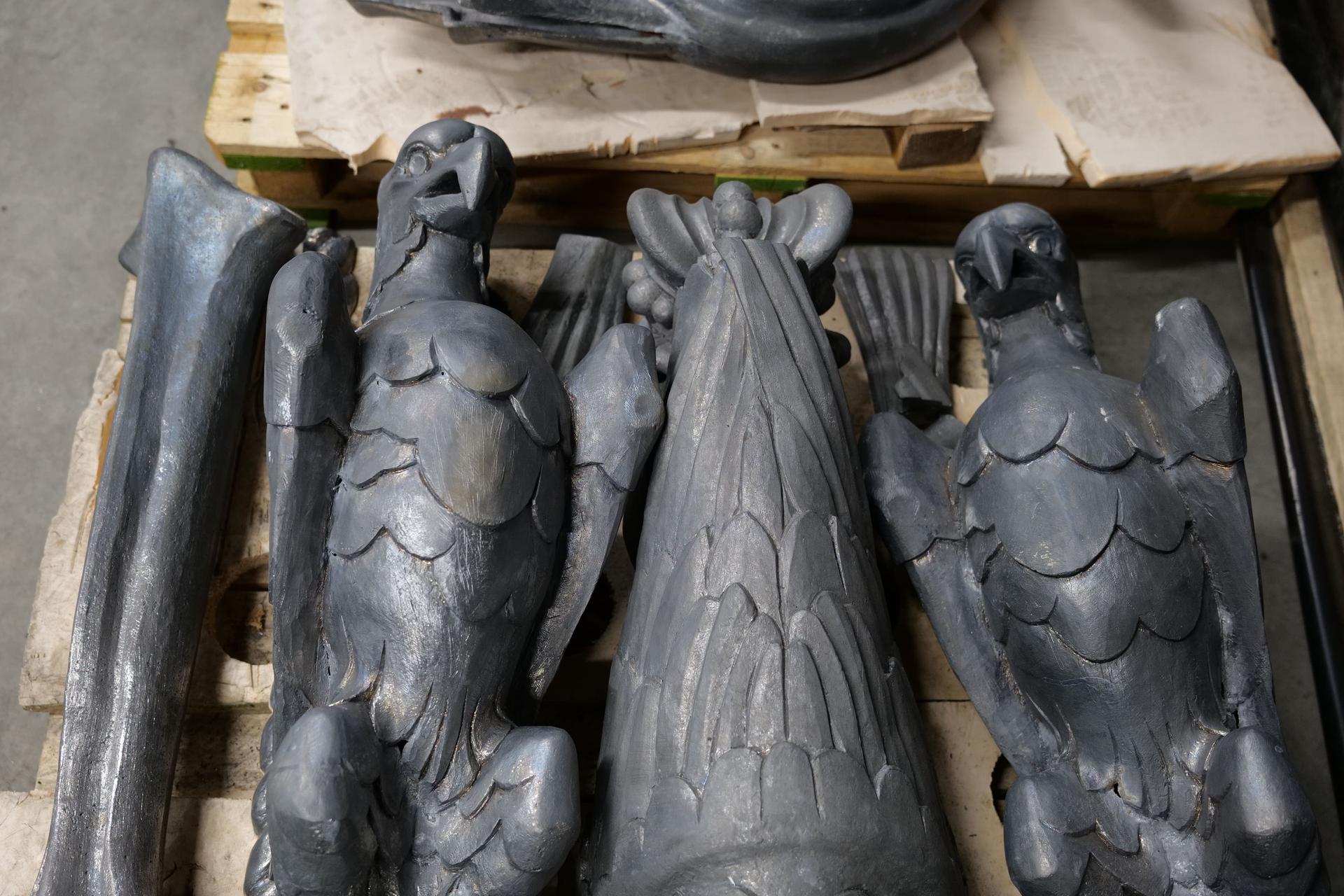
Lastly, the different cast lead figures are installed, such as the eagle owls at the top of the decorative pinnacles at the base of the needle.
Once covered, the needle of the spire will be ready to grace the skyline for centuries more to come!