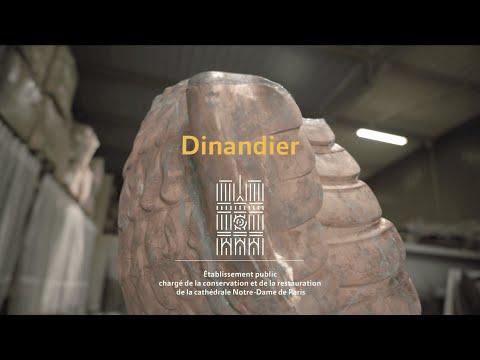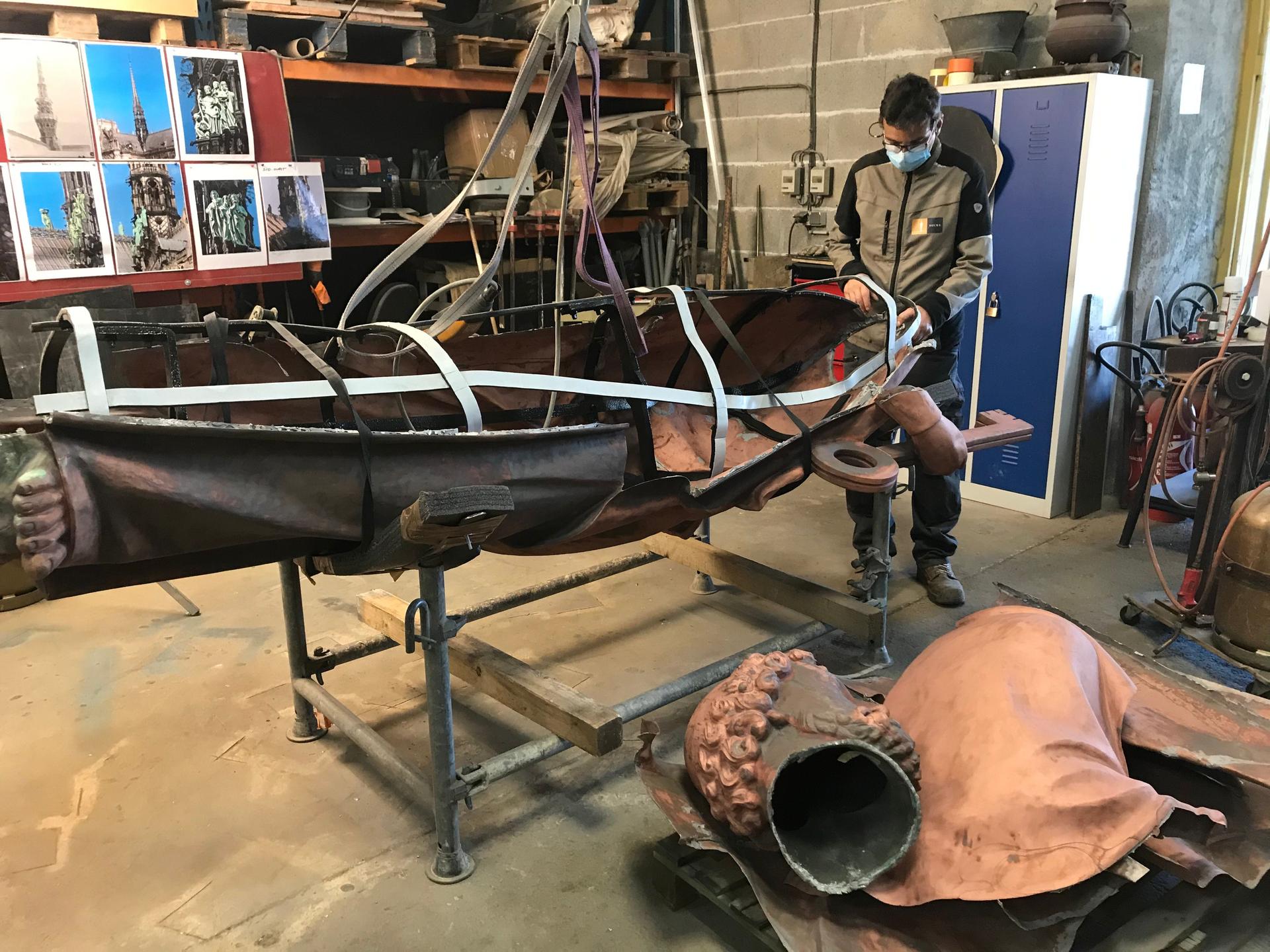

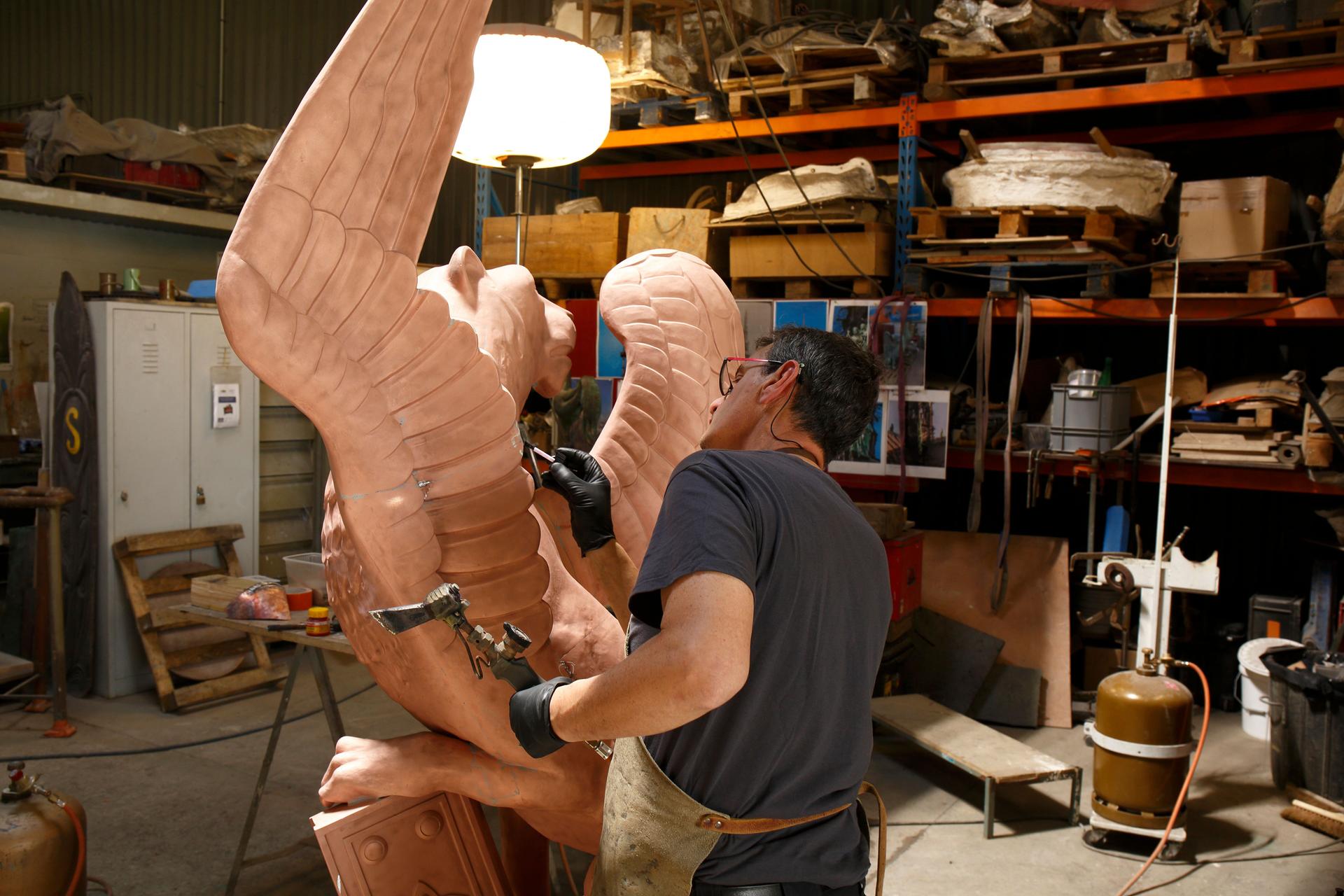
Today the coppersmith's trade alternates between traditional boiler making, metalworking and sculpture. Coppersmiths are key players in the restoration of sculptures made of sheet metal. They combine traditional techniques with modern processes to restore artworks to their original splendor.
Coppersmiths often work in teams comprising other artisans specializing in metalwork, such as restorers, manufacturers of decorative metal fittings and patina finishers. There are currently fifty coppersmiths working in France.
On the Notre-Dame de Paris site
Sixteen ornamental statues used to adorn Notre-Dame’s spire. They were removed for restoration just a few days before the fire.
In the confines of their workshop, coppersmiths refer to the notes taken by restorers when refurbishing the figures of the twelve apostles and the four evangelists.
The coppersmiths restore all the copper sheets one by one, removing corrosion, stabilizing the metal and delicately correcting any deformities with a hammer. After completing all the elements, the statues are reassembled on their armatures, ready to receive the final patina.
How to become a coppersmith?
The Compagnons du Devoir organization provides CAP-level training in "Sheet Metalworking" and CAP-level and vocational baccalaureate-level training for "Industrial Sheet Metalworking Technicians". Trainees can then hone their skills by embarking on a “Tour de France” journeyman apprenticeship.
Two post-baccalaureate training courses exist for coppersmiths: a two-year "Architectural décor, specializing in metalworking" DMA program, and a DNMADE "Object" program.
Nowadays, most coppersmiths qualify after following parallel training programs in the sheet metalworking and gold or silver smithing industries, or in the metalworking departments of “écoles supérieurs” institutes of applied arts.
Coppersmith