
In the course of its history, the architectural masterpiece that is Notre Dame de Paris has also housed major artworks of a religious and devotional character.
A race against the clock
On April 15 2019, while simultaneously attempting to save the monument, along with the general manager of the cathedral and the services of the Ministry for Culture and Regional Directorate for Cultural Affairs, Paris firefighters began a race against the clock to evacuate as many artworks as possible.
Thanks to the safeguard plan established a few months earlier for artworks, they defined an order of priority. The most outstanding relics, including the Crown of Thorns protected in a reinforced reliquary in the ambulatory, were evacuated first. Then came the Treasury objects, displayed in the sacristy at the time: gold and silver reliquaries, sacred vases, candelabras, etc. All through the night, guided by the curators, the firefighters continued to evacuate the most precious artworks one after the other.
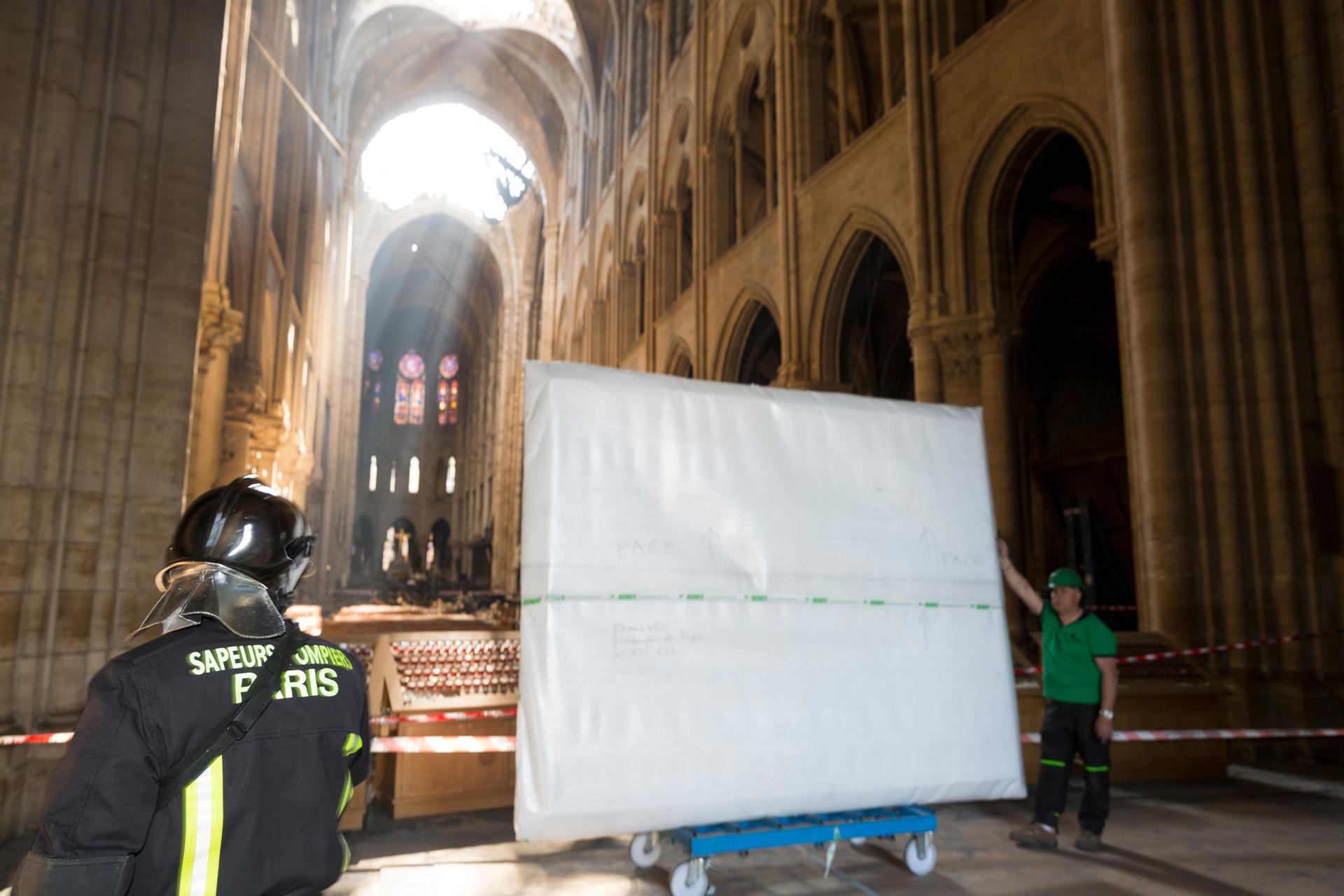
Once they had been removed from the cathedral, the artworks were gathered together at the chevet and packaged meticulously. Carefully supervised trucks then transported them to the Hôtel de Ville, from where they were conveyed to the Louvre reserves the following day.
The evacuation continues
On the morning of April 16, the day after the fire, the curators concluded that, with the exception of the choir organ, which had been drenched with water, and the furniture installed by Cardinal Lustiger, which was destroyed by the collapse of the crossing, all the artworks in the cathedral had survived.
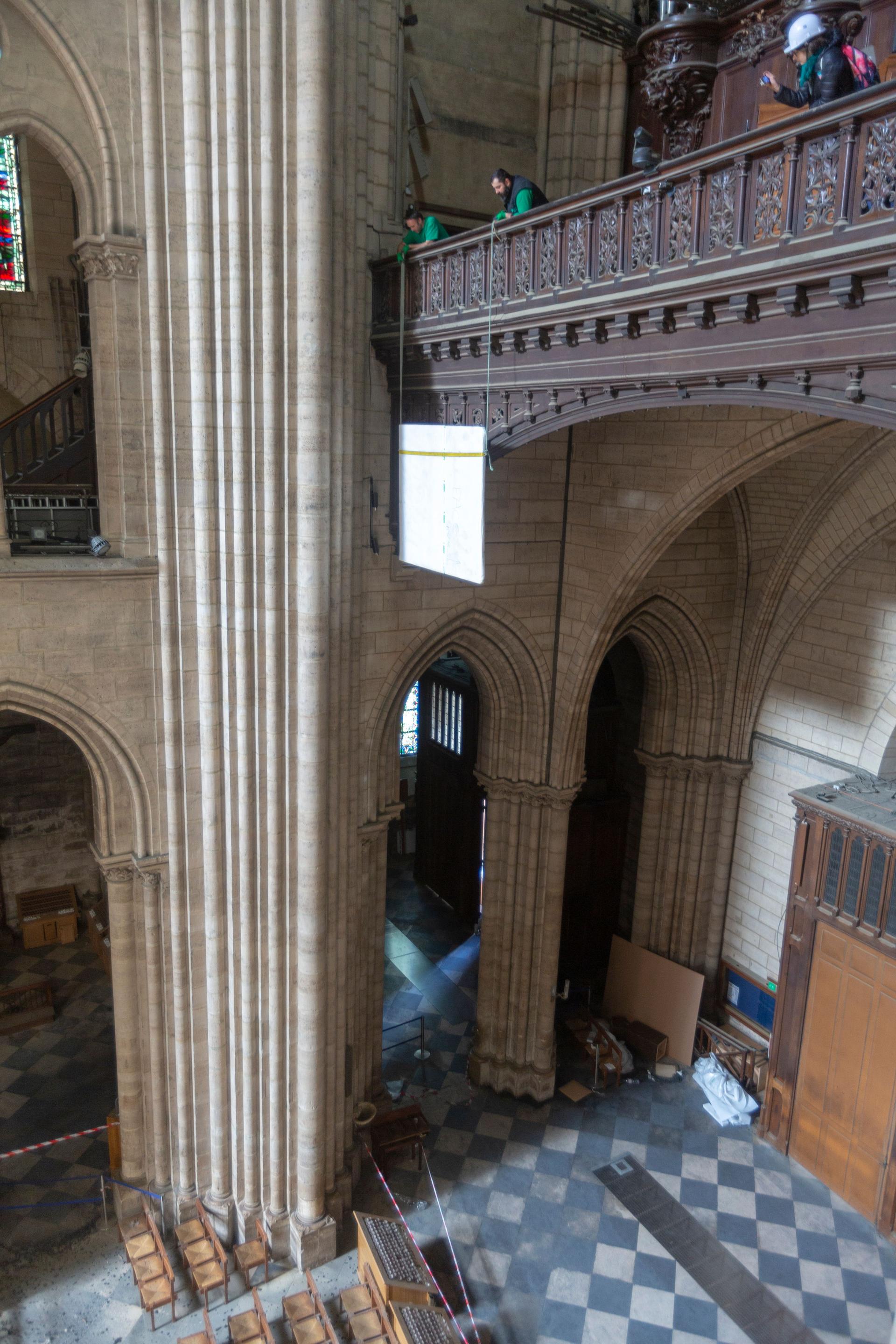
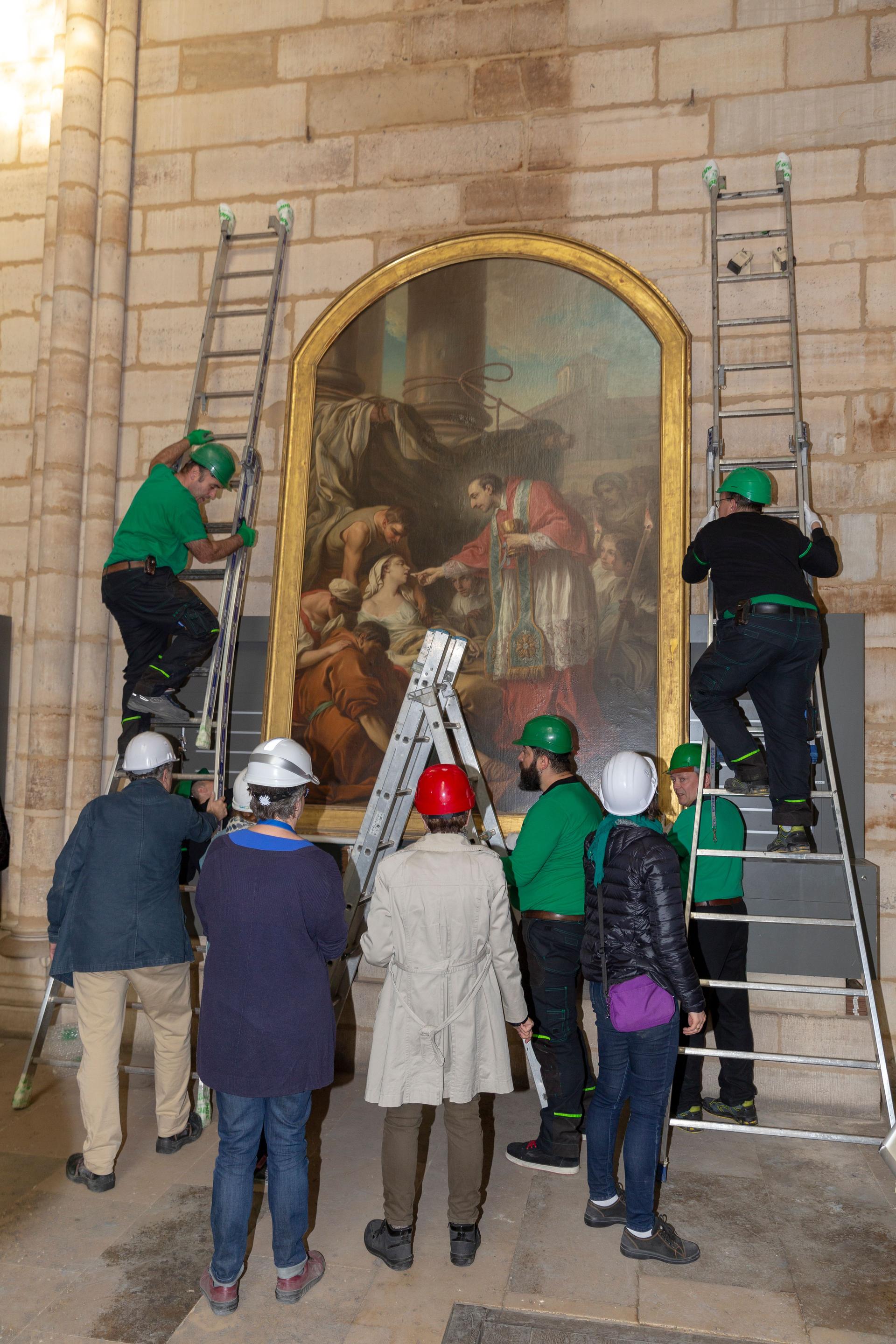
However, the dangers threatening the monument made it necessary to evacuate all moveable artworks. Thus, over the following days, firefighters, professionals from the Ministry for Culture and the companies mobilized for the project, operated with extreme caution as they transported some twenty large-format paintings out of the cathedral. The 19th century choir carpet stored in the side aisles of the cathedral was removed, rolled out and aired before being transferred to the National Furniture workshops.
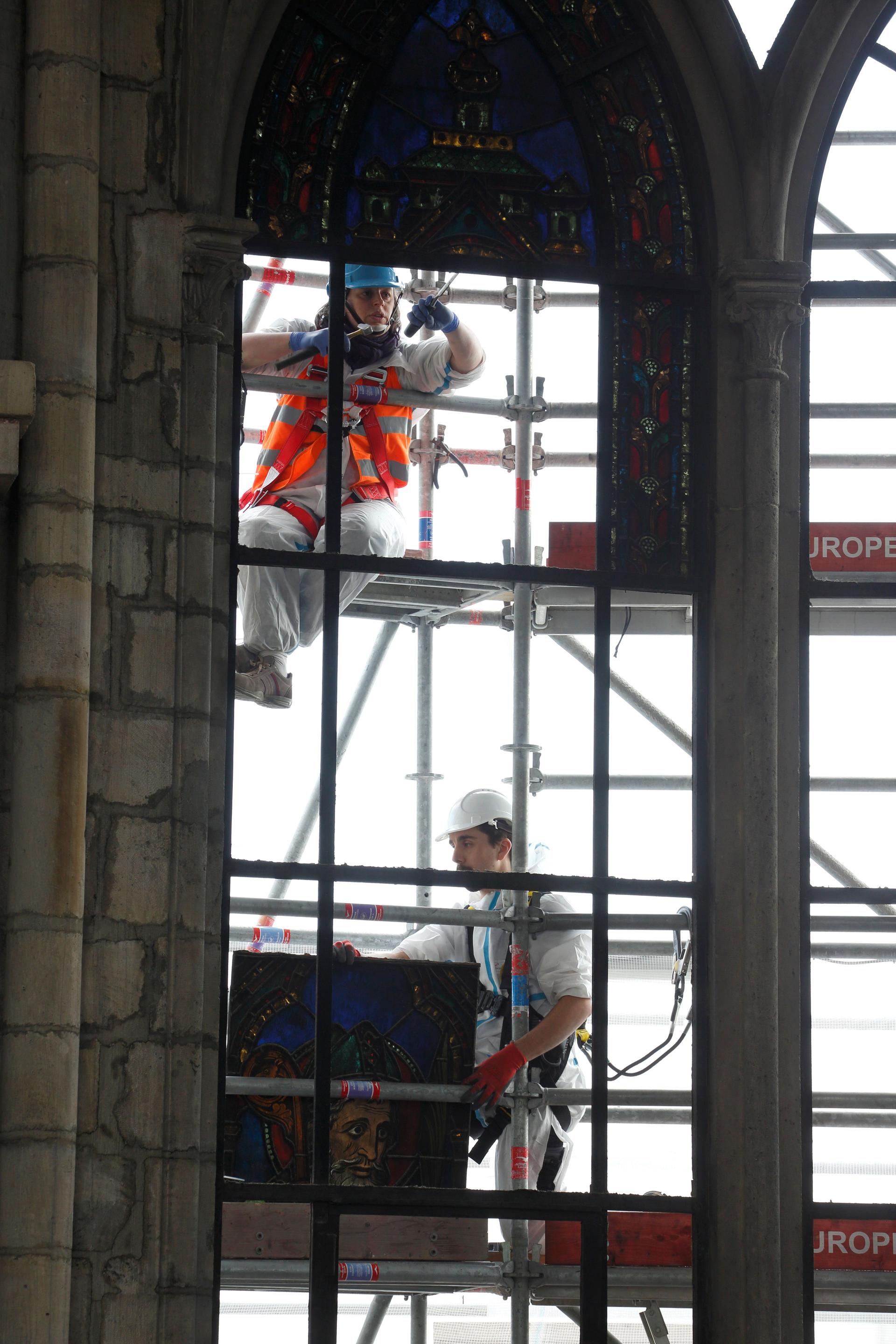
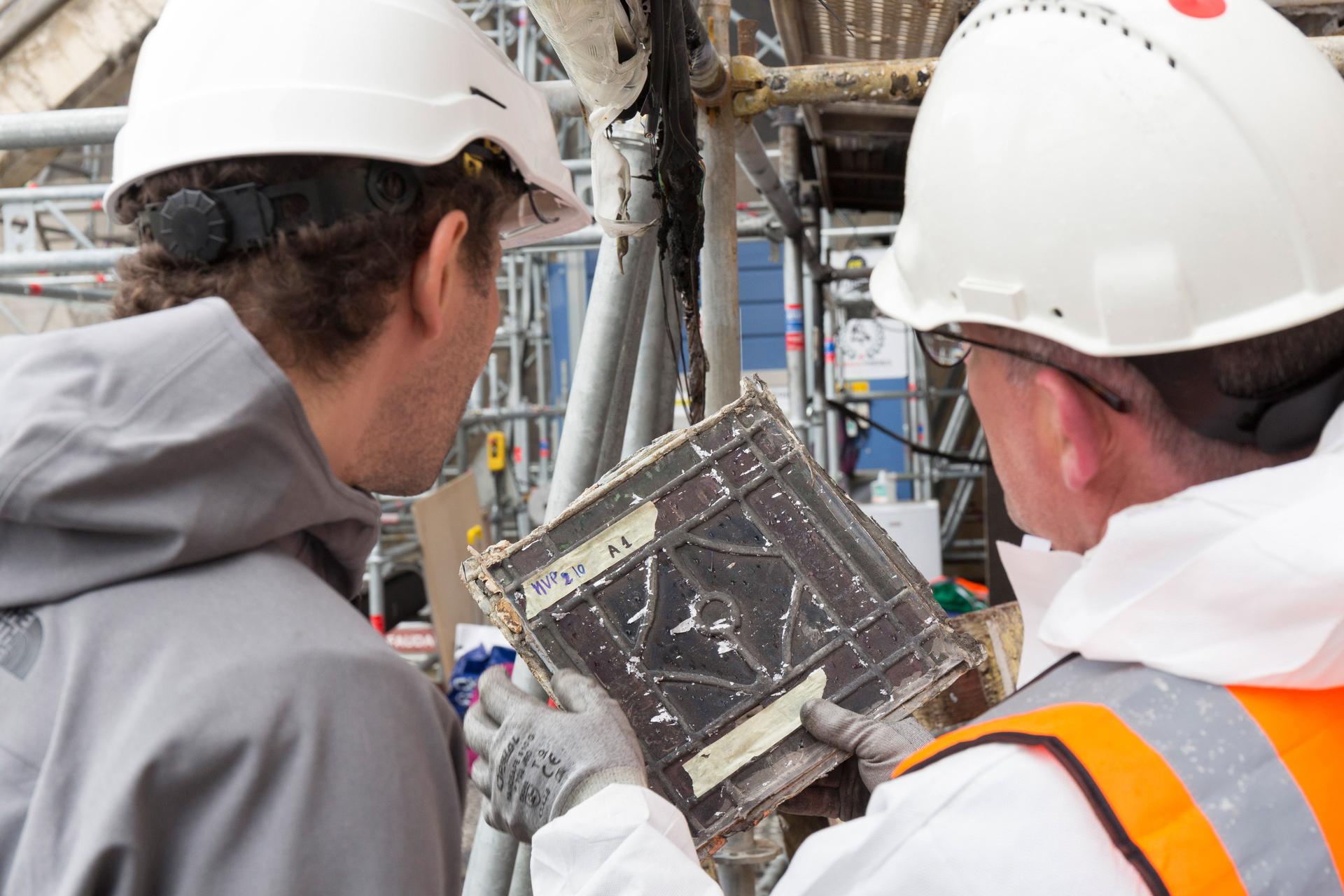
As a precautionary measure and to facilitate future securing operations, the stained-glass windows in the upper bays of the nave and choir, intact like all the windows in the cathedral, were removed panel by panel by nine master glassmaker workshops mobilized for the emergency from all over France.
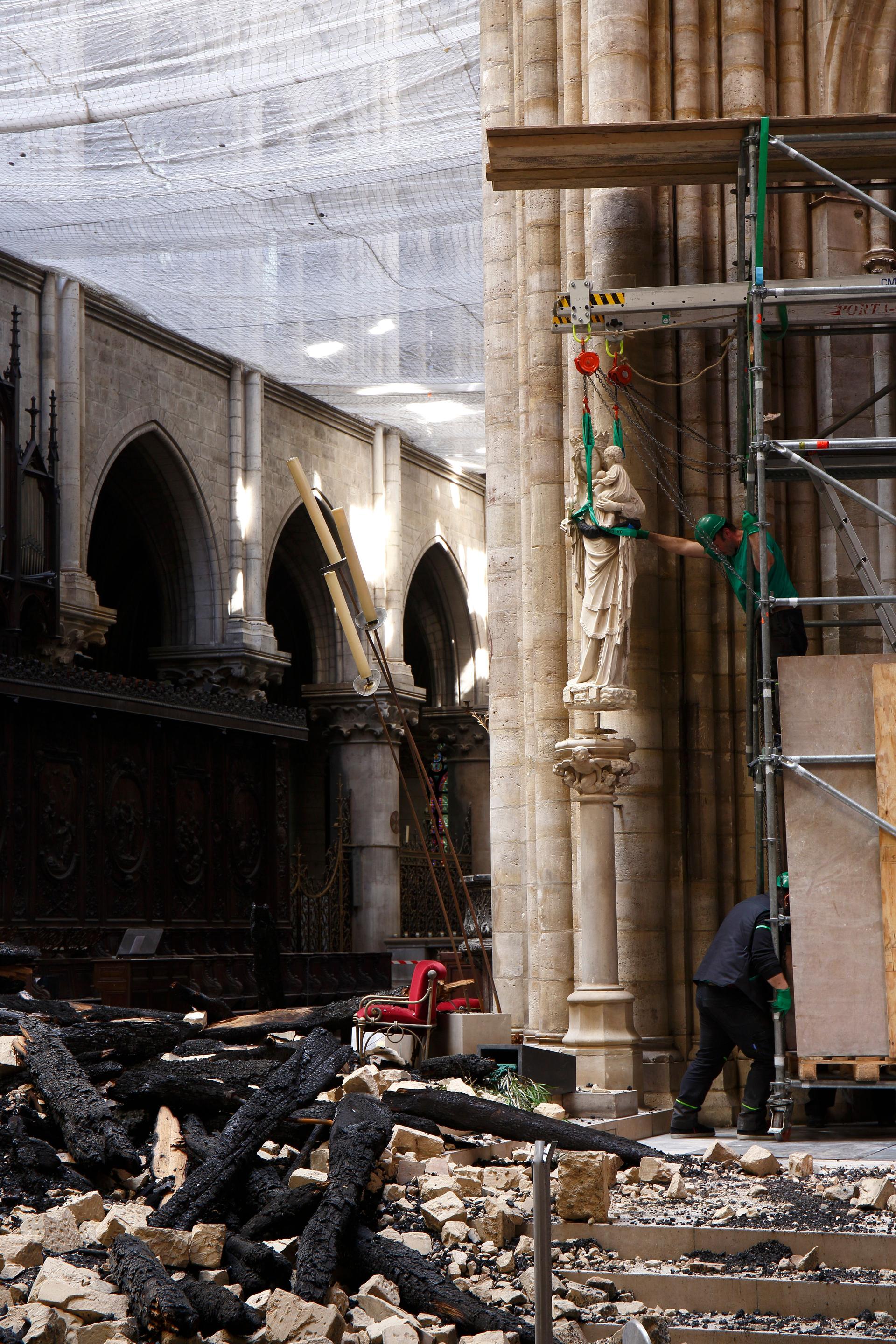
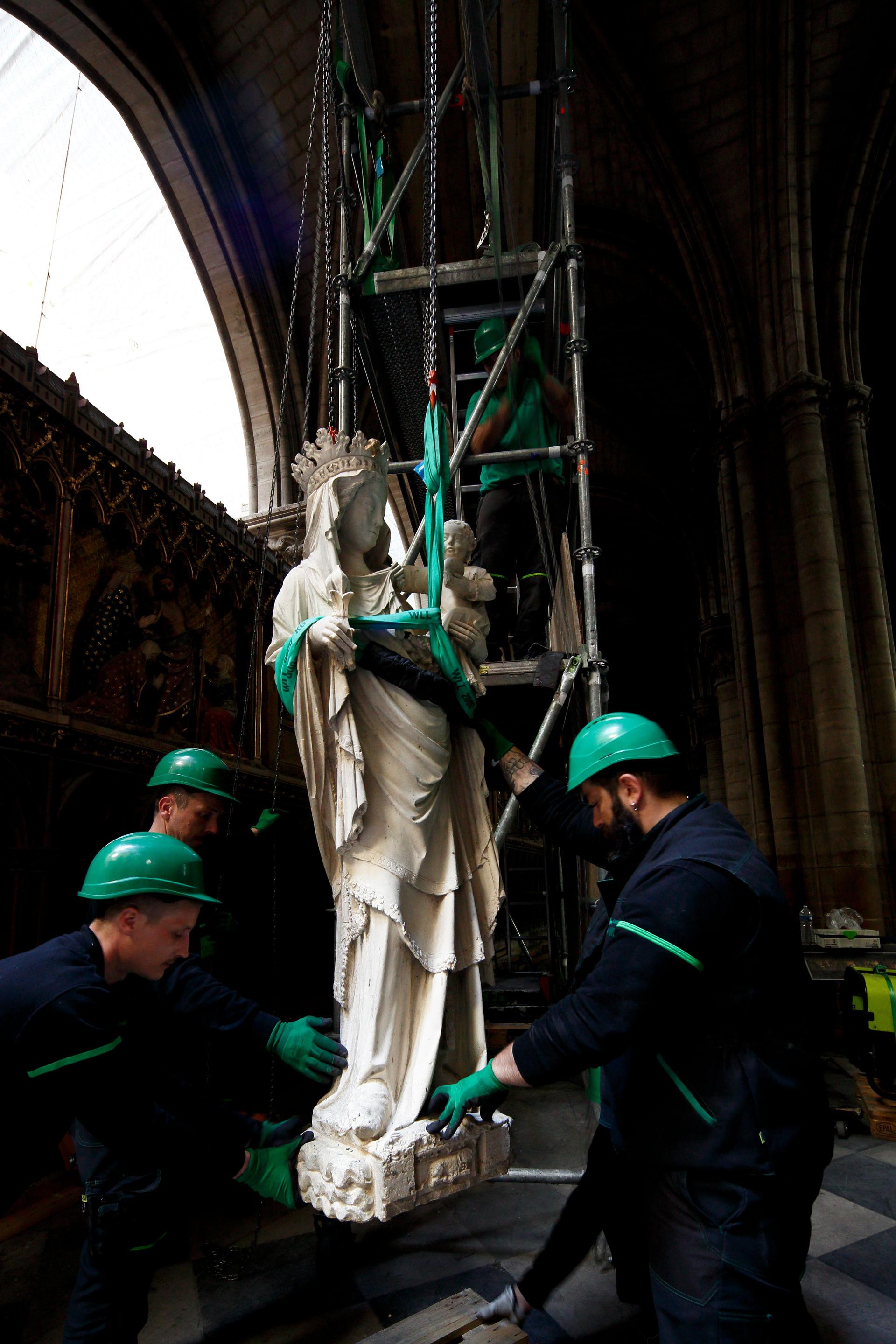
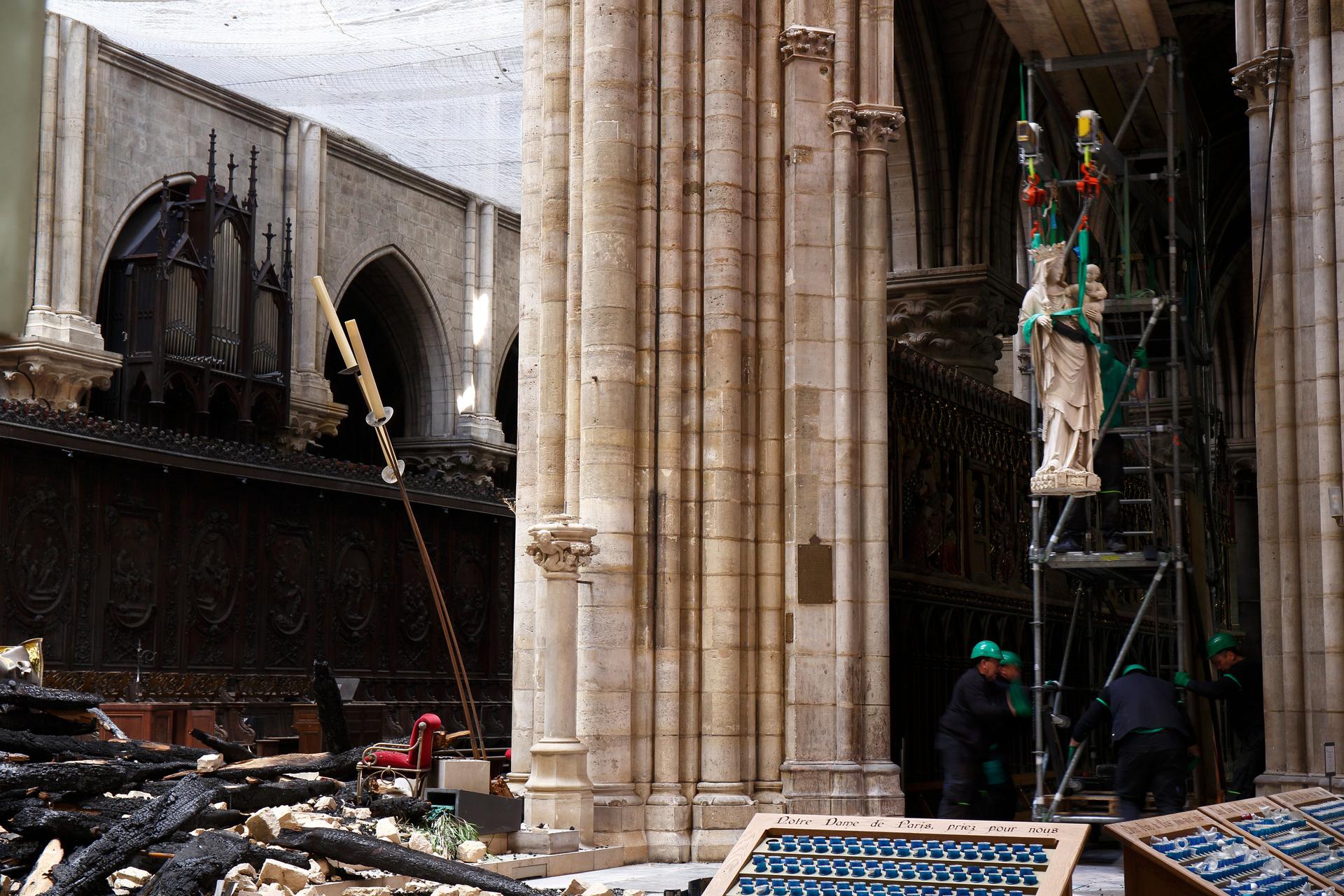
Miraculously spared by the collapse of the spire and the vault of the transept crossing, the 14th century Virgin of the Pillar, a symbol of Notre Dame, left the cathedral in turn on April 25. It is currently displayed in Saint-Germain l'Auxerrois church and a replica installed in the square serves as a reminder of its importance.
Lastly, in the upper parts of the cathedral, the few external sculptures directly affected by the fire were separated from their pedestals and removed by cranes.
A new life
Being inseparable from the cathedral, all these artworks were restored and cleaned at the same time as the monument. Together with the pieces previously preserved in the reserves of the cathedral located in the galleries, they were the subject of a "collections project" that would result in an inventory and stock verification.
Depending on their state of repair, they were cleaned and restored or copied and reinstalled.
The same is true for the works that could not be transported (e.g. stalls, altars, statues of Louis XIII's vow, pulpit). Remaining in the cathedral, they were restored there.
Notre Dame will thus shine with a new radiance when it reopens to the public in 2024.
Main visual © David Bordes - RNDP