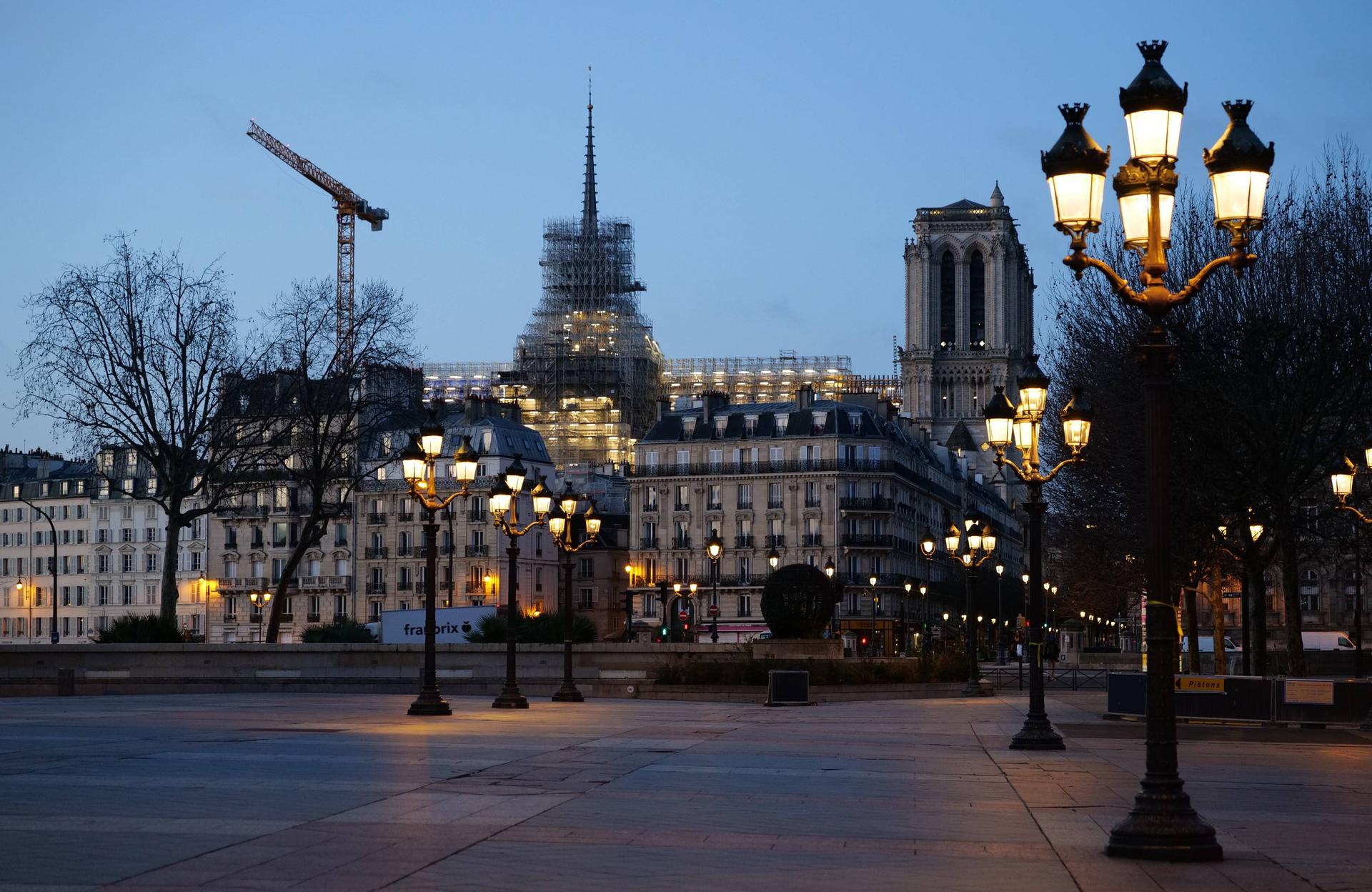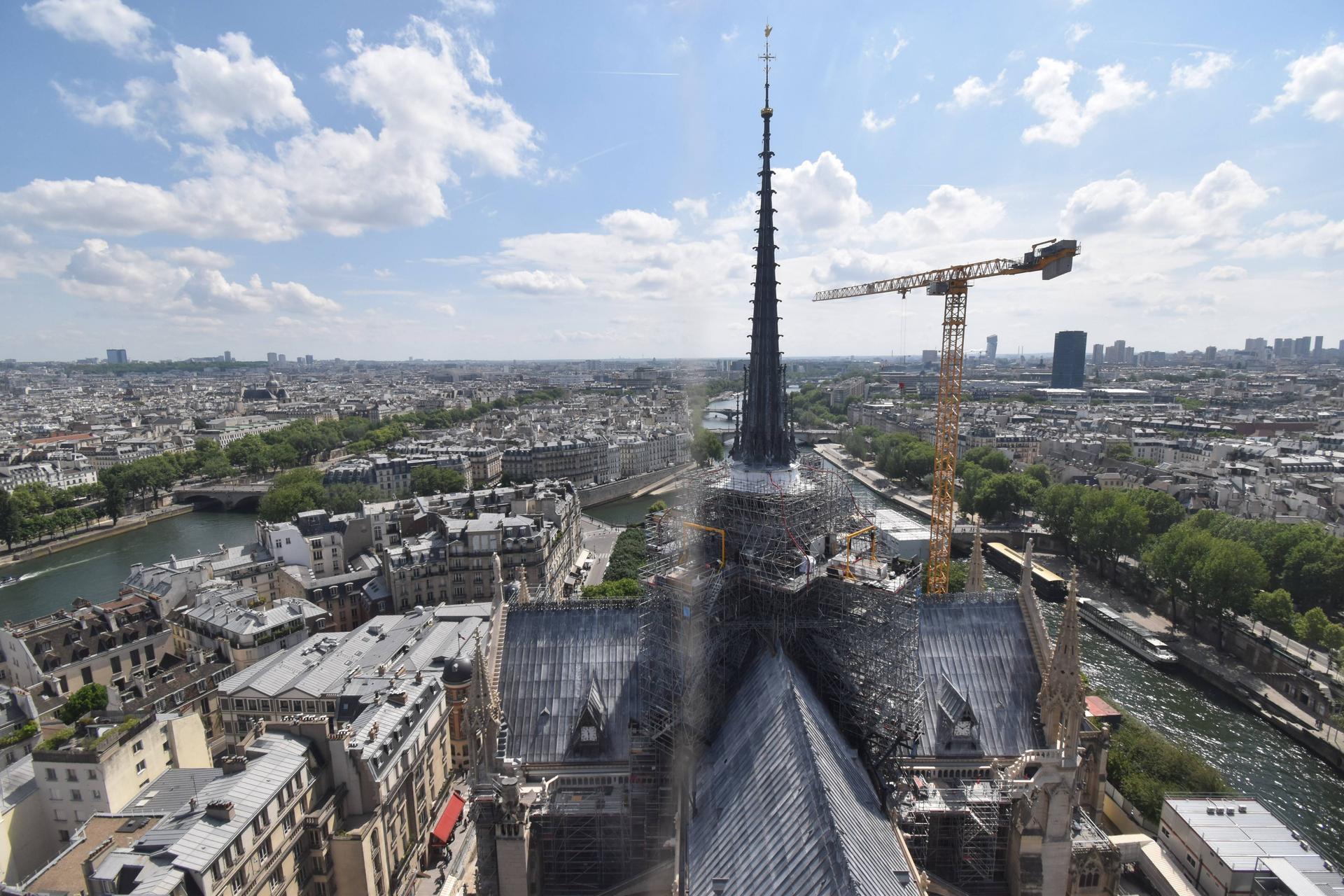


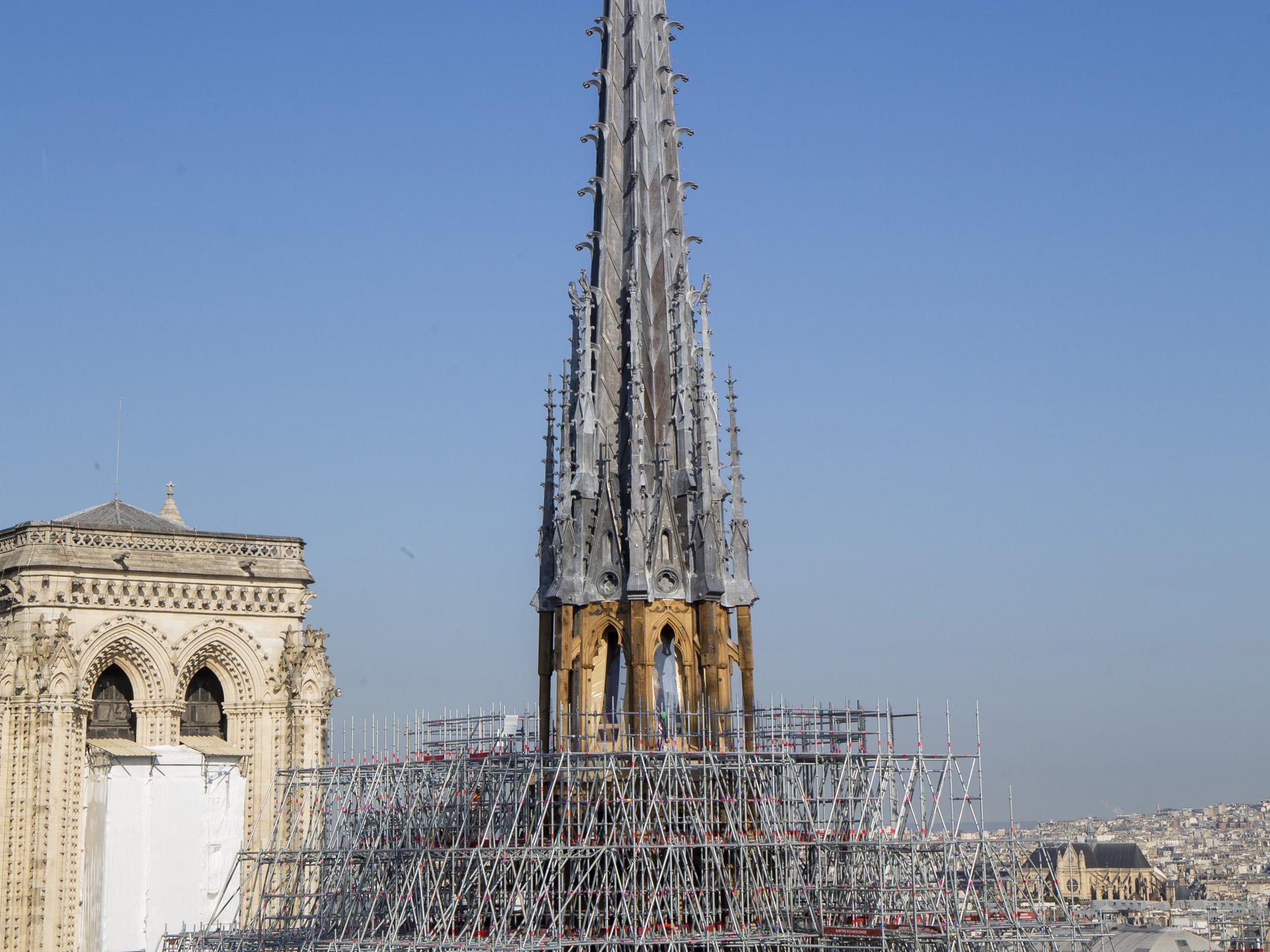
The task of applying the covering to the spire was split into two phases: the covering on the upper section (the needle) was applied between December 2023 and March 2024, making it possible to remove the heavy scaffolding installed in the crossing for use by the carpenters, and thus to complete the vaults. The lower section (the openwork, the base and the tiers which support the 16 statues) then received their covering once the cathedral had been reopened, over the course of the winter, spring and summer of 2025, thanks to a more lightweight scaffolding anchored to the four corners of the crossing and designed specifically for use by the roofers.
As with the covering of the grand comble (or ‘main attic’), lead was chosen as the material most in keeping with the restoration’s concern for historical authenticity, but also for its technical properties: lead is malleable, durable and ductile, which means that it stretches without breaking, ensuring that the joints between the different structural elements remain waterproof.
In the workshop
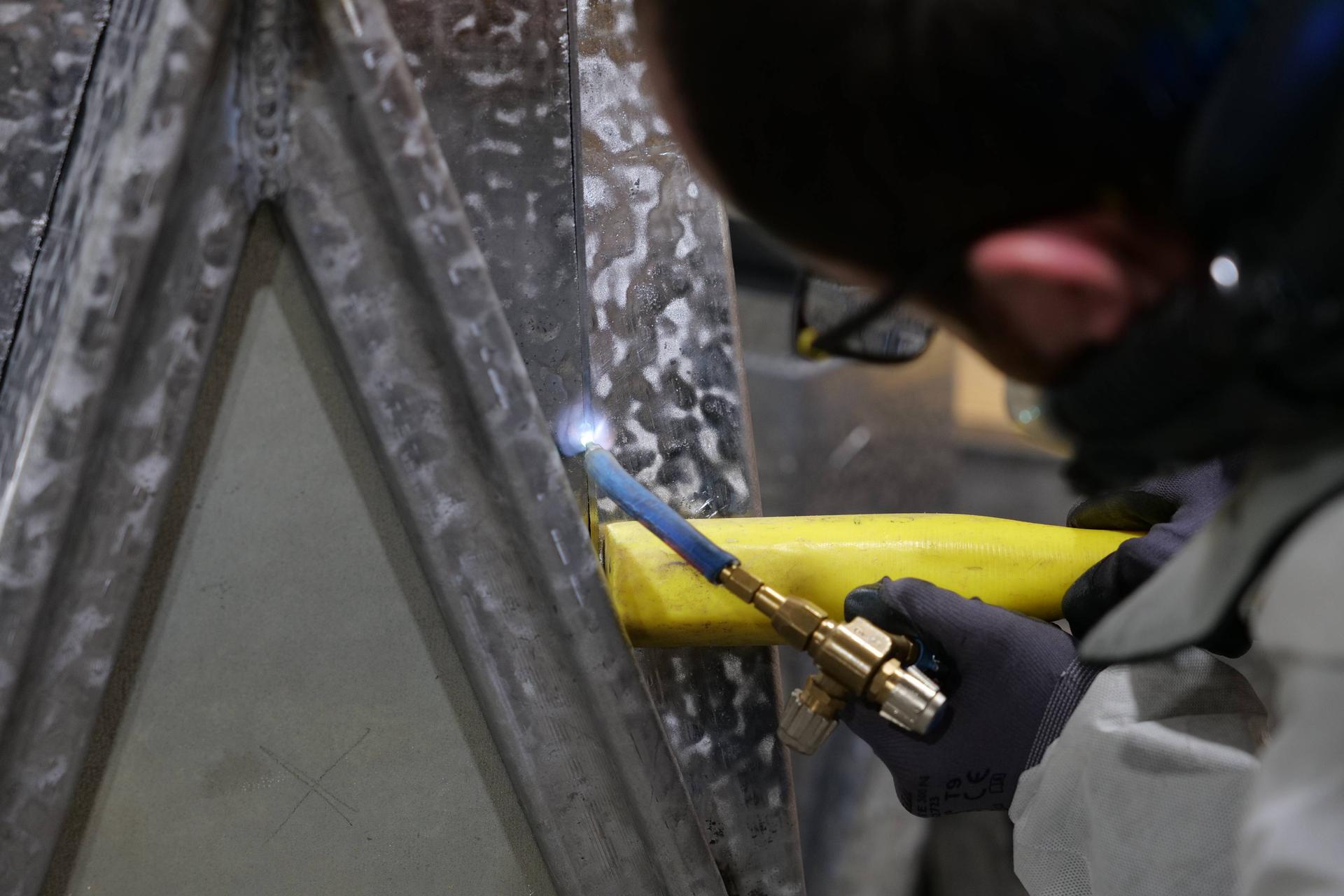
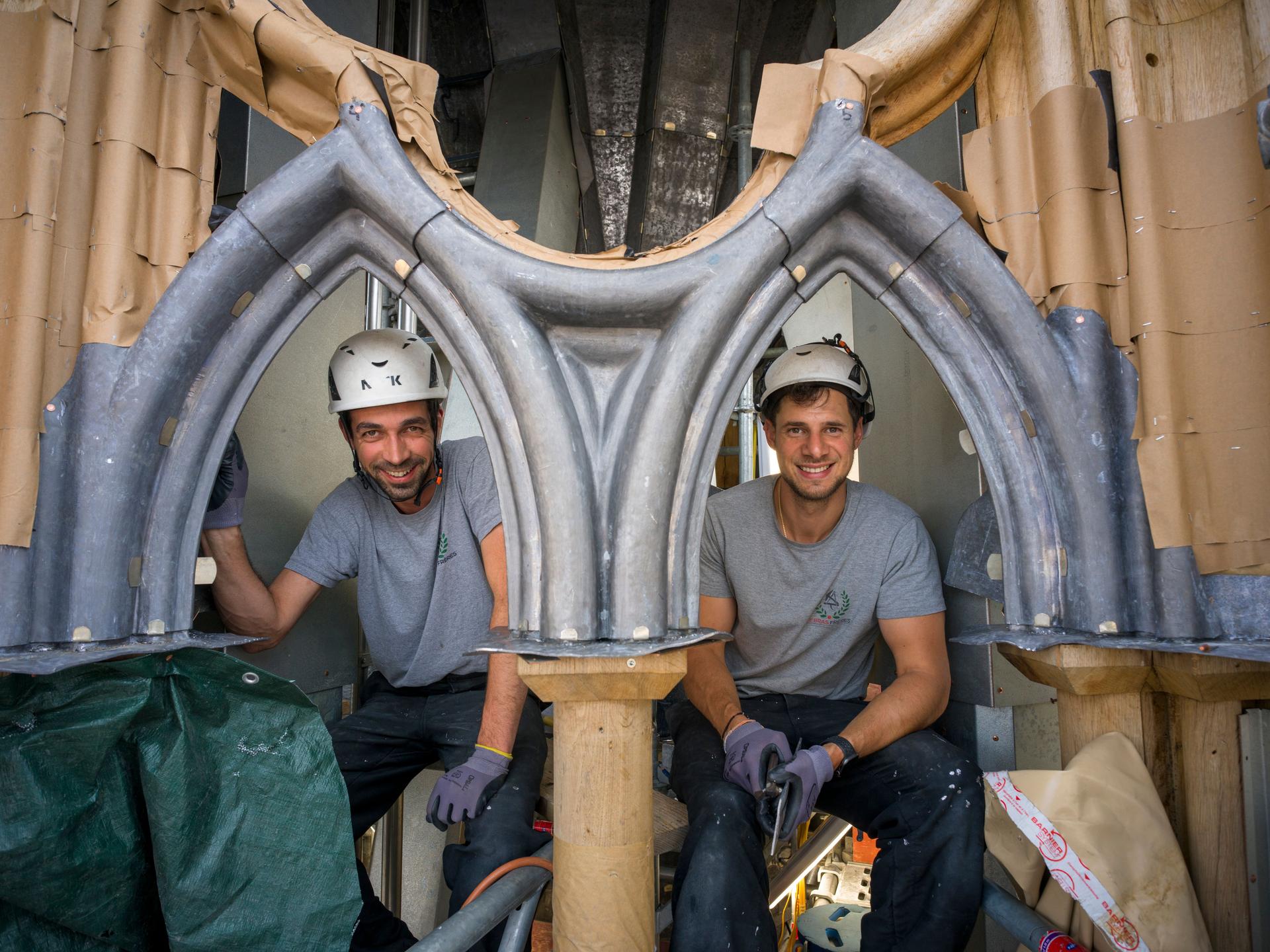
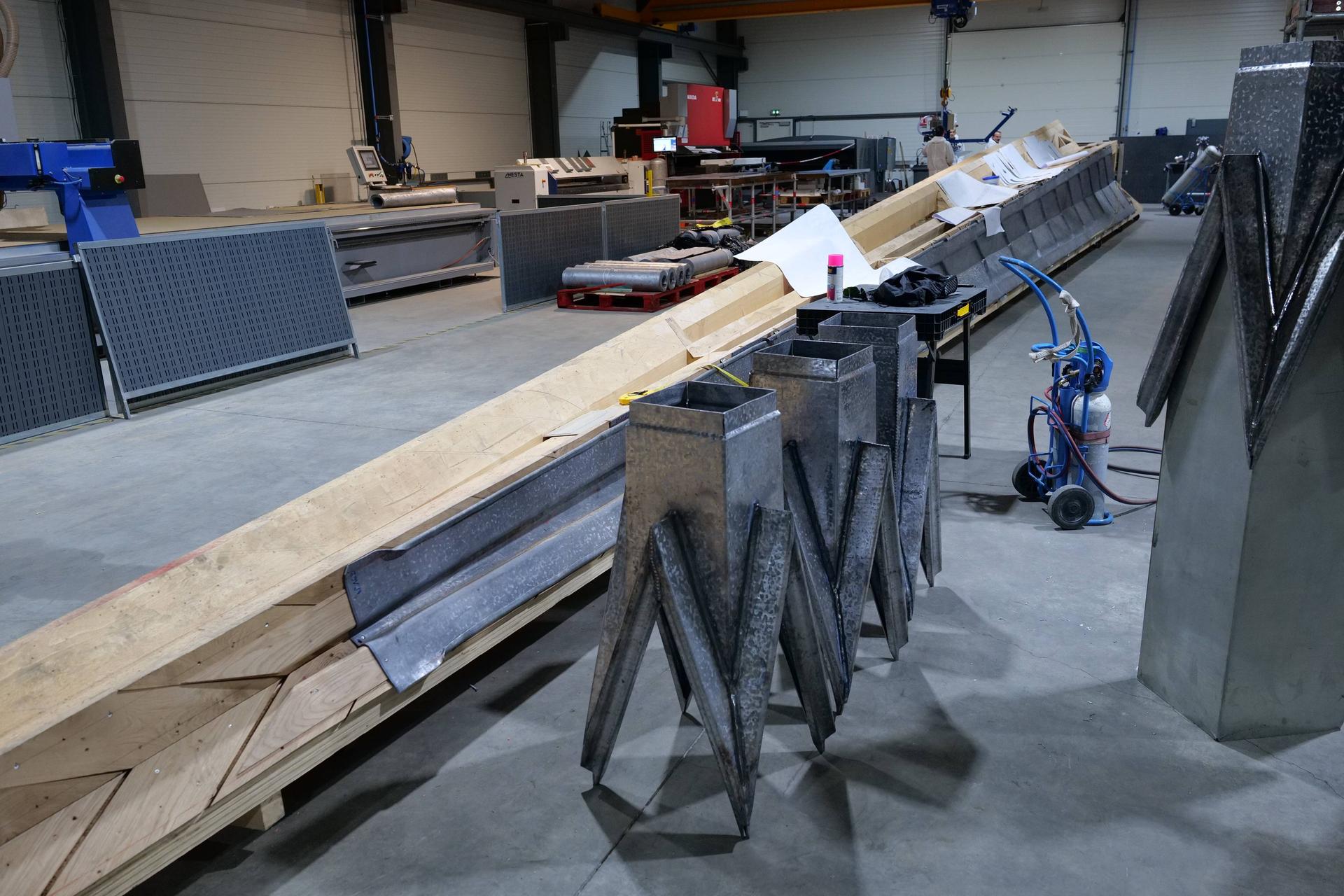
In order to speed up the installation process and ensure the safety of the craftspeople, by minimising the time they would have to spend scaling the spire, both the lead sheets and the decorative features were pre-prepared in the workshops using wooden models which reproduced the contours of the spire.
A full-size model of the top half of the needle was thus crafted from fir timber, and used by the craftspeople to assemble and hammer the 2.8 m x 1.52 m lead sheets into rows of finials. These were numbered and dismounted, before being reassembled in the exact same positions on the actual spire.
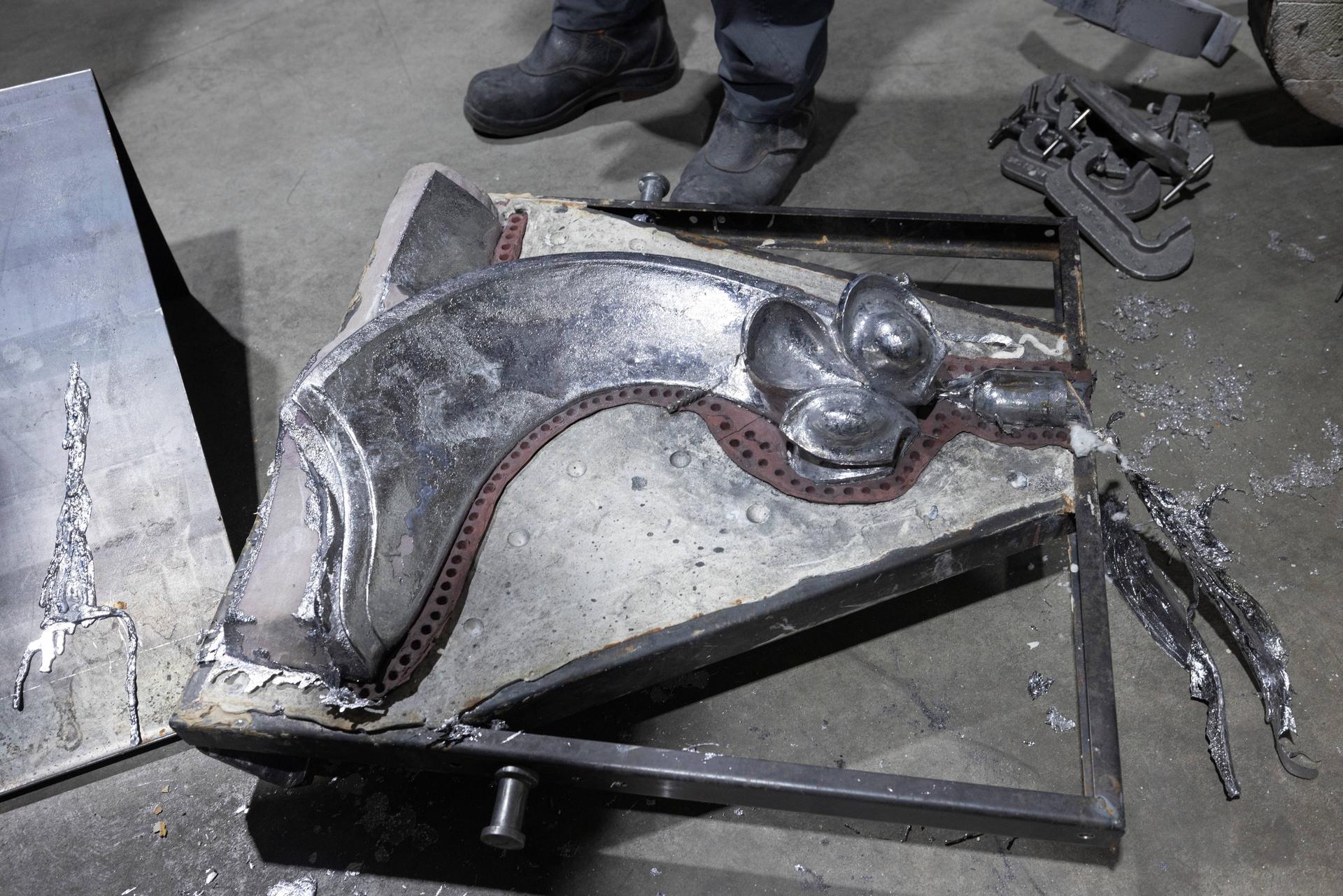
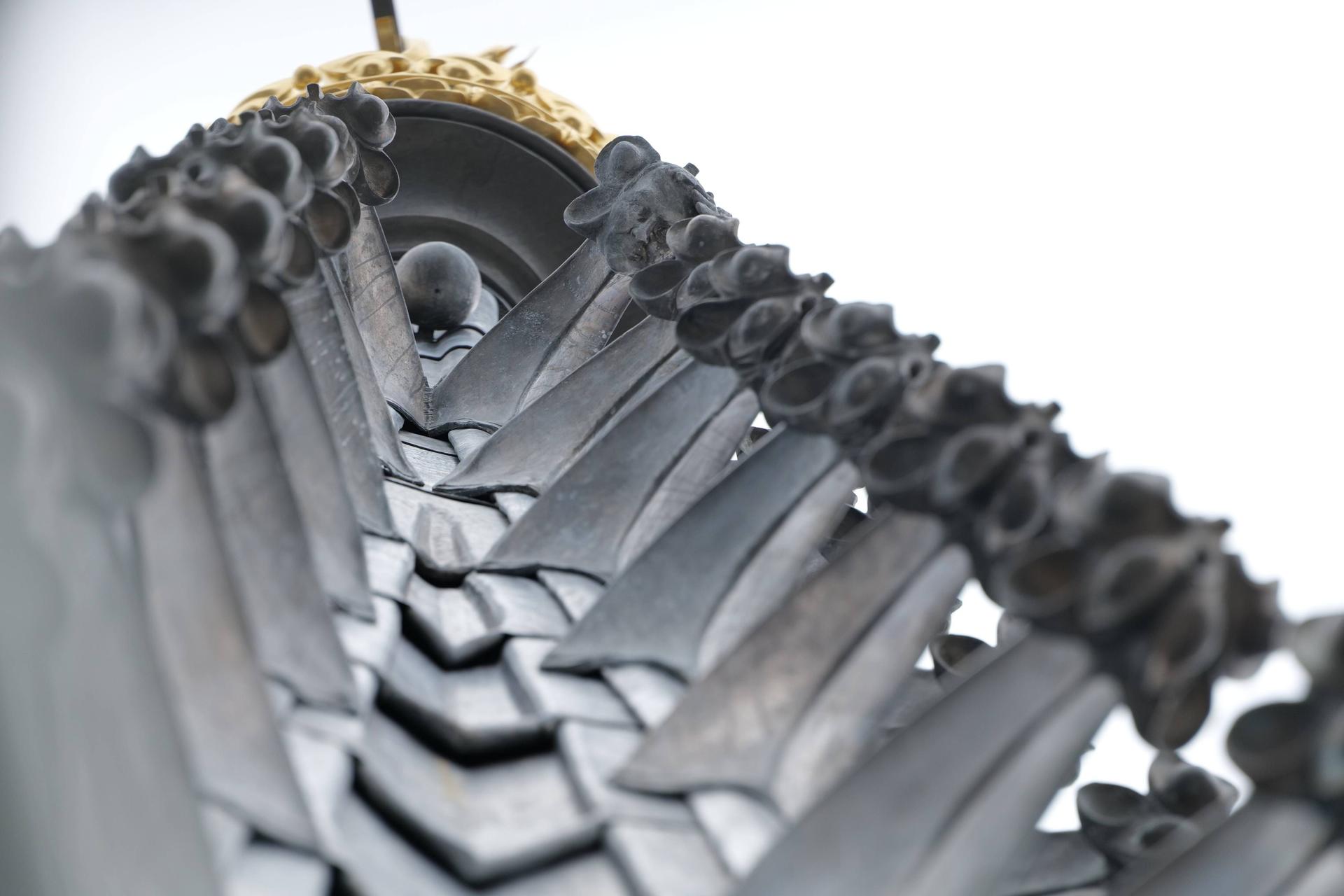
The hundreds of ornamental features were also cast in the workshop (a solution suggested by the architects to make them more robust, as opposed to the lead embossing technique employed by Viollet-le-Duc, which introduces a certain degree of fragility).
This preliminary shaping work, conducted by the roofers and ornamental roofers in their workshops, also offered another advantage: it meant that work could continue interrupted, even when roofing operations on the cathedral were interrupted between Spring and December 2024.
Installing the covering
Before installing the final covering on site, the roofers came up with some ingenious solutions to get around the fact that the wood would need to dry, ensuring that this process could continue once the roof was finished. A tinned copper fastening system was put in place where necessary, protecting the wood from any warping induced by the drying process, and the lead from any excess moisture by ensuring that the wood remains well ventilated.
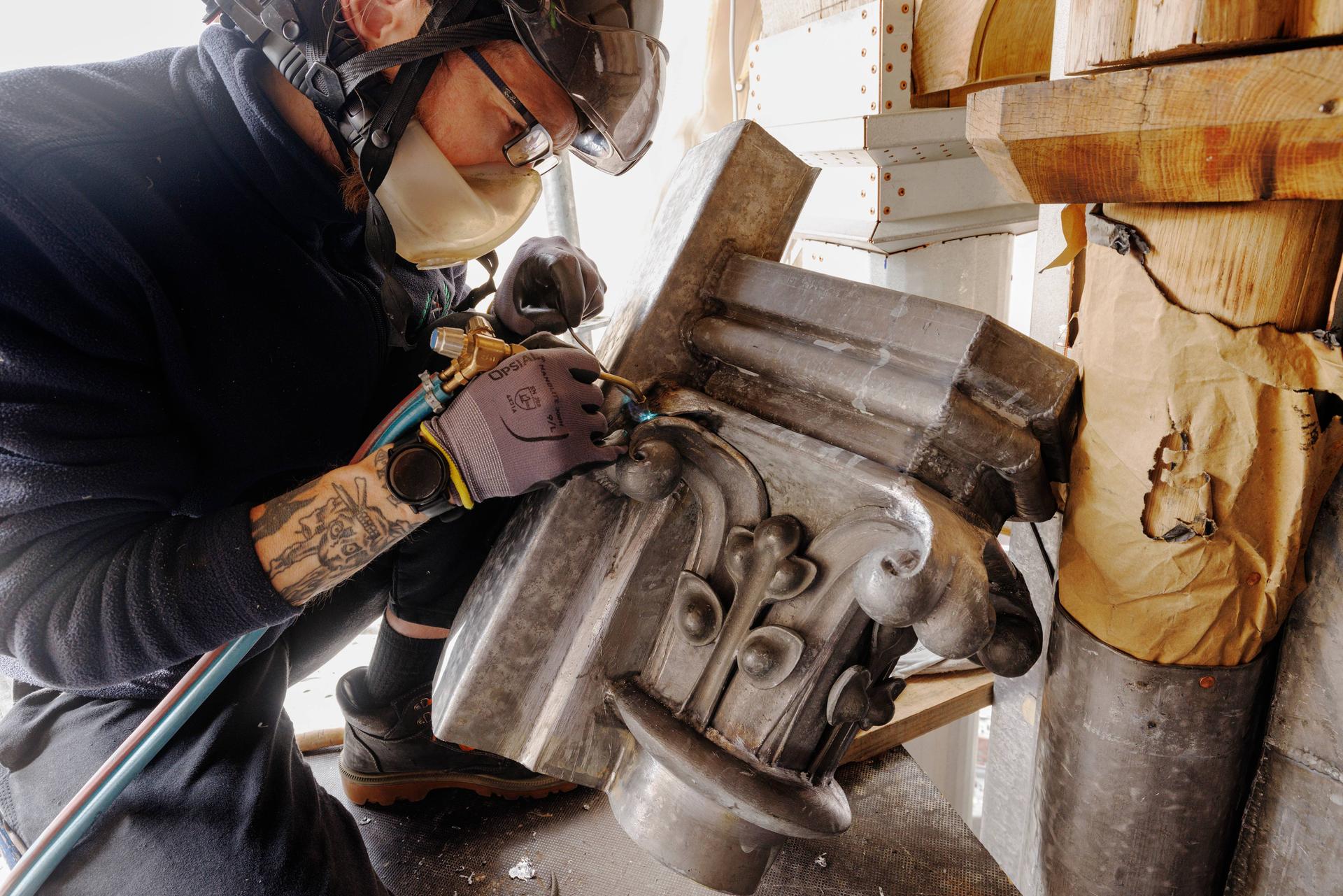
The ornamental features, meanwhile, were attached to the spire using a galvanised steel framework driven directly into the timber, ensuring that the welded joints do not have to bear the weight of the lead sculptures.
During the first phase of the covering process – which took place during the winter of 2024 with its abundance of rain, wind and cold temperatures – the fact that the assembly, preliminary sculpting and preparation work could be done in advance allowed the roofers to stick to a very particular protocol. During the second phase, in 2025, the fact that the cathedral was open to the public (and attracting large crowds of visitors) required us to restrict heavy lifting operations and adapt our working methods once again.
Hundreds of ornamental details
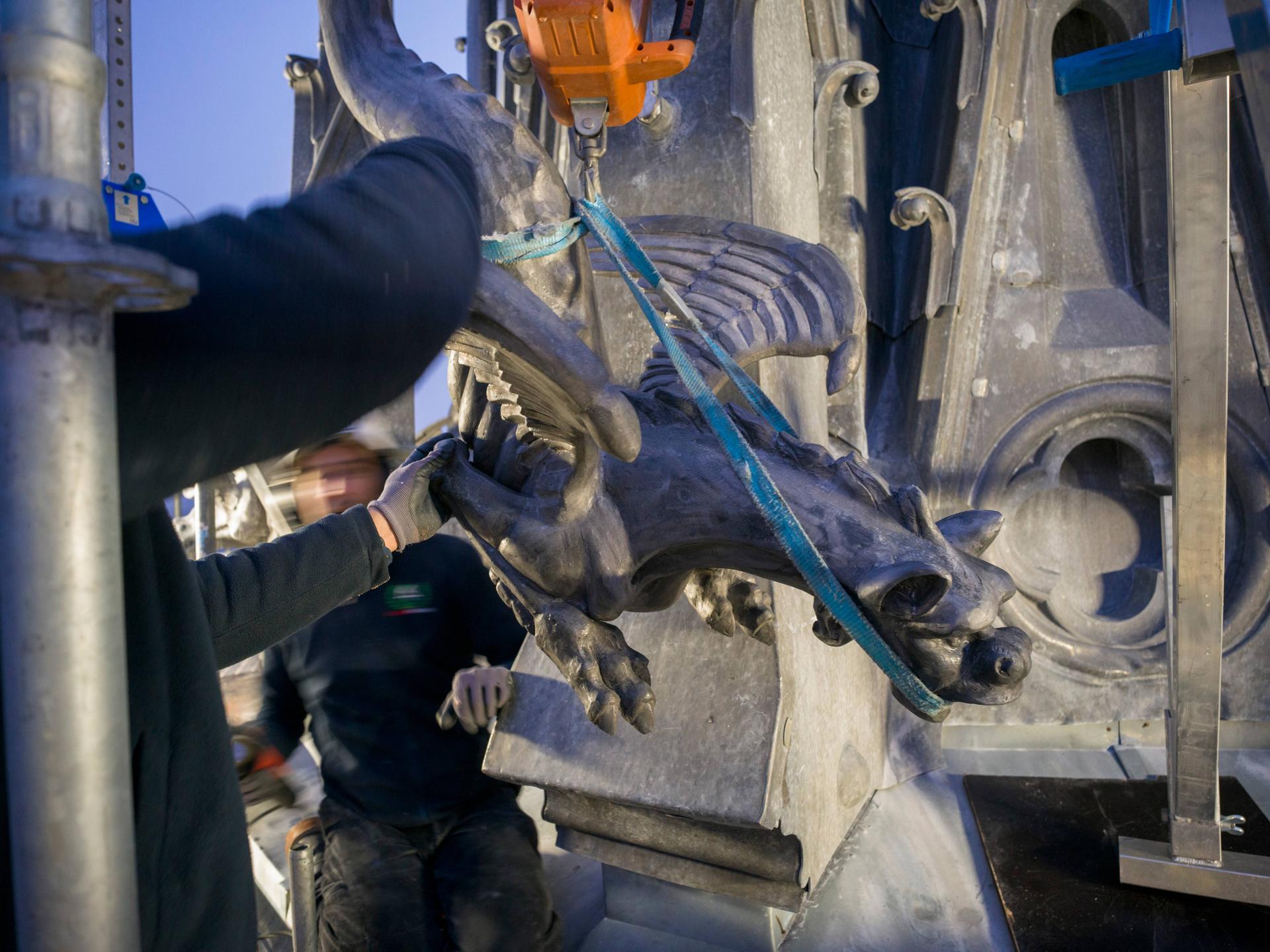
The spire designed by Viollet-le-Duc is noteworthy for its sheer volume of ornamental detail: 112 gothic hooks on the needle, 6 birds of prey atop the pinnacles, 16 griffins and 8 chimeras on the openwork sections, not to mention the relief sculptures and capitals which adorn the architectural elements. Creating these details in the same material used to cover the spire was a task for the ornamental roofers. These expert craftspeople were assisted by sculptors for the most substantial ornaments, such as the chimeras and griffins.
The statues on the spire
Without a doubt, the most emblematic ornamental features on the spire are the sixteen statues which miraculously emerged unscathed from the fire. They are also the only pieces made of embossed copper rather than cast lead, representing the twelve apostles as well as the four traditional symbols of the evangelists (the tetramorph) in an unhabitual, theatrical configuration conceived by Viollet-le-Duc.
Restored in 2019-2021, they returned to the site in Spring 2025, just as covering work on the lower section of the spire was nearing its conclusion. On 23 June the first statue, a likeness of St. Paul, was blessed and reinstated to its position at the base of the spire, soon to be followed by its fifteen companions. The final statue will be installed during the summer of 2025, completing the covering of the spire and bringing the entire renovation project to a conclusion. This epic undertaking is finally complete!
Main picture: David Bordes © Rebâtir Notre-Dame de Paris