Romaric Toussaint © Rebâtir Notre-Dame de Paris
The project
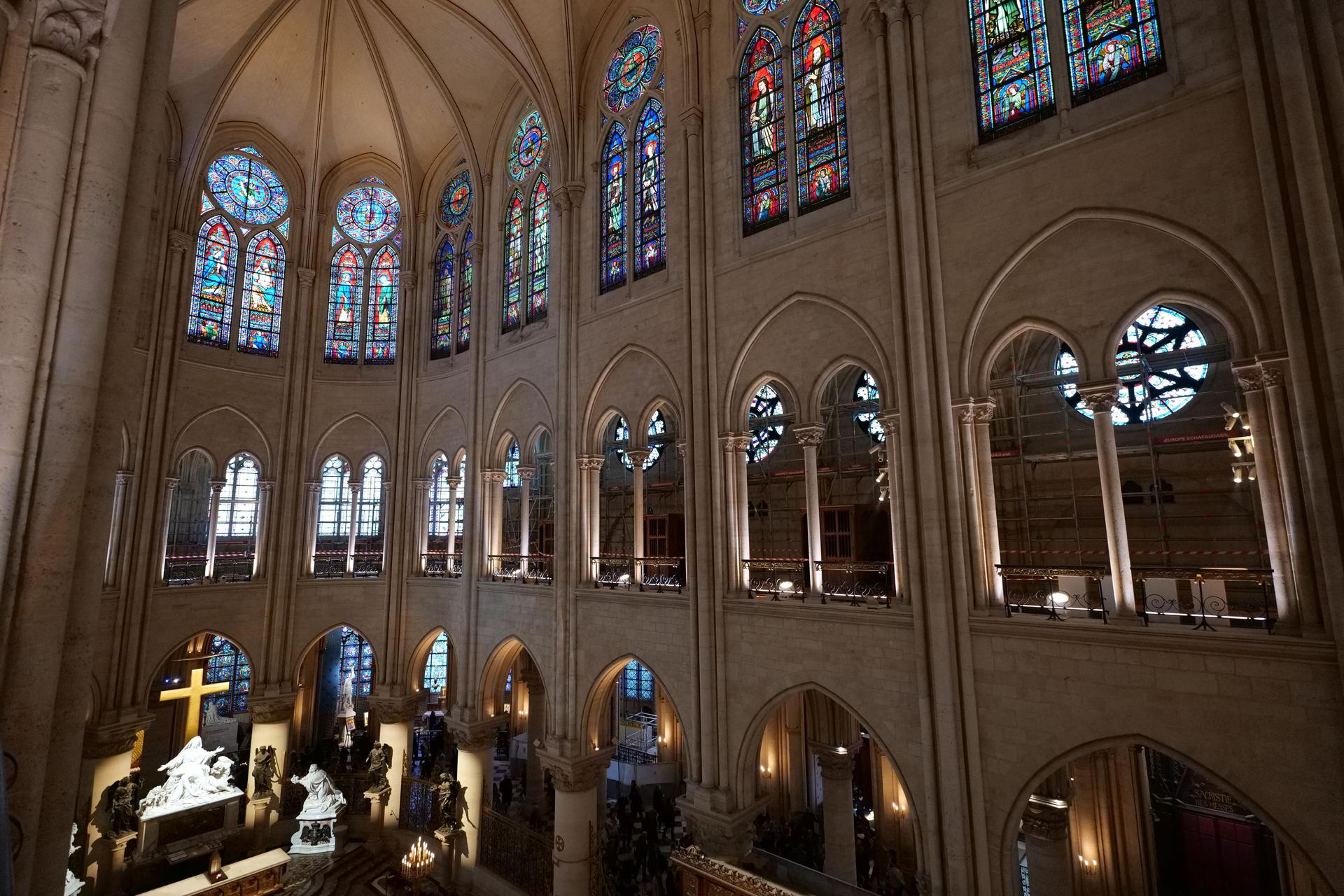
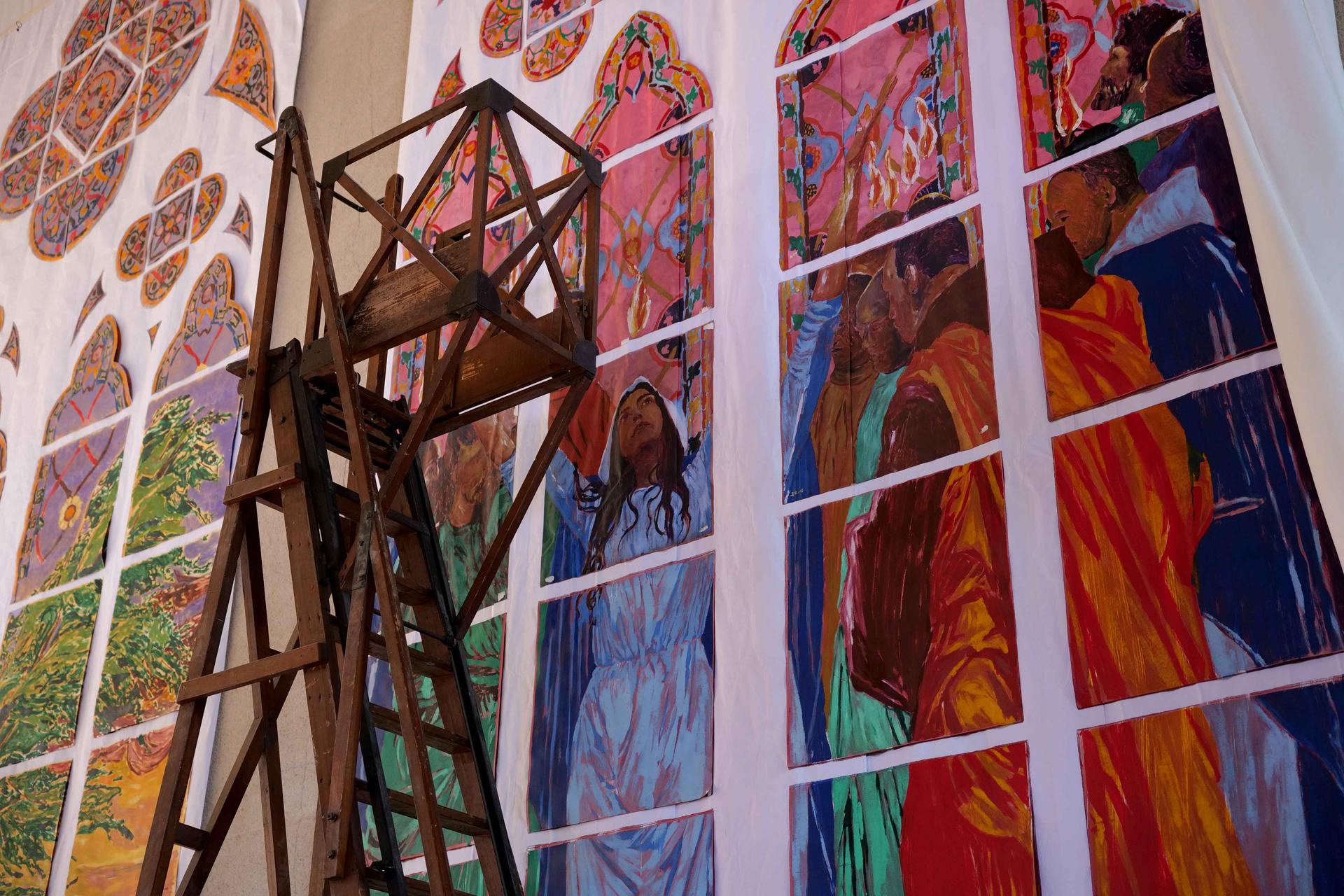
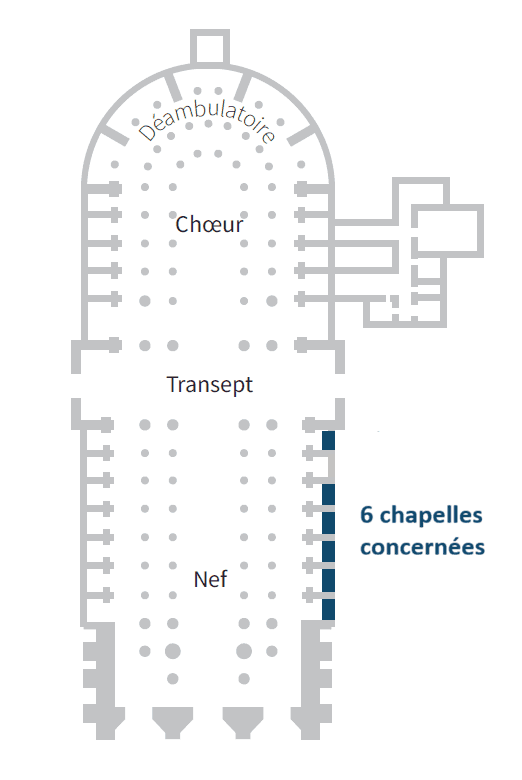
During his visit to the Notre-Dame de Paris work site on December 8, 2023, the French President announced his approval of the request made by Monsignor Laurent Ulrich, Archbishop of Paris, to install contemporary stained-glass windows depicting the Pentecost in six chapels along the cathedral’s south aisle.
At the end of 2026, these six new windows will replace six non-figurative stained-glass windows—known as grisaille windows—dating from the 1860s. Following their restoration, four of the original windows will go on display at the Château de Pierrefonds in Oise, and two will be exhibited at the Cité de l’Architecture et du Patrimoine in the 16th arrondissement of Paris.
This public commission, funded by the French State, was launched in April 2024 by the Ministry for Culture. As the Contracting Authority, the Rebâtir Notre-Dame de Paris public establishment worked with an artistic committee chaired by Bernard Blistène, former President of the Musée National d’Art Moderne. Made up of representatives of the State, the Diocese of Paris, and qualified experts, the committee conducted a selection process based on a highly detailed set of specifications. Developed in collaboration with the teams from the Diocese of Paris, these specifications established the iconographic program intended to best convey the meaning and significance of the Pentecost. In consultation with the architects, they also defined heritage requirements to ensure that the new windows would be successfully integrated into the cathedral while preserving its historic character. These requirements include the use of traditional stained-glass techniques, such as lead came assembly and the preservation of the existing metal framework, as well as careful consideration of color balance and proportions.
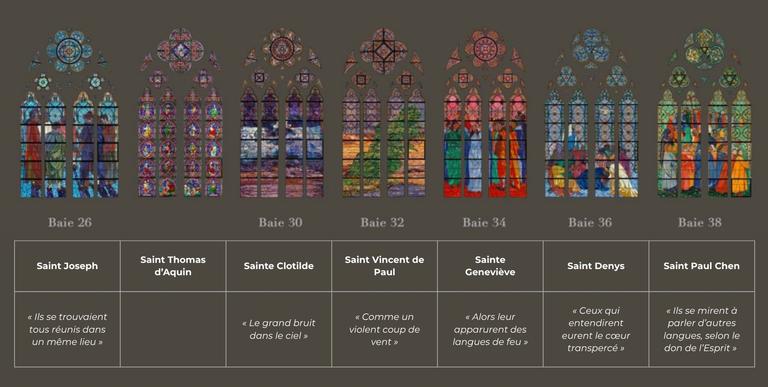
On December 18, 2024, the partnership formed by the Simon-Marq Workshop, founded in Reims in 1640, and artist Claire Tabouret was selected to create the six new stained-glass windows depicting the Pentecost that will adorn six chapels along the south aisle of the nave of Notre-Dame de Paris.
The team fully incorporated the detailed requirements set out in the specifications, both in terms of iconography and heritage preservation. Their proposal preserves the project’s religious meaning while ensuring the new windows are integrated harmoniously into the historic monument.
Full-scale models of each of the six windows were created by Claire Tabouret during the first half of 2025, allowing production to begin in fall 2025 at the Simon-Marq Workshop in Reims. The new windows will be installed in the cathedral at the end of 2026, where they will complement the stained-glass window depicting the Tree of Jesse (1864), located in one of the seven chapels along the cathedral’s south aisle.
Timeline
• December 8, 2023: During his visit to the Notre-Dame de Paris work site, the French President announces his approval of the request made by Monsignor Laurent Ulrich, Archbishop of Paris, to install contemporary stained-glass windows depicting the Pentecost in six chapels along the cathedral’s south aisle.
• Early 2024: The Ministry for Culture launches the project as part of a public commission overseen by Rebâtir Notre-Dame de Paris, the public establishment responsible for managing the project.
• December 2024: The winning proposal, submitted jointly by artist Claire Tabouret and the Simon-Marq Workshop, is selected.
• Fall 2025–Fall 2026: The stained-glass windows are created at the Simon-Marq Workshop in Reims.
• October–November 2026: Installation of the stained-glass windows in the cathedral.
• December 2026: Unveiling of the new stained-glass windows.
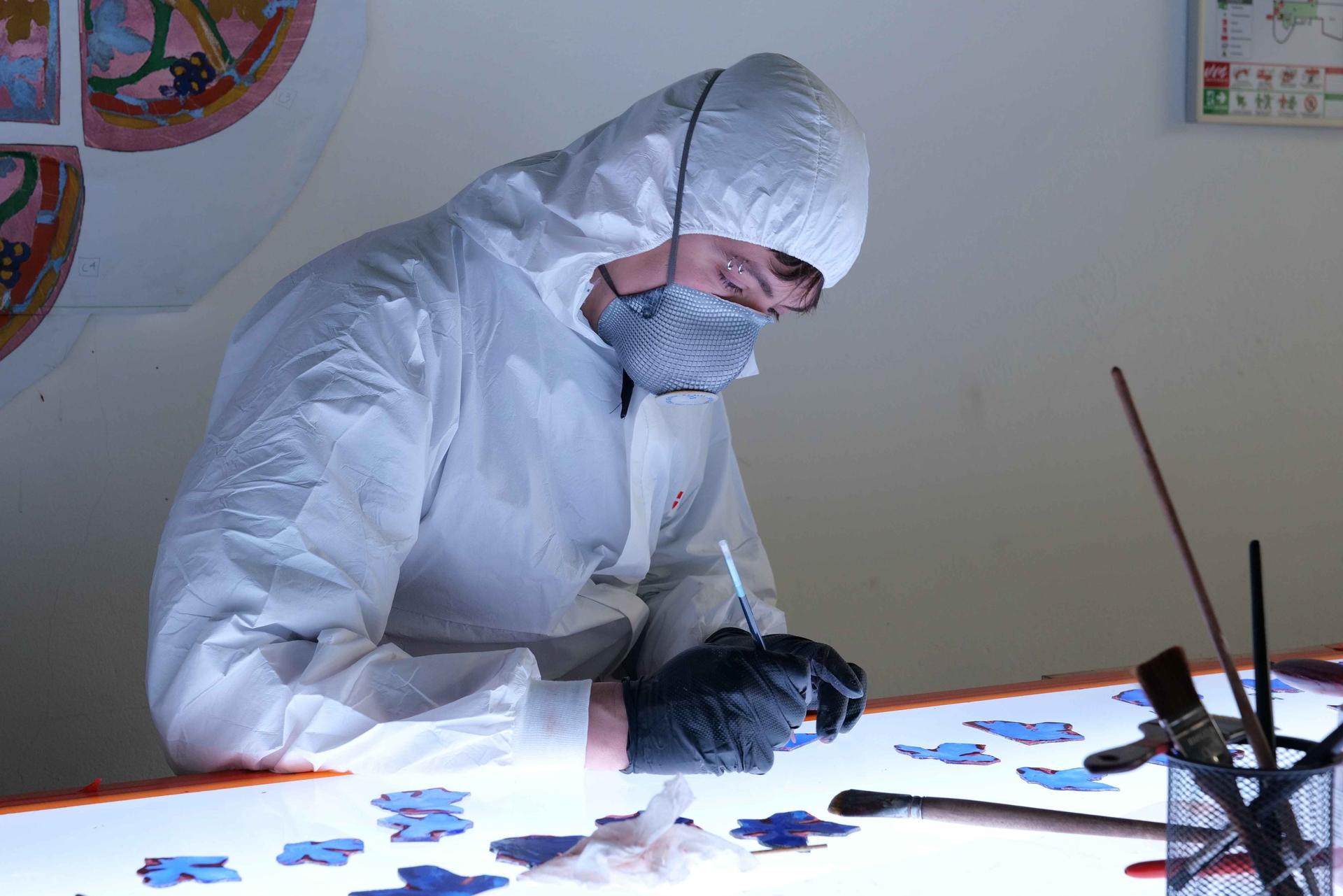
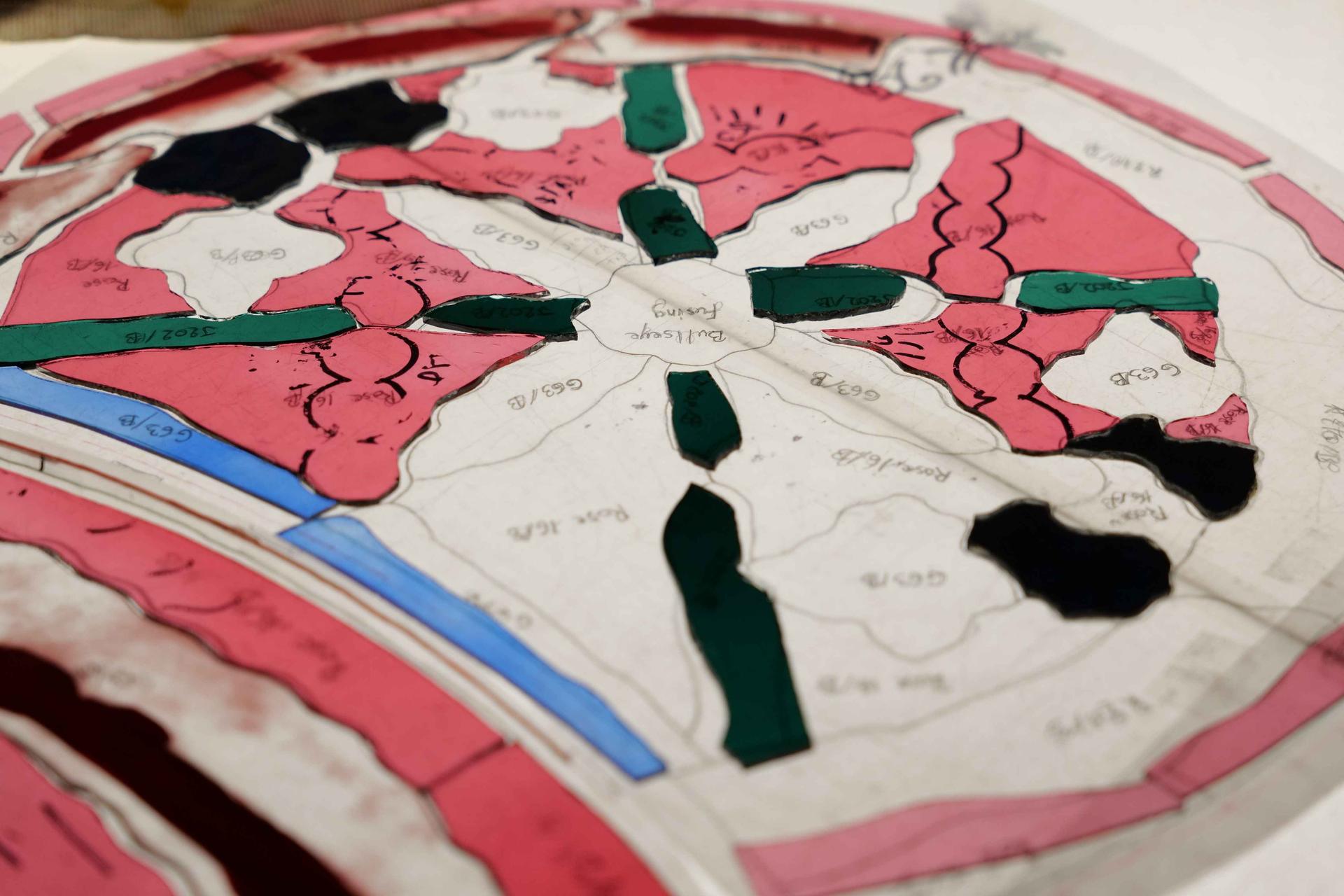
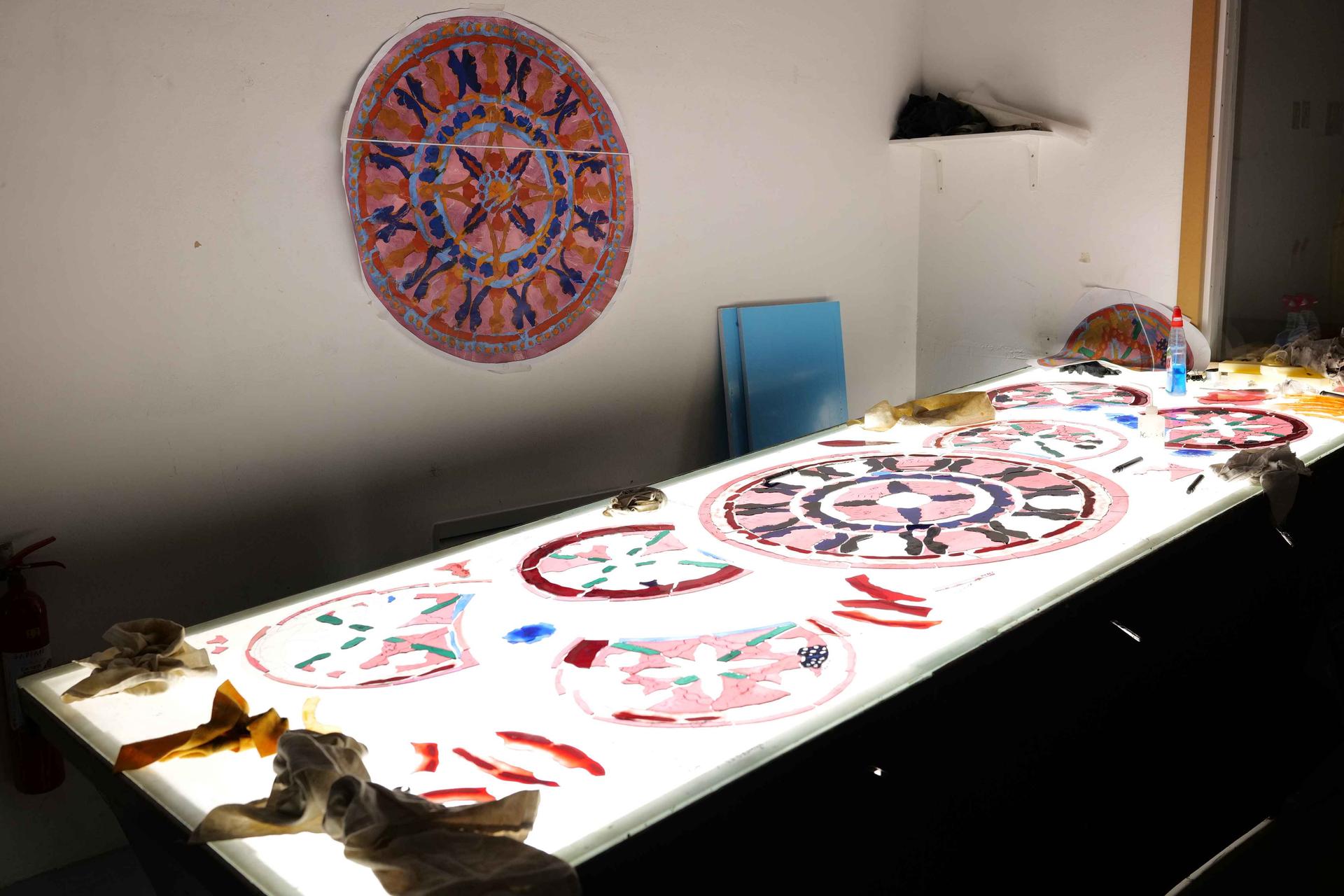
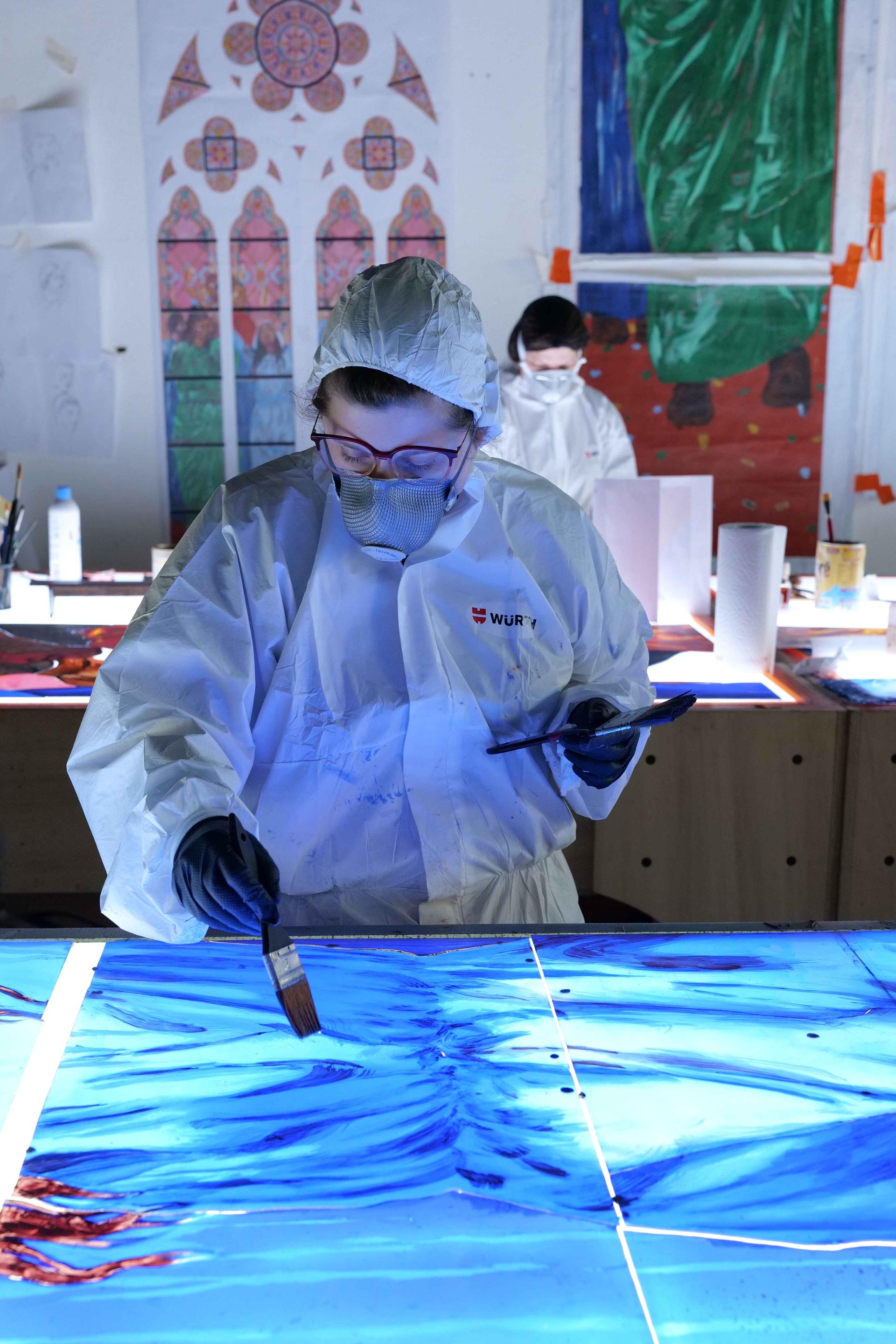
Different stages in the production of the stained-glass windows
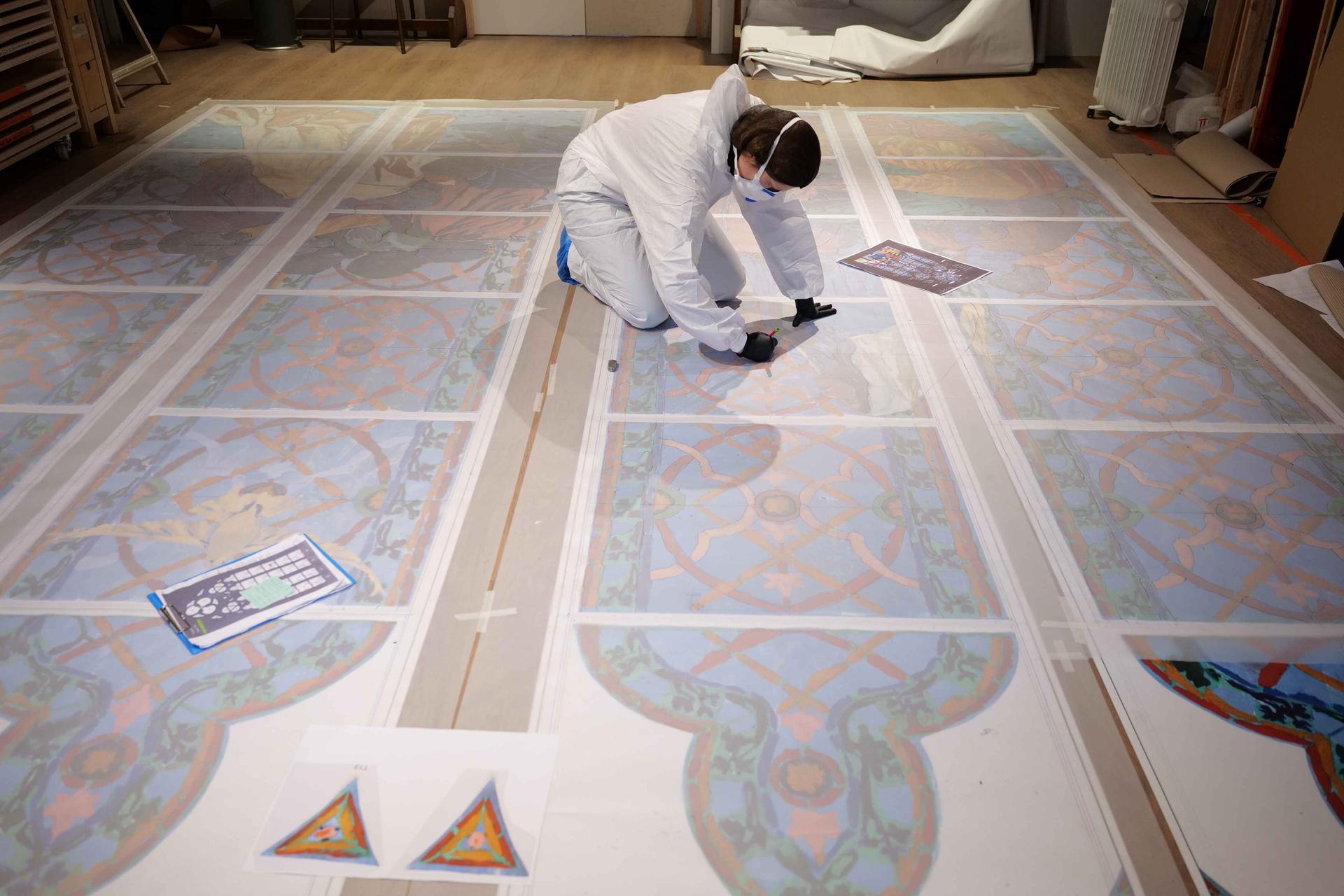
- Full-scale drawing (reproduction on the floor of the entire stained-glass window)
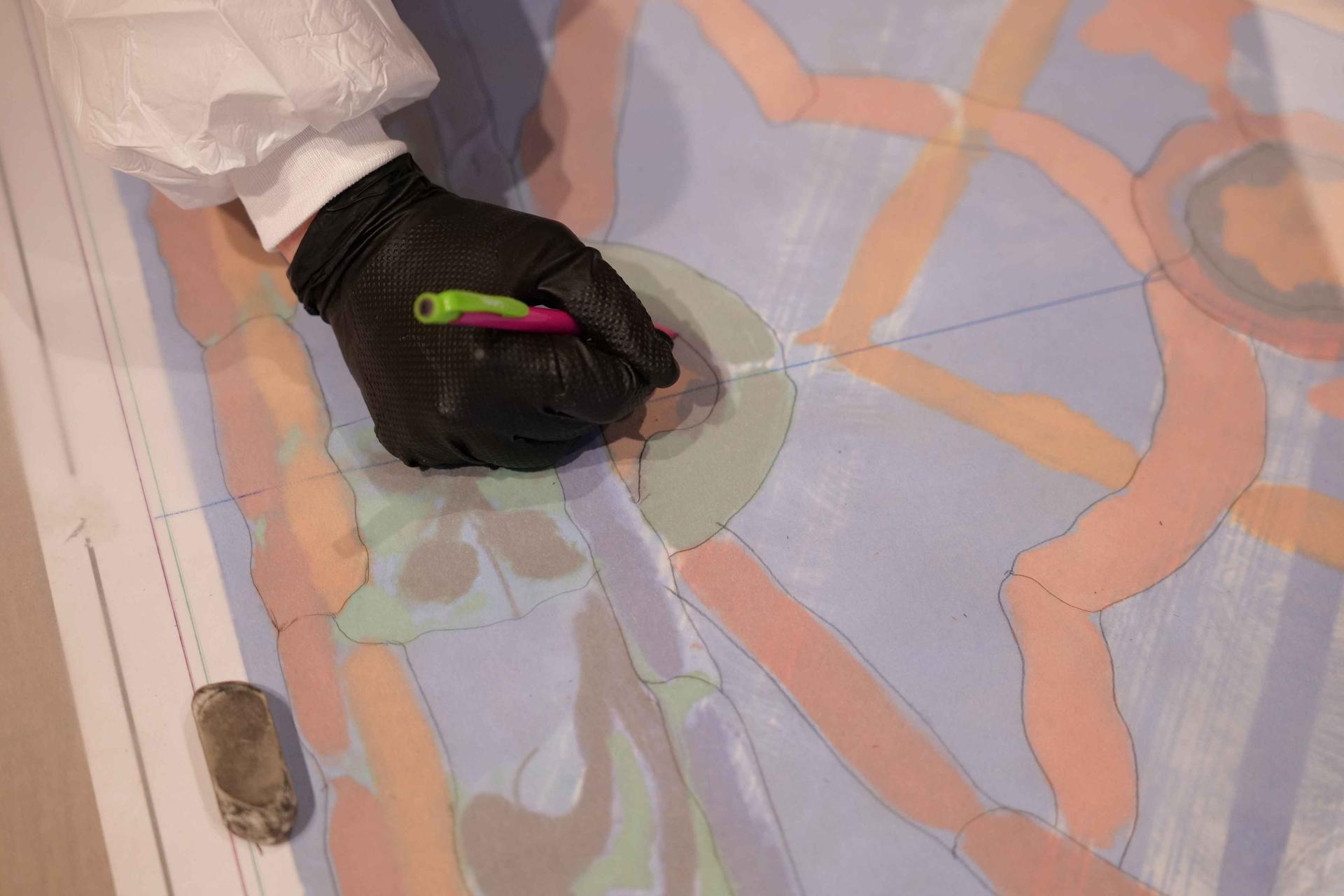
Each of the six designs created by Claire Tabouret were printed at full scale. The measurements of each bay were taken on site at the cathedral and were transferred onto the full-scale drawing, including the position of the metalwork, the precise positioning of the retaining clips, and the stone spacing. The templates for all elements of the tracery, as well as the lancets, were then positioned in relation to one another to faithfully reproduce the complete window design on the floor
- Leadwork
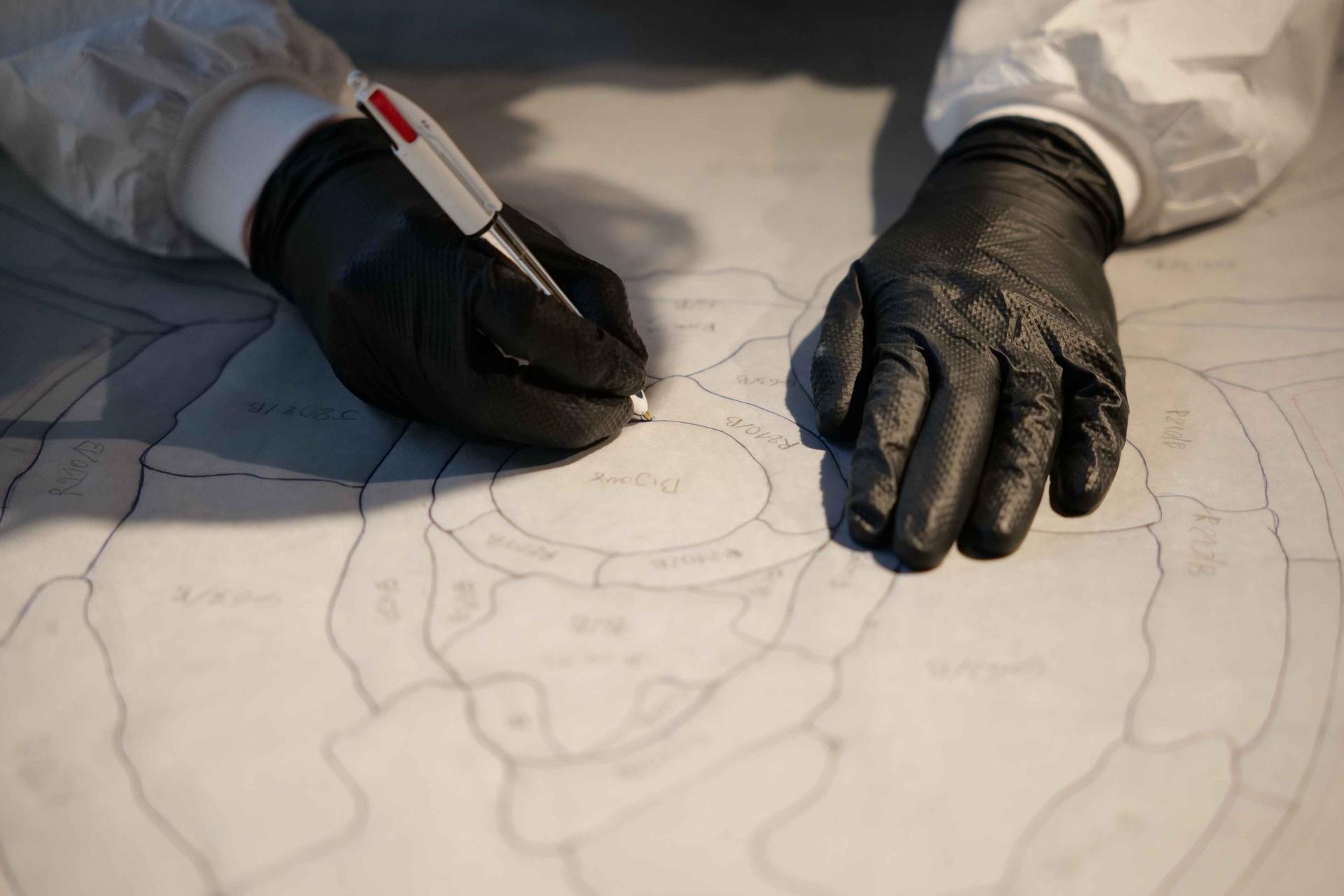
The leadwork serves a dual purpose: it holds the individual pieces of glass together while also enhancing the main lines of the design. A tracing sheet was placed over the entire full-scale drawing. The leadwork was then drawn onto the tracing sheet at full scale, based on a preliminary design created at a scale of 1:20. This step helped fine-tune the design.
- Transfer onto thick ‘pattern paper’ and cutting of the templates
Thick paper known as ‘pattern paper’ was placed beneath the tracing sheet. The leadwork design was transferred onto the pattern paper, along with the color indications for each individual piece of glass. The templates were then cut out and organized by panel (each stained-glass window is made up of several panels) in preparation for cutting the glass sheets.
- Cutting the glass pieces
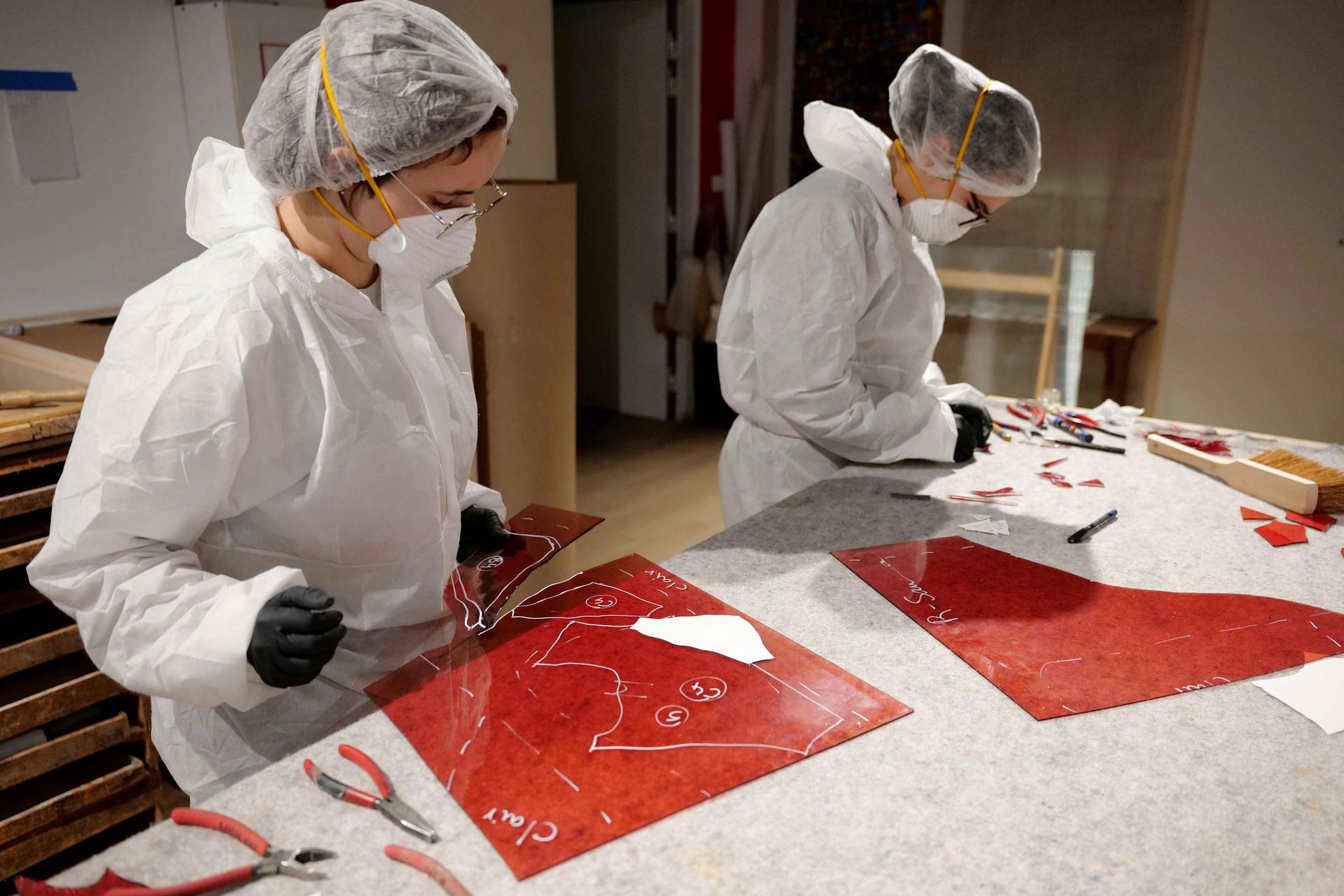
The templates are used to cut the pieces of glass. This work is carried out by hand using a glass cutter fitted with a tungsten wheel. The base sections of the stained-glass windows are produced using a water-jet cutting machine, enabling use of the ‘chef-d’œuvre’ technique—the insertion of one piece of glass into another.
- Engraving
The flashed glass used for the project consists of a transparent base layer with colored enamel surfaces. Once cut, each piece of glass is engraved. This involves selectively removing the colored layer to create variations in tone, such as color gradients or textural effects. Before engraving, each piece is carefully marked with the required indications.
Hydrofluoric acid is applied by brush in specially secured booths. Double-flashed glass may also be used to transition from one color to another without the need for additional leadwork between the different colors.
- Painting
The glass pieces are then painted to faithfully reproduce the designs created by Claire Tabouret. Several layers of paint are applied to the interior surface of each piece of glass. A layer of grisaille paint (a ‘matting’ layer) is applied to the exterior surface of each piece. Each layer requires a separate firing process.
- Assembly (leading, cementing, and drying)
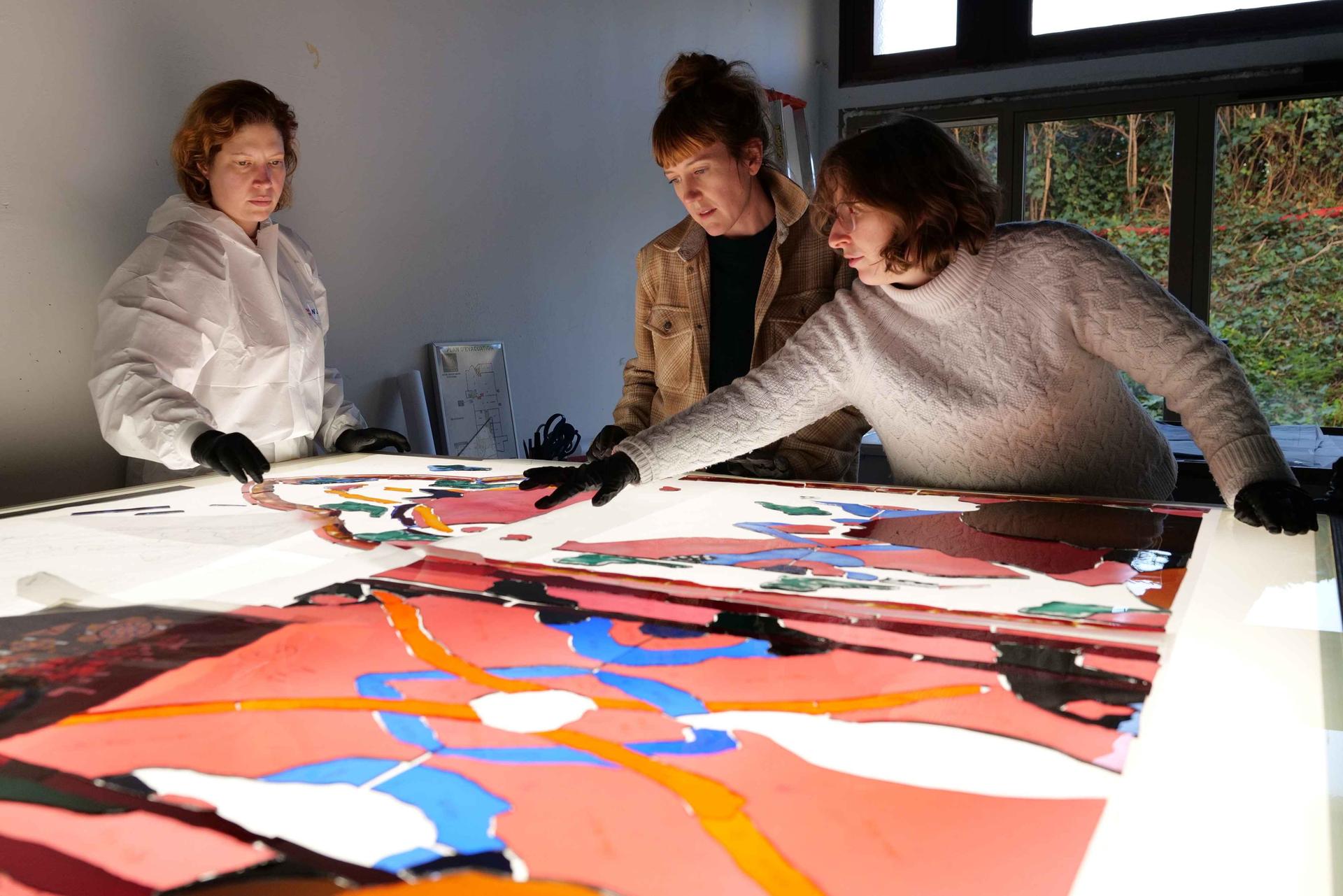
The final stage involves leading all the glass pieces, carefully following the pre-determined lead pattern. The glass pieces are leaded and soldered at every intersection, on both sides (interior and exterior). Cementing, using putty applied with a brush or the thumb, ensures the panels are watertight and structurally stable. The putty is made from linseed oil, drying agent, chalk, and soot, following the Simon-Marq Workshop’s own specific formula. After cementing, the putty must be left to dry for one month before the panel can be crated or installed.