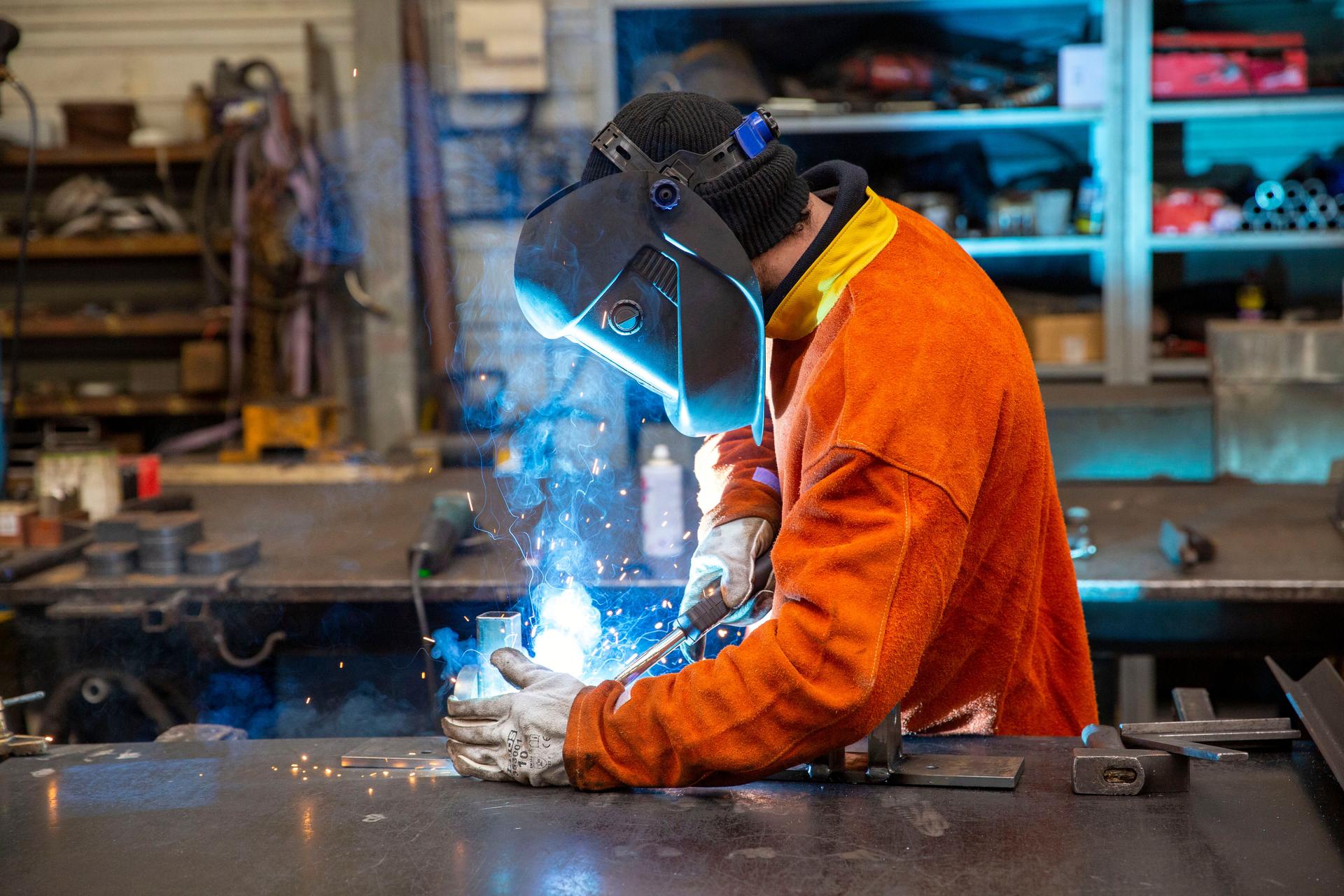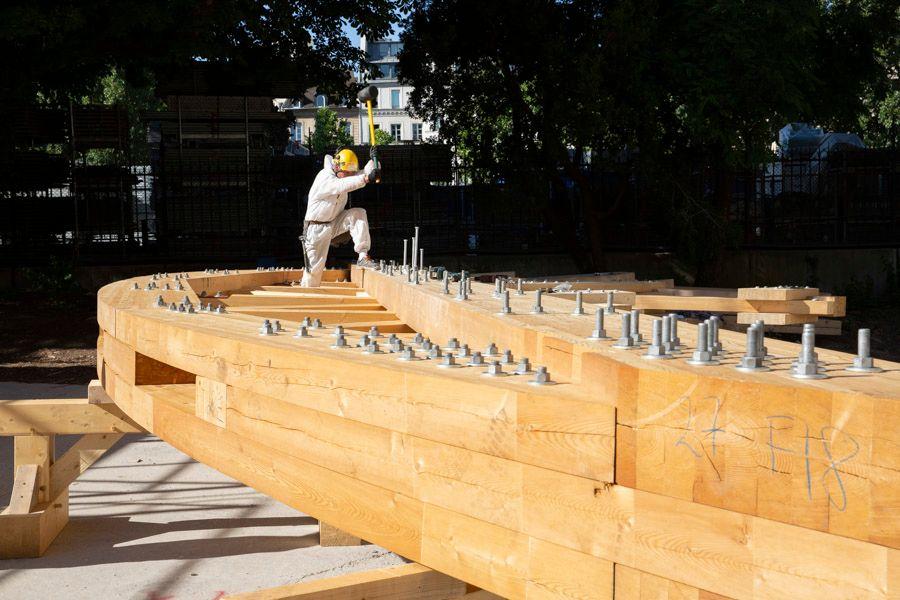

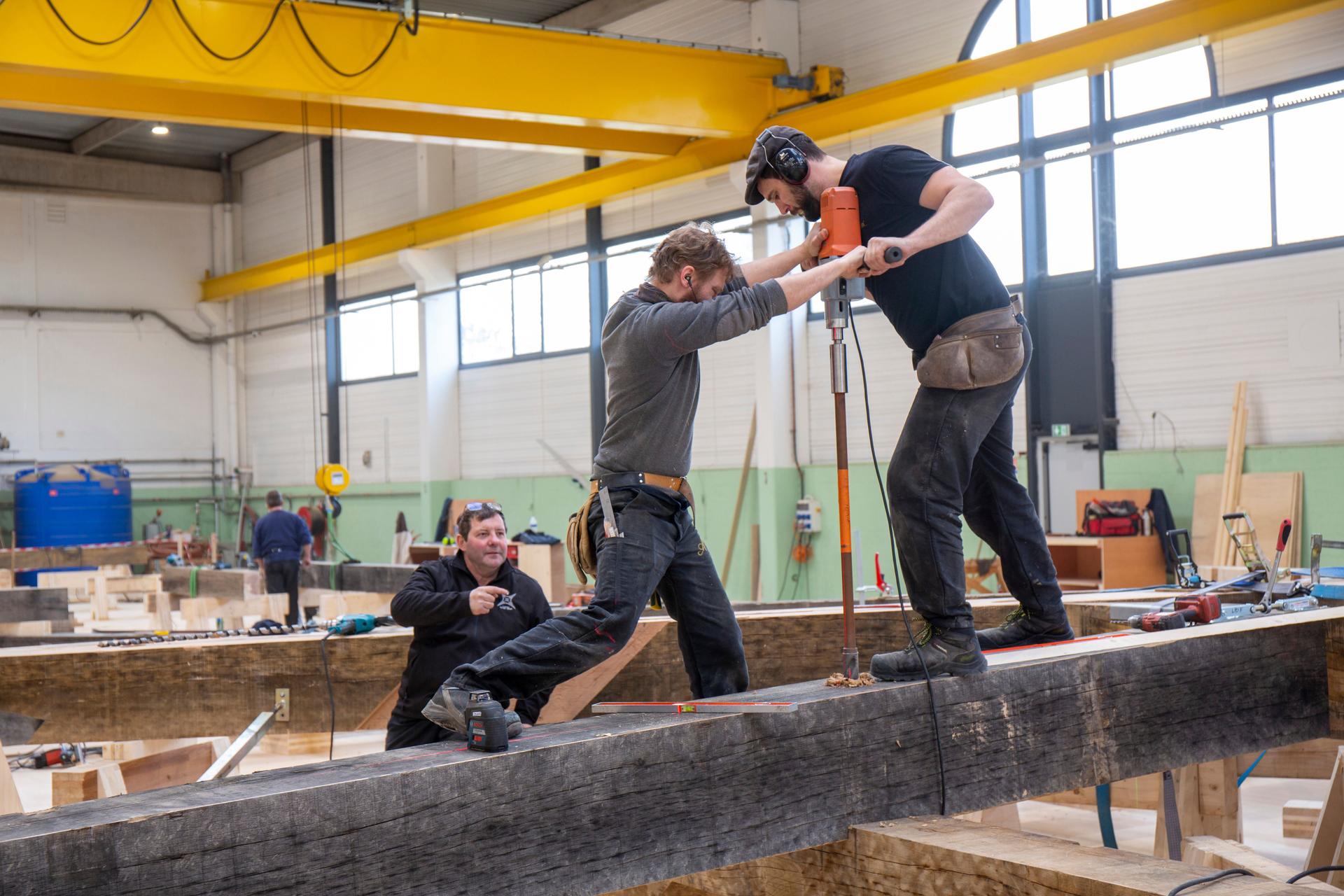
Carpenters design and create the framework, stairs and formwork for buildings, as well as walkways and large-scale infrastructures.
To create these structures, carpenters work with wood but also with other materials (e.g. composite materials and metal), depending on their specialty. They combine ancestral know-how with modern techniques in order to design, fashion and assemble frameworks with due regard for architectural styles and constraints.
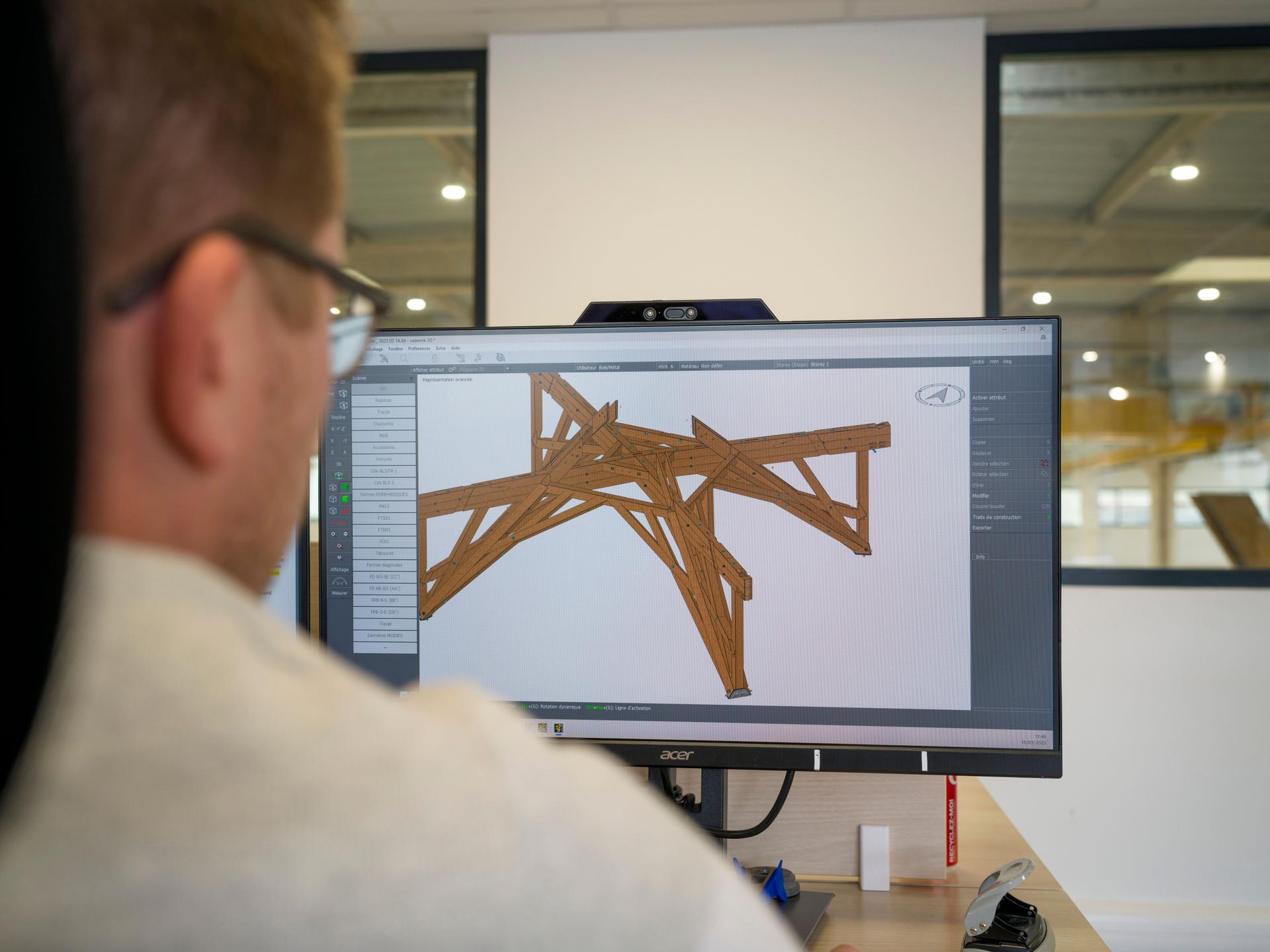
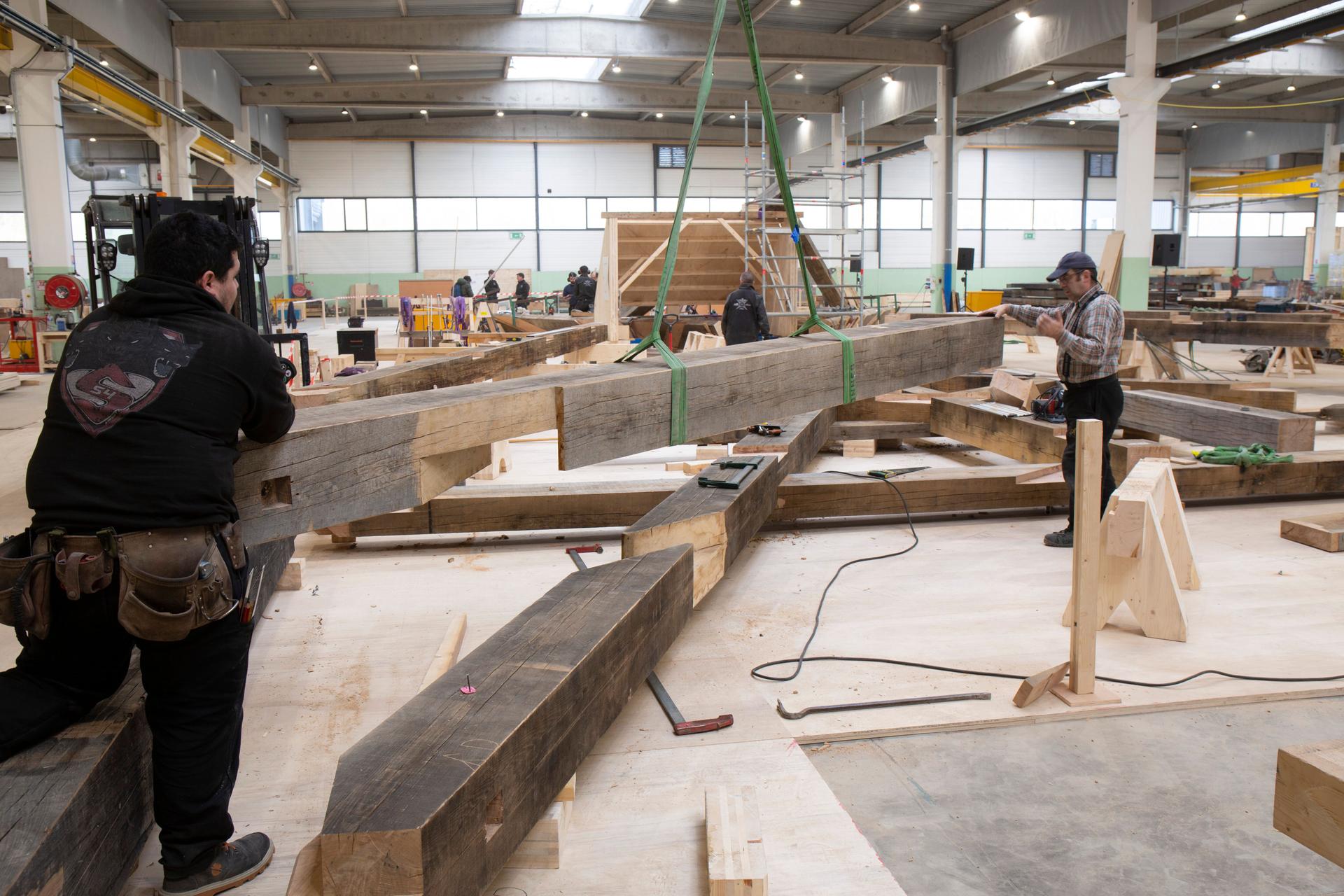
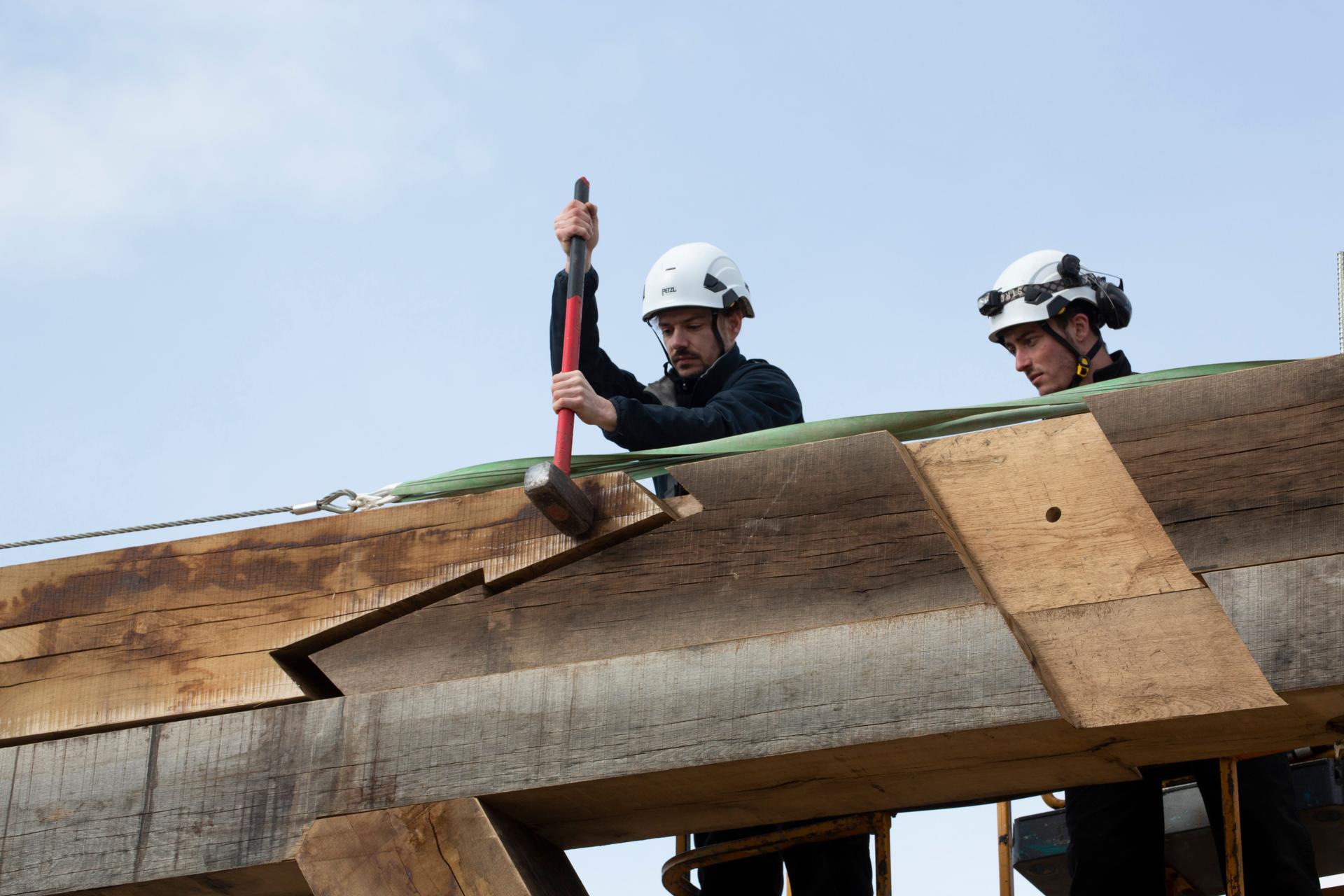
In workshops, carpenters translate the architect's plans into assemblies. They then cut the materials with machines or craft the pieces by hand. On site, with their team, they assemble and raise the previously cut pieces. Often working in elevated positions, they help to complete the building fabric.
Playing an indispensable role in all historic monument restoration and conservation projects, they make be asked to restore frameworks, reinforce weakened structures and restore roofs.
On the Notre-Dame de Paris site
Immediately after the fire, carpenters played a key role in securing the cathedral by installing platforms over the arches and enabling them to be inspected from above.
During the securing phase, carpenters designed immense wooden half-arches in engineering offices, manufactured them in workshops and installed them on site. These elements weighing several tons supported the flying buttresses and consolidated the cathedral's most badly damaged arches. On the cathedral site, this method, which is widely used in projects to secure historic monuments, was employed on a massive scale using state-of-the-art technologies.
Carpenters will also be reconstructing the entire structural framework of Notre-Dame de Paris, beginning with the spire, followed by the transept and finally the choir and nave.
How to become a carpenter?
Several different training programs are available for carpenters, with specializations varying according to the materials they work with.
Trainees can begin in 8th grade, with a two-year CAP certificate (in woodwork, metalwork or industrial metalwork).
In high school, trainee carpenters can follow three-year vocational baccalaureate programs (specializing in working on traditional buildings or metal structures). This training enables candidates to become carpenter-technicians.
For restoring historic monuments, the most highly prized training program is for "journeymen" (compagnons) working as apprentice carpenters in certified companies that perpetuate a centuries-old heritage.