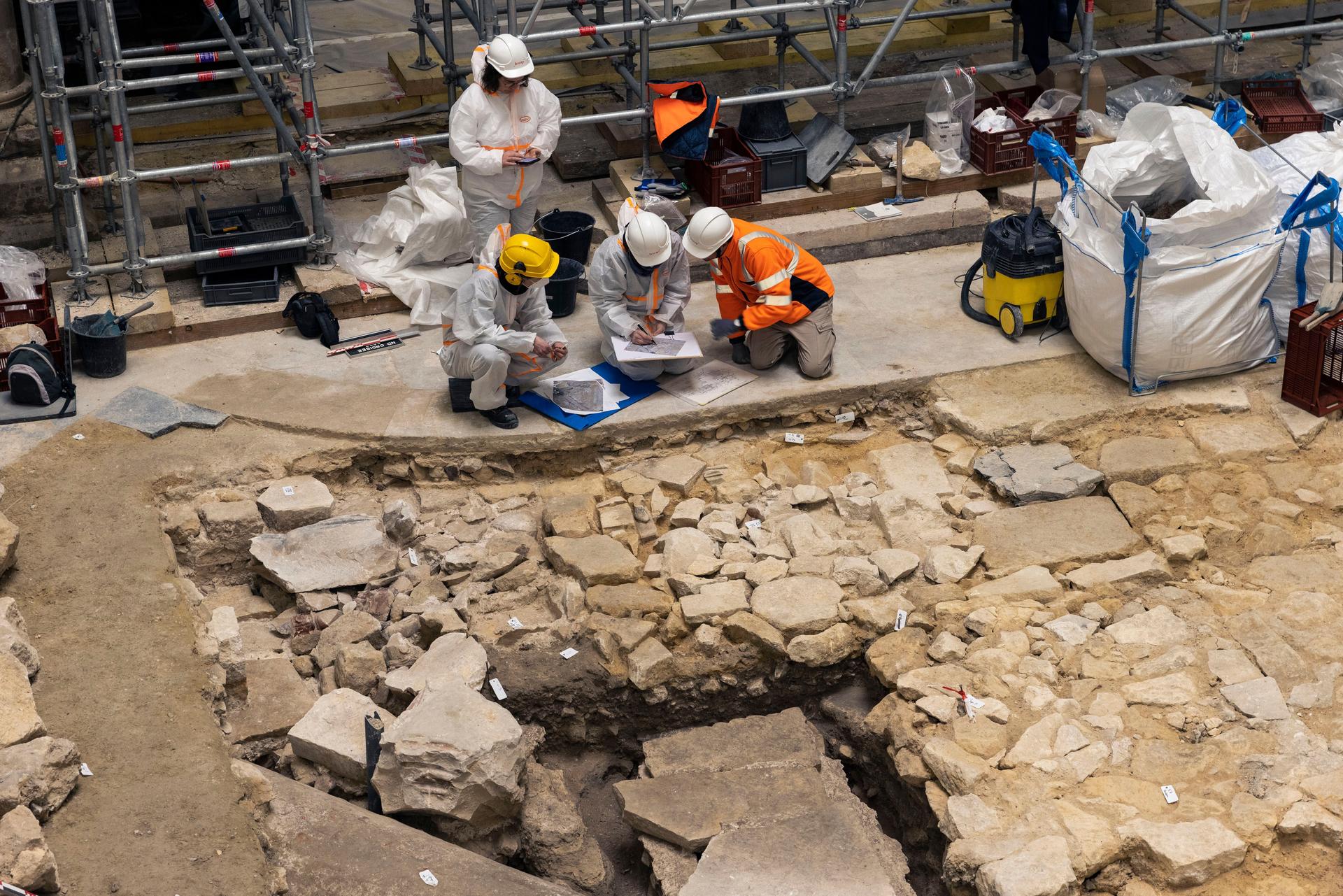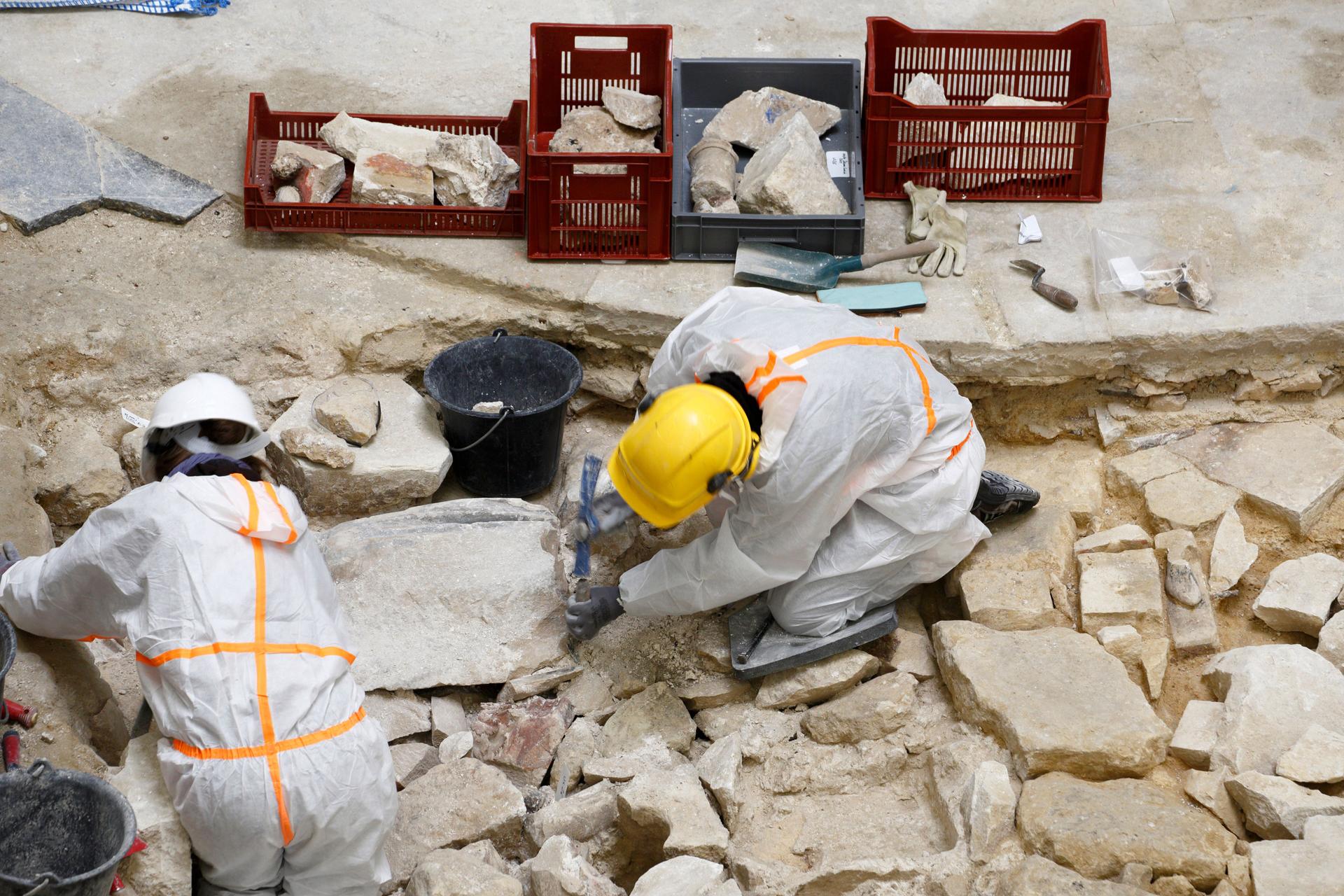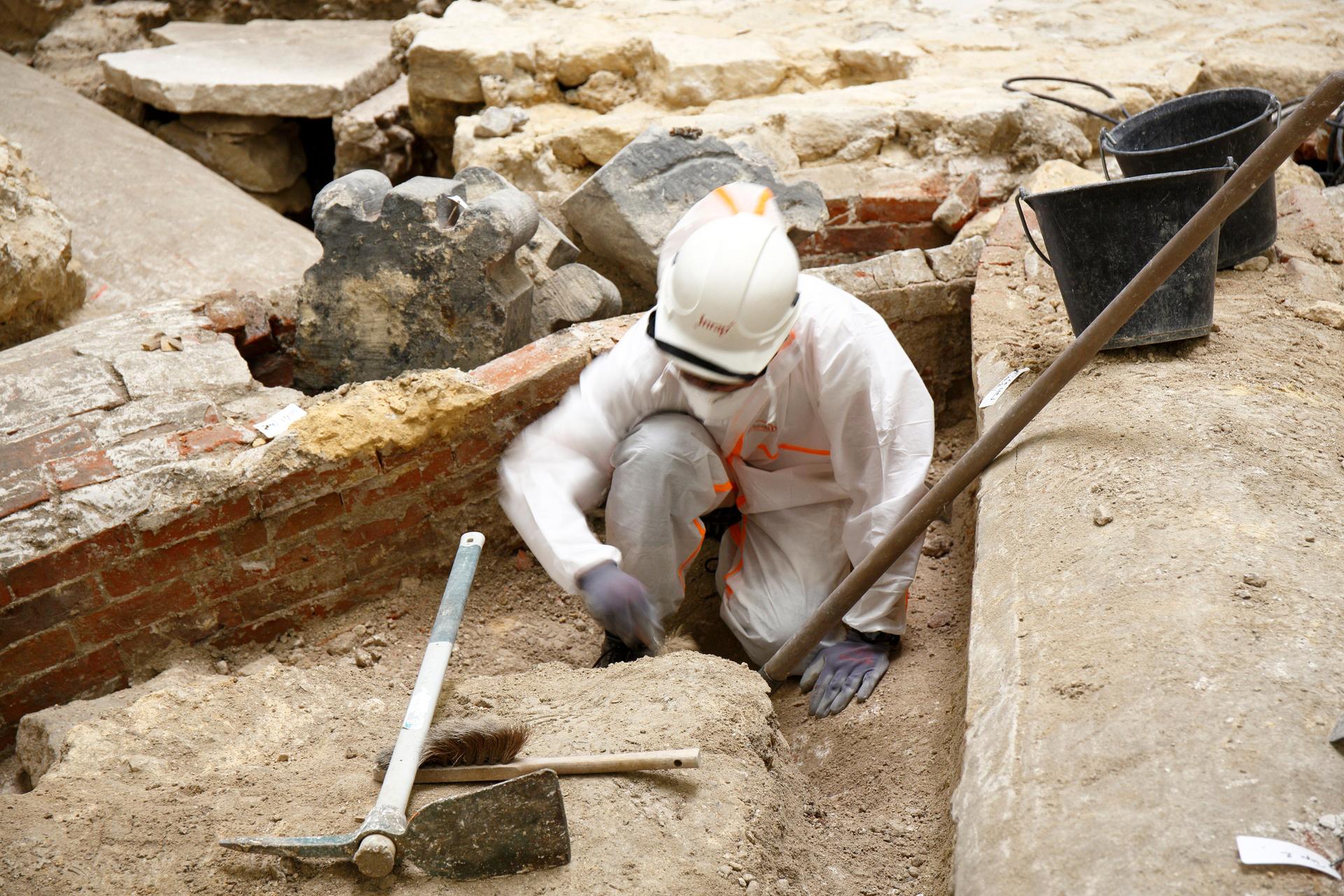

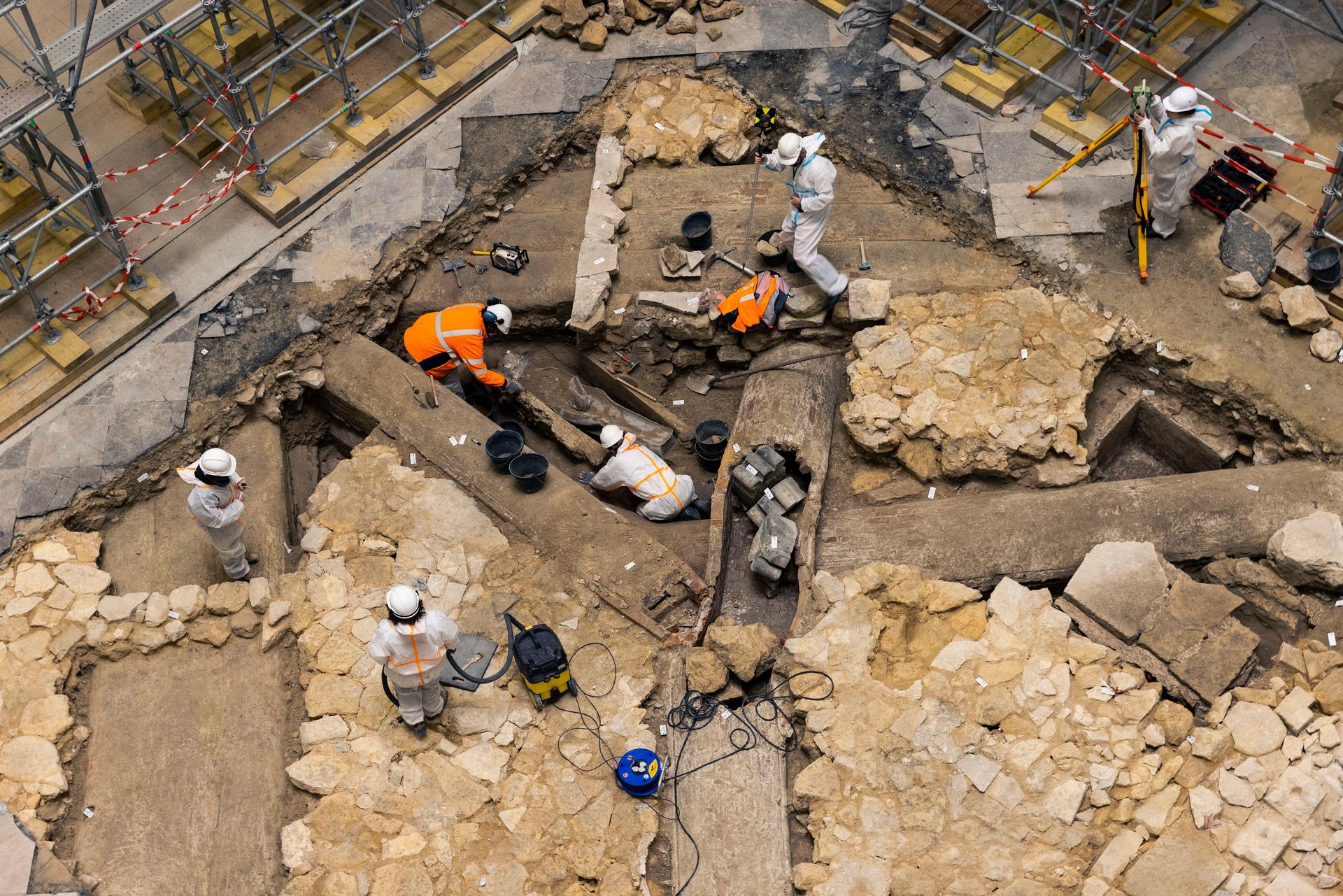
The site archaeologist carries out hands-on excavations, assisted by conservators and researchers specializing in archaeology. Learning about the past by studying the artifacts that are found is central to all archaeological activities.
On sites where the presence of artifacts has been confirmed, archaeologists may conduct “programmed” excavations lasting several weeks, which generally cover extensive areas. Archaeologists may also have to conduct excavations within a specific time frame. On the site of major development projects such as the area around Notre-Dame de Paris, preventive archaeological studies are conducted. If the presence of artifacts is confirmed, archaeologists from INRAP (French National Institute for Preventive Archaeological Research) must then conduct time-sensitive excavations.
All the artifacts taken from the site are analyzed by researchers and help to increase our knowledge of the past. The results of archaeological research may confirm previously known theories or give rise to new interpretations.
On the Notre-Dame de Paris site
The archaeologists' first task during the securing phase was to sort through all the artifacts from the roof structure and the arches in order to better understand the history of the construction of the cathedral, while checking to see whether certain items could be reused in the restoration.
Aided by scientists, the cathedral restoration project is combined with a research project coordinated by the CNRS (French National Centre for Scientific Research) and the Ministry for Culture. Many of the researchers are studying artefacts from the fire and the damage caused to the cathedral. From acoustics, wood and structural timber, monumental decor and metal, to structures, stone, mortar and glass, the research being carried out covers vast and varied fields.
Different preventive excavations were also conducted during the project prior to the arrival of equipment and facilities on the site. These excavations took place around the cathedral before the installation of the tower crane, and at the transept crossing before the erection of some of the interior scaffolding. These preventive excavations provided an opportunity to make ground-breaking archaeological discoveries that enabled the archaeologists and researchers to enrich their knowledge of Notre-Dame.
How to become an archaeologist?
After graduating from high school, it takes five years of training to become an archaeologist. A bachelor’s degree in history or archaeology must be followed by a two-year specialized master's degree (in archaeology or archaeological science).
Students interested in becoming researchers are advised to continue their studies at PhD level (eight years of higher education).